
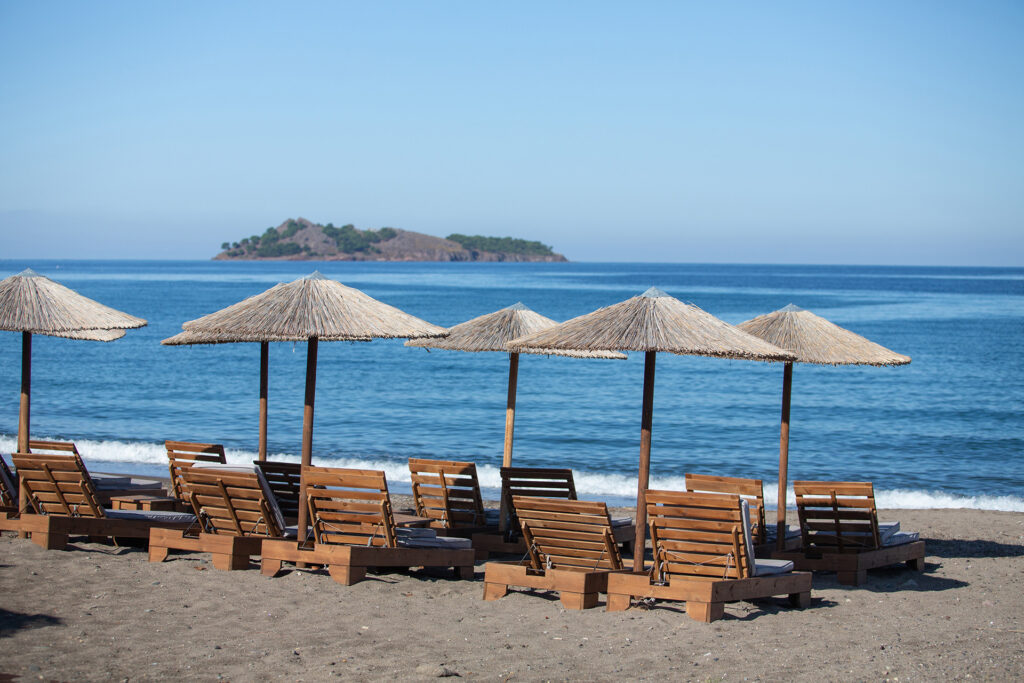
September Is High Season for Lesbians on Skala Eressos, Lesvos
For queer women, few places carry as much symbolic weight as the Greek island of Lesvos. But how about right now?
The island gave the world both the word “lesbian” and the adjective “sapphic,” yet the reality on the ground is far more nuanced than the mythology. Lesvos is not a lesbian island in the sense that Provincetown or Fire Island are overwhelmingly gay and queer destinations. Rather, one small corner of the island—Skala Eressos—has spent the last half-century quietly evolving into one of the world’s most enduring lesbian travel destinations. If you’re wondering whether Lesvos really is “for lesbians,” the answer is yes—but only if you know where to go.
The island that gave lesbians their name
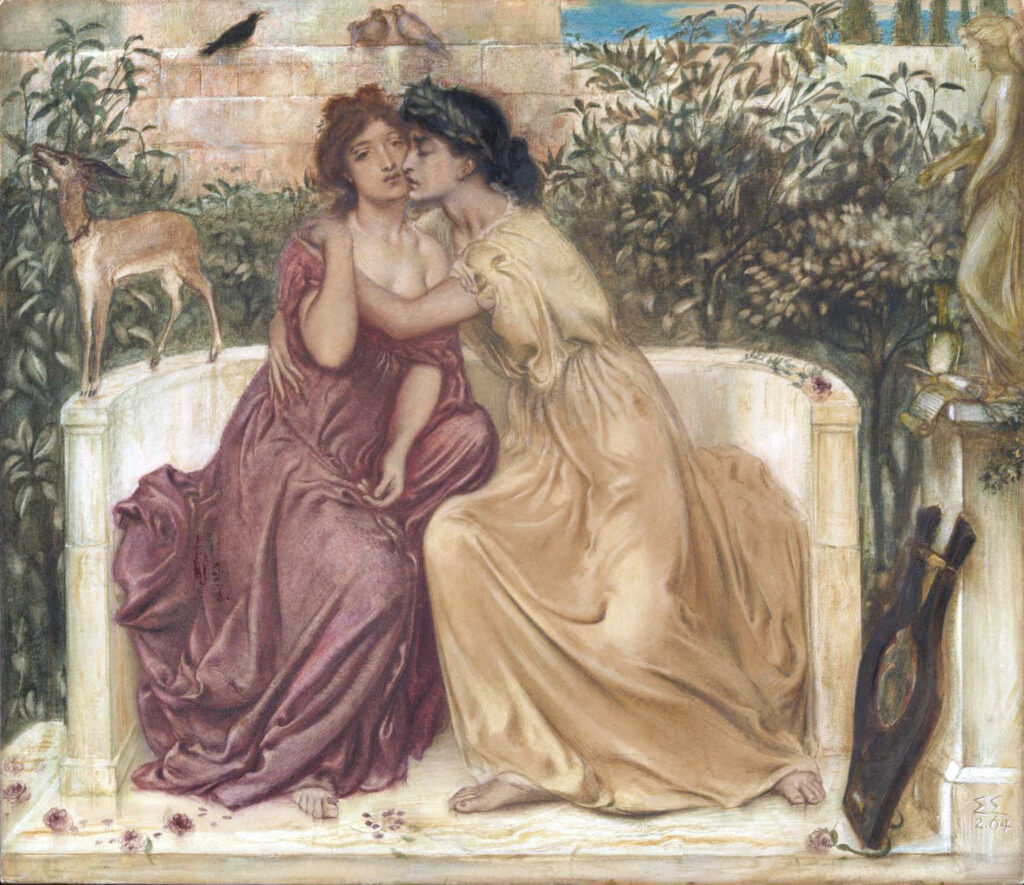
Everything begins with Sappho. She was born around 630 BCE in the main inland village of Eresos on the island of Lesvos, which is located about 2.5 miles from the coastal port and beach called Skala Eresou, which sits directly on the coastline. Sappho became one of history’s greatest lyric poets, and although only fragments of her work survive, many celebrate love and desire between women.
By the nineteenth century, the words “Lesbian” and “Sapphic” had become synonymous with female same-sex attraction because of her association with Lesvos/Lesbos.
Today, visitors can see statues and references to Sappho throughout the island, and her presence is woven into cafés, hotels, festivals, and local businesses as a living cultural identity. There are two main public modern statues of Sappho on the island—one in the capital city of Mytilene (in Sappho Square) and another in Skala Eresou.
The accidental birth of a lesbian paradise
Lesbian women began quietly arriving in Skala Eressos during the late 1970s. Unlike many LGBTQ+ destinations that were deliberately marketed, Eressos happened almost organically. Word spread through feminist bookstores, women’s music festivals, lesbian travel newsletters and publications, and of course, lesbian communities worldwide. Women were looking for somewhere they could hold hands, swim topless, and exist without explanation and they found it in an isolated fishing village with a pristine beach and almost no nightlife to begin with. By the early 1980s, thousands were making annual pilgrimages.
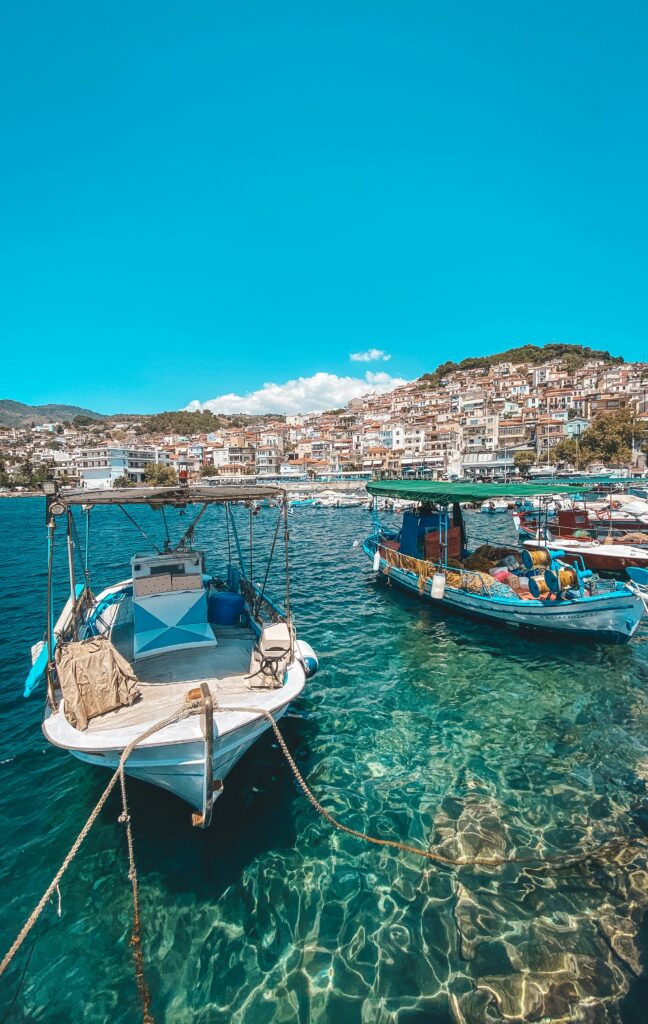
Unlike Mykonos—which became associated primarily with gay male tourism—Eressos developed almost entirely through lesbian travelers. The community was initially created by visitors rather than local residents. Many came from Britain, Germany, the Netherlands, Scandinavia, Australia and North America. Over time, however, a number stayed permanently, opening guesthouses, cafés, restaurants and travel businesses, creating a rare collaboration between local Greeks and long-term expatriates.
Acceptance wasn’t immediate
The idyllic image sometimes obscures a more complicated history. During the 1980s and 1990s, there were periods of tension between conservative local residents and increasingly visible lesbian visitors. Arguments sometimes centered less on sexuality than on differing expectations about nudity, public behavior, and ownership of the beach. There were protests, occasional hostility, and cultural misunderstandings that became international news.
Olivia Travel successfully visited the island of Lesbos in 1993 for what founder Judy Dlugacz described as a historic lesbian pilgrimage. The Greek family-owned line leasing the ship embraced the trip precisely because of their pride in Lesvos and its connection to Sappho.
As tourism became vital to the local economy, relationships softened. Local businesses recognised that lesbian visitors returned year after year, often staying for weeks rather than days. Many formed lasting friendships with residents, bought property and integrated into village life.
Today’s atmosphere is considerably more relaxed than it was forty years ago, although Lesvos remains a traditional Greek island outside the Eressos bubble.
Women who shaped modern Lesvos
Perhaps no contemporary figure has documented this history more thoroughly than filmmaker and photographer Tzeli Hadjidimitriou, who jokingly describes herself as a “double lesbian”—both a lesbian and a woman from Lesvos.
Her documentary Lesvia traces over four decades of lesbian life in Eressos, documenting the friendships, romances, conflicts and extraordinary community that emerged there. Released internationally in 2026, it has introduced many younger queer women to this remarkable story.
Another milestone was the launch of the International Eressos Women’s Festival in 2000, which transformed decades of informal gatherings into an organized annual celebration of women’s culture. Today it is run by the local non-profit Sappho Women.
The International Eressos Women’s Festival, organized by Sappho Women with community input, is held every September and features live music, international DJs, performances, walking tours, talks, dance, kayaking, art, and community gatherings. Also confirmed for 2026 is the band BETTY, famous for their theme tune to the iconic show, The L Word.
Overall, it’s an event that particularly appeals to older international lesbians and anyone who values the women’s movement and its community. A key event is the swim to the Rock, one of the festival’s best-loved traditions. It’s both a challenge and a chance to join an exhilarating experience with other like-minded women.
This year’s dates are September 9 through 19. Wristbands for the festival are available here.
Where should lesbian travelers stay?
Skala Eressos
This is the heart of lesbian Lesvos. Expect beachfront cafés, women-owned accommodation, relaxed tavernas and one of the friendliest atmospheres for queer women anywhere in Europe. Most visitors spend their entire holiday here. Practically the entire village is lesbian-friendly, though specific top-rated properties featured on booking platforms include:
- Aeolian Village Beach Resort: A large 4-star beach resort popular with diverse travelers.
- Eressian Hotel & Hammam Spa: A boutique 3-star property blending local heritage with modern comfort.
- Up to 1.9% investedShop at Expedia.com and earn up to 1.9% of your purchase invested Eressian Lodgings Apartments: Highly rated beach guesthouse apartments with sea views.
- Sappho Hotel: A centrally located local stay close to the main beach front.
- See what is available here.
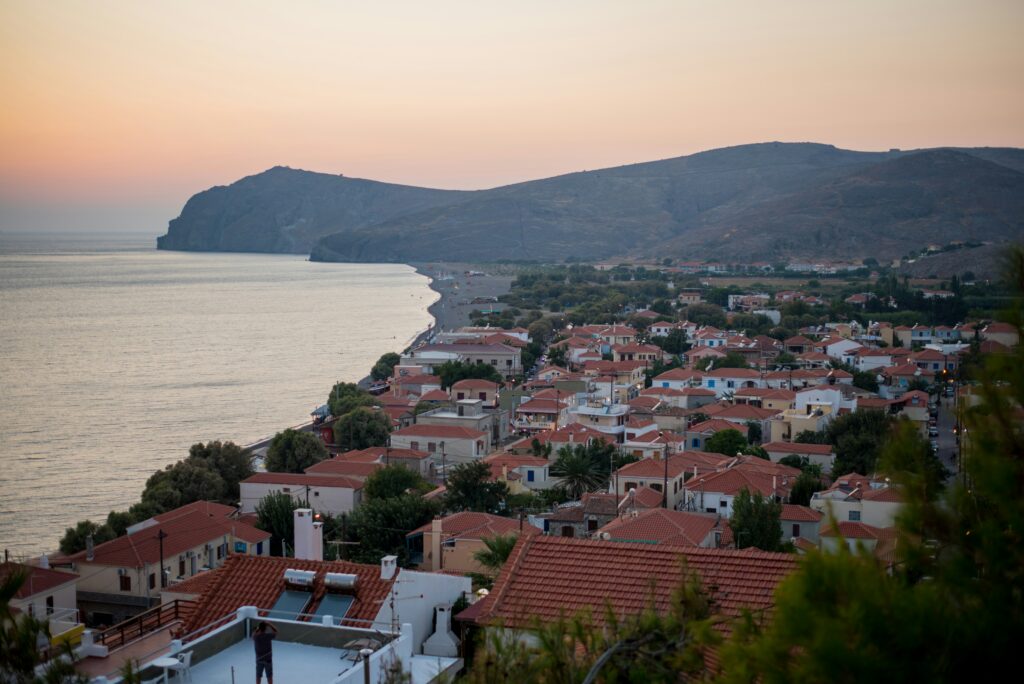
Eresos village
A few kilometres inland, this traditional mountain village is believed to be Sappho’s birthplace and offers a quieter glimpse into everyday island life.
Mytilene
The island’s capital is worth visiting for museums, Byzantine architecture and restaurants, but it is not specifically an LGBTQ+ destination.
Lesbian cafés, bars and community spaces
Unlike larger LGBTQ+ cities, Eressos has relatively few permanent lesbian bars. Instead, almost the entire beachfront becomes an informal queer social space during summer. Highlights for more than a decade have included women’s cafés along the seafront where solo travelers quickly meet others and beach bars hosting women-focused evenings during high season. Yoga retreats, writing workshops, and wellness activities are organized around the women’s community.
In addition to nightlife, the appeal is daytime sociability. Breakfast conversations routinely become beach afternoons and sunset dinners with complete strangers. The Flamingo Beach Bar in Skala is the place to be. It is a beachfront spot with live music, themed nights, DJs, and a year-round festival atmosphere. It’s all about fun and chosen family and seems to be the last remaining hotspot after Belle Ville and Buddha Bar closed.
Meanwhile, Ohana Saloon, which hosts the Queer Ranch Festival, appears to be thriving for a younger, mixed generation of queers—it saw its fifth successful edition this past May.
Is Lesvos only for lesbians?
Not at all. Families, hikers, birdwatchers, history enthusiasts and Greek holidaymakers all visit the island. Outside Skala Eressos, you’ll mostly experience traditional island life with little overt LGBTQ+ visibility. Public affection between same-sex couples is generally accepted in tourist areas but remains more discreet in conservative villages.
LGBTQ+ rights in Greece
Greece has changed dramatically in recent years. In 2024, it became the first majority-Orthodox Christian country to legalize same-sex civil marriage. Married same-sex couples also gained full adoption rights, placing Greece among Europe’s more progressive legal systems despite continuing opposition from parts of the Orthodox Church.
Same-sex marriage is recognized. Adoption rights are available for married same-sex couples. Anti-discrimination protections exist in employment. Tourist areas are generally welcoming of visible queerness, although rural attitudes remain more traditional.
What about the refugee crisis?
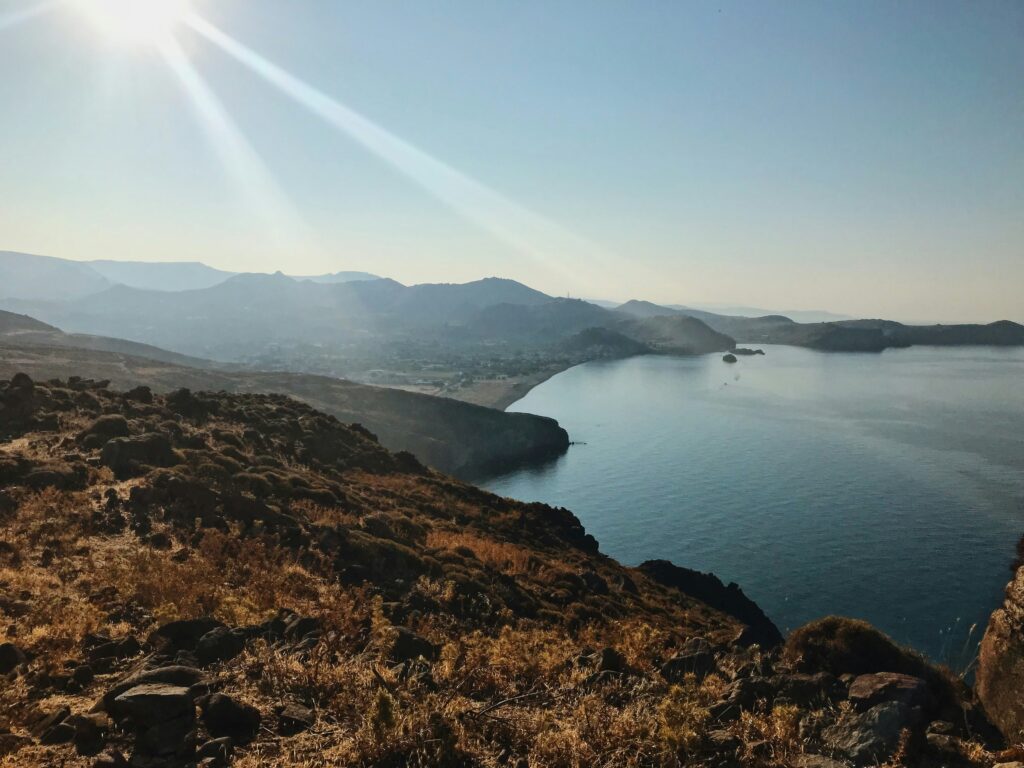
Lesvos sits only a few miles from the Turkish coast and became one of Europe’s principal entry points during the refugee crisis beginning in 2015. Large numbers of asylum seekers crossed the Aegean by inflatable boats, leading to overcrowded reception facilities such as the now-closed Moria camp. Although humanitarian challenges remain, the situation has changed significantly from the peak years. Arrivals have dropped sharply due to stricter EU policies, police patrols, and coast guard pushbacks, allowing local tourism to recover.
Civilization on the island of Lesvos dates back over 5,000 years. But some stone tools found on the island suggest a human presence of over 125,000 years. Through the long arc of human development, it’s remarkable to understand the island as the birthplace of the woman who redefined how humans wrote about love and desire. Lesvos isn’t a lesbian Disneyland. But it’s certainly worth the pilgrimage. And we haven’t even mentioned the ouzo, the ornithology, the olives, or the hot springs.
Find out more about Lesvos at any time of year here.