
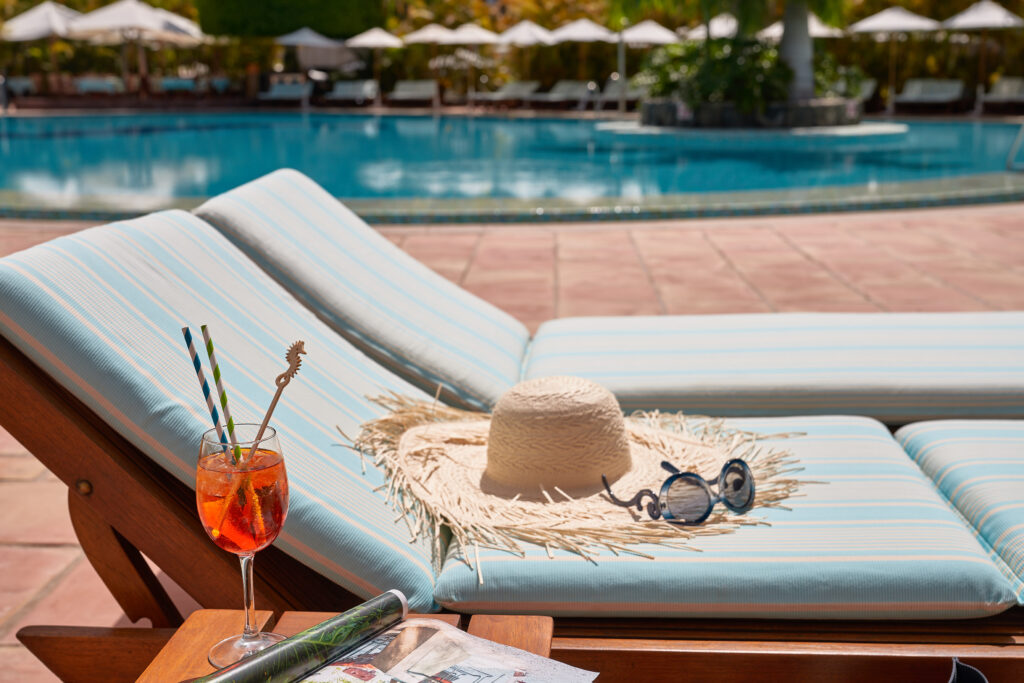
Gran Canaria: Spain’s Sunny LGBTQ Paradise
If your idea of a perfect Spanish escape involves golden beaches, volcanic landscapes, great food, a lively, unapologetic LGBTQ scene, and reliable sunshine, put Gran Canaria on the list.
This island has been welcoming queer travelers for decades, but there is much more to it than bars, beaches and pool parties. Think handsome colonial neighborhoods, sophisticated restaurants, vineyards tucked into mountain ravines, dramatic volcanic scenery and one of Europe’s most spectacular dune landscapes.
Where Exactly Are the Canary Islands?
The Canary Islands are a Spanish archipelago in the Atlantic Ocean off Northwest Africa. The main islands include Gran Canaria, Tenerife, Lanzarote, Fuerteventura, La Palma, La Gomera, and El Hierro. Geographically, they may be closer to Africa than mainland Europe, but politically and culturally they are very much Spain—meaning the currency is the euro, the language is Spanish, and EU laws apply.
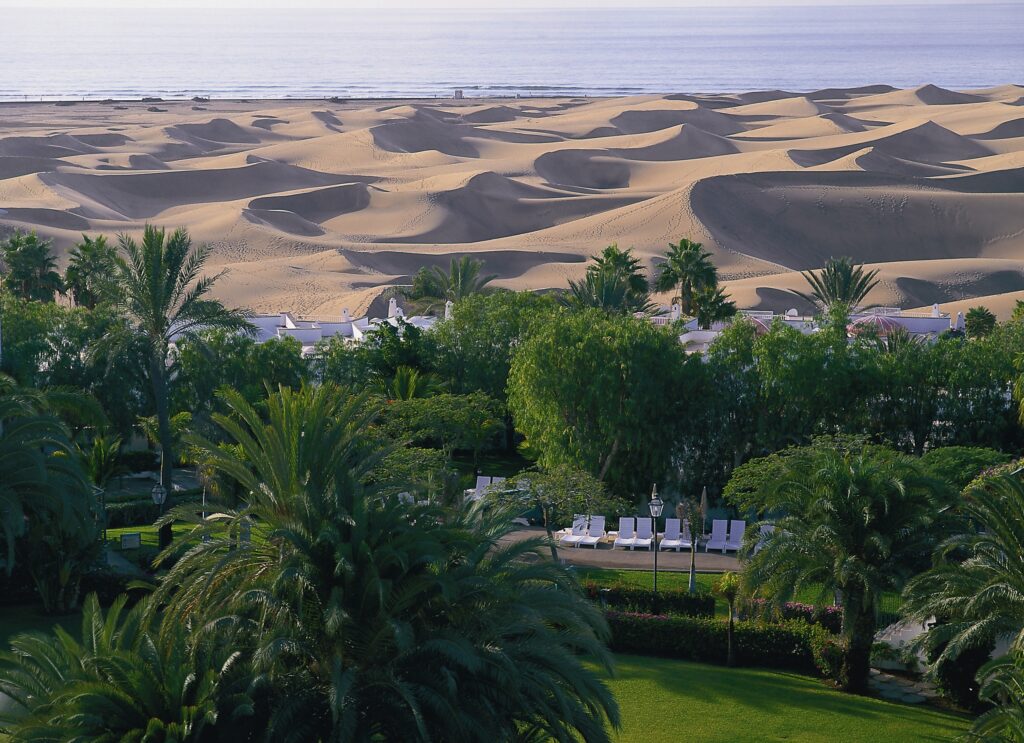
The islands have a laid-back temperament. The landscape and culture have a distinctly Atlantic-meets-African quality, blended with Spanish traditions and centuries of maritime connections. Gran Canaria itself is often called a “continent in miniature” because its mountainous interior creates a remarkable range of landscapes and microclimates.
Trade winds, ocean currents, and the island’s topography create remarkably mild conditions year-round. The south is generally warmer, drier, and sunnier than the north, while the mountains can be considerably cooler and greener. Pack the swimsuit, but don’t assume the entire island has the same weather.
Las Palmas: Start in the Historic Heart
Gran Canaria’s capital, Las Palmas de Gran Canaria, is on the island’s northeastern coast and makes an excellent introduction. Founded in 1478, it became an important Atlantic port and a stopping point on routes between Europe, Africa and the Americas.
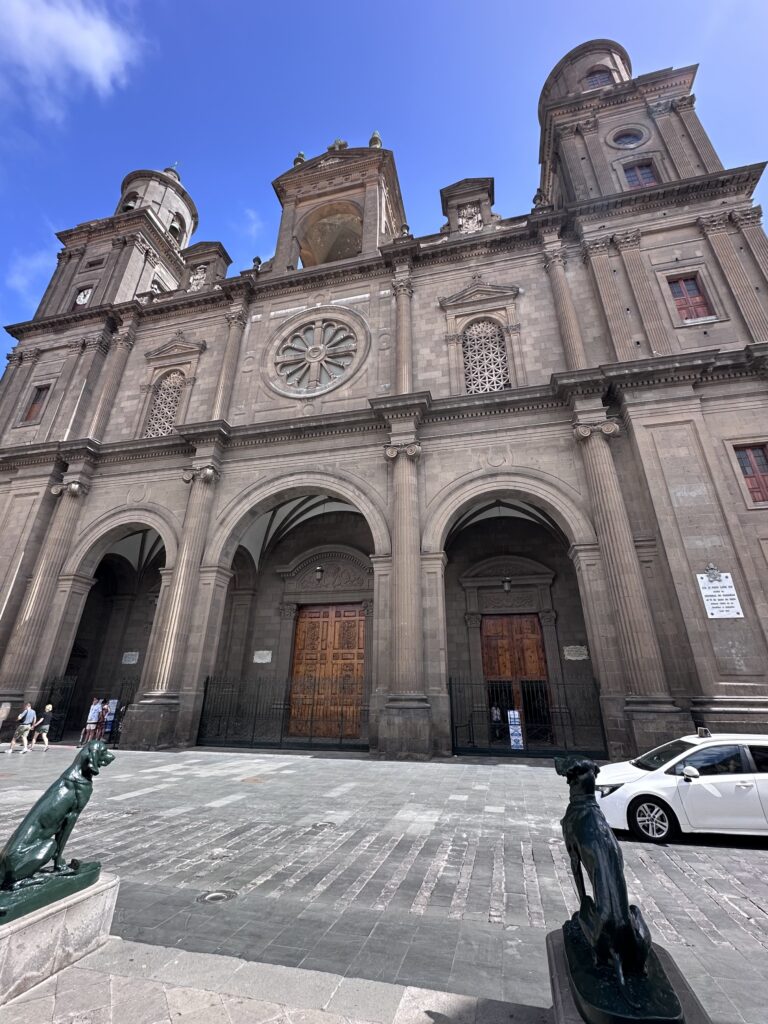
The best place to understand its history is Vegueta, the atmospheric old town with its cobbled lanes, wooden balconies, elegant courtyards, leafy plazas, and incredible old buildings. Plaza de Santa Ana is where the monumental Cathedral of Santa Ana faces the historic Casas Consistoriales. Over centuries, the cathedral evolved, combining Gothic and Neoclassical elements.
Nearby, Casa de Colón—Columbus House—explores Christopher Columbus’s connections with Gran Canaria and Spain’s voyages to the Americas. The Museo Canario delves into the history of exploration, cartographic imaginings of the New World, and the culture of the islands’ indigenous Guanche population.
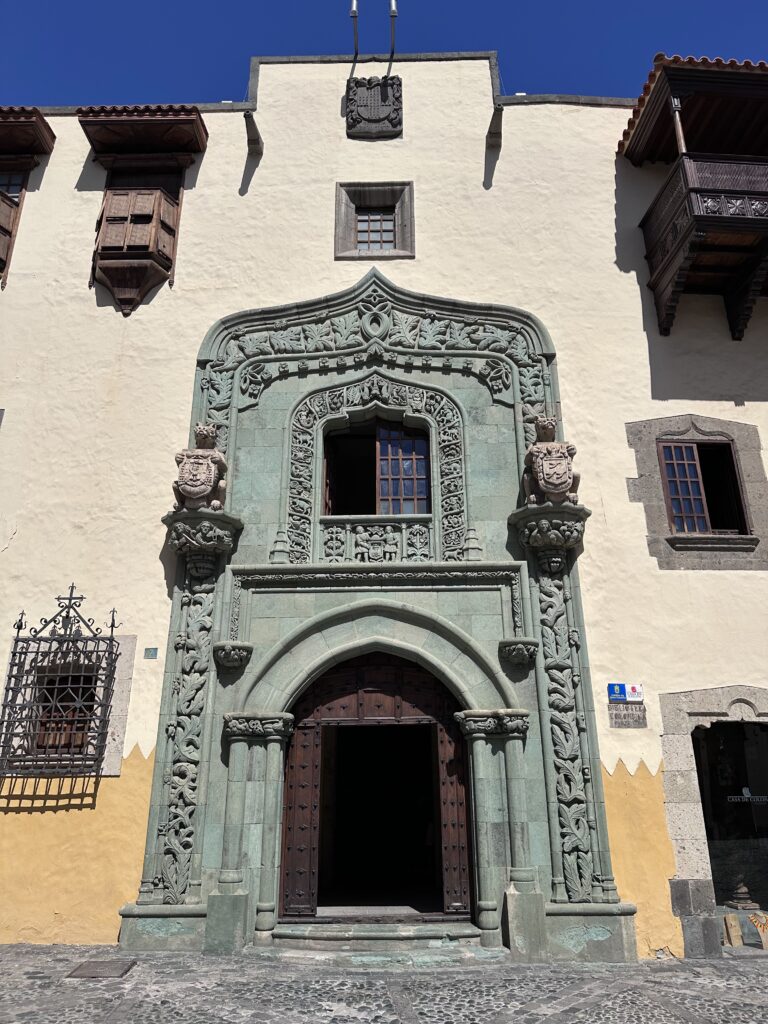
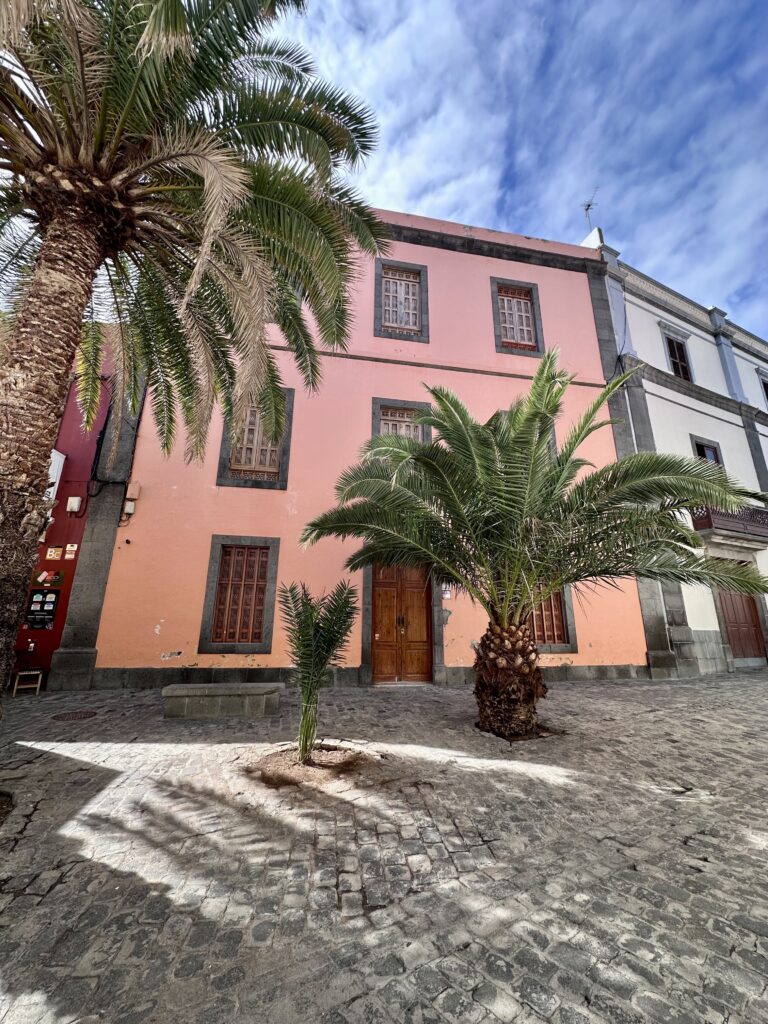
Photos: Merryn Johns
And don’t rush. One of the pleasures is simply strolling with an espresso or gelato, or perhaps sitting down with a wine or small plate and watching the neighborhood go about its business. Leave Vegueta and you’ll find a very different city.
Triana is the elegant commercial district, packed with boutiques, cafés, restaurants, and attractive historic architecture. Continue north toward Santa Catalina and the city’s port, and Las Palmas becomes more cosmopolitan.
Lights, Camera, Las Palmas!
You can’t miss Playa de Las Canteras, the city’s great urban beach, backed by a lively promenade of restaurants, cafés, shops, and hotels. At the western end stands the striking Auditorio Alfredo Kraus, which looks almost like a monumental sculpture rising beside the Atlantic. It also adds to the city’s cinematic character.
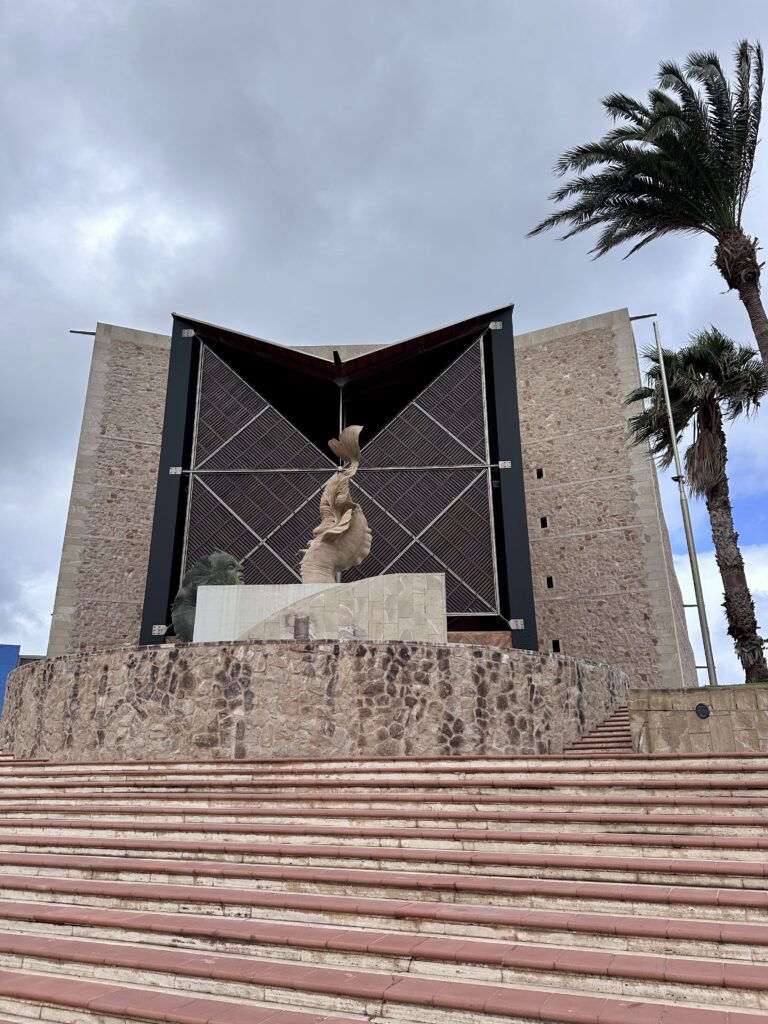
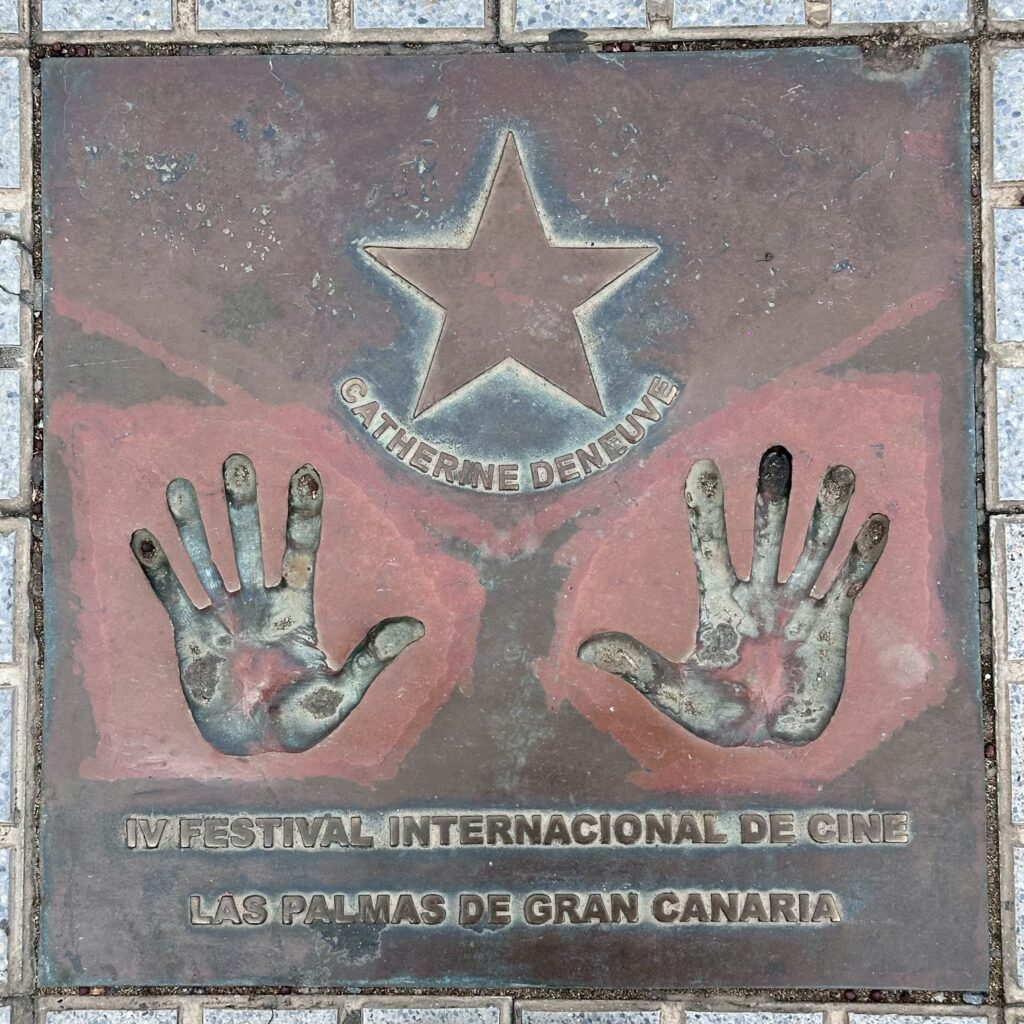
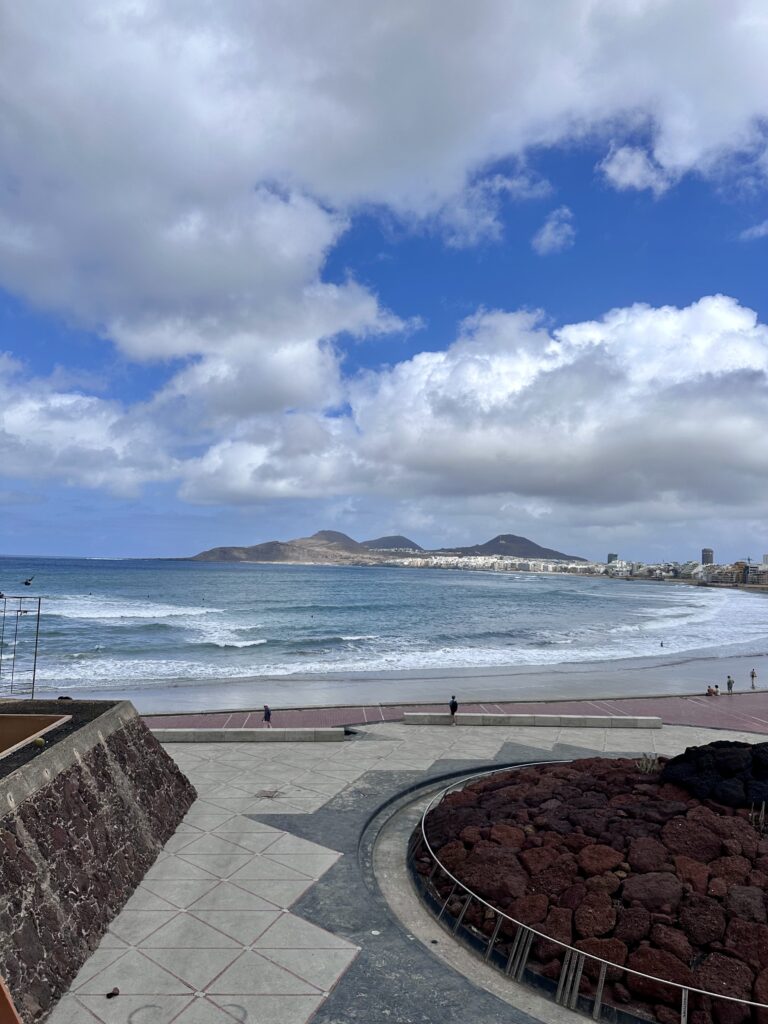
Photos: Merryn Johns
The Las Palmas de Gran Canaria International Film Festival, usually held in Spring, is one of Spain’s more unique film festivals, particularly if you like international and auteur cinema rather than Hollywood blockbusters. It’s not Cannes, but it has a dramatic character of its own.
The Auditorio Alfredo Kraus sits right at the western end of Las Canteras, overlooking the ocean, and is one of the festival’s major venues. So you can spend the afternoon on the beach and the evening watching international cinema with the Atlantic as your backdrop. Note the celebrity handprints on the promenade outside the auditorium.
A Vineyard Hidden in a Ravine
For a completely different Gran Canaria experience, make time for Bodega Señorío de Cabrera in the municipality of Telde. This is not a commercial winery built for tour buses. It is a small, atmospheric family vineyard tucked into the steep Barranco García Ruiz, where the vines climb the terraces of the ravine.
The owners, Agustín Cabrera and Felisa Vega, are a married couple who have spent more than two decades developing the property and producing wine. And Felisa doesn’t simply watch while Agustín pours the wine. She cooks—and oh, how she cooks. Bring your appetite and a couple of hours! A visit can include a guided tour, tastings, and a home-style Canarian meal featuring products from the property and the island—things such as homemade bread, preserves, olives, local cheeses, croquettes, and traditional dishes. Their finca also produces fruit, coffee and other ingredients used in the kitchen.
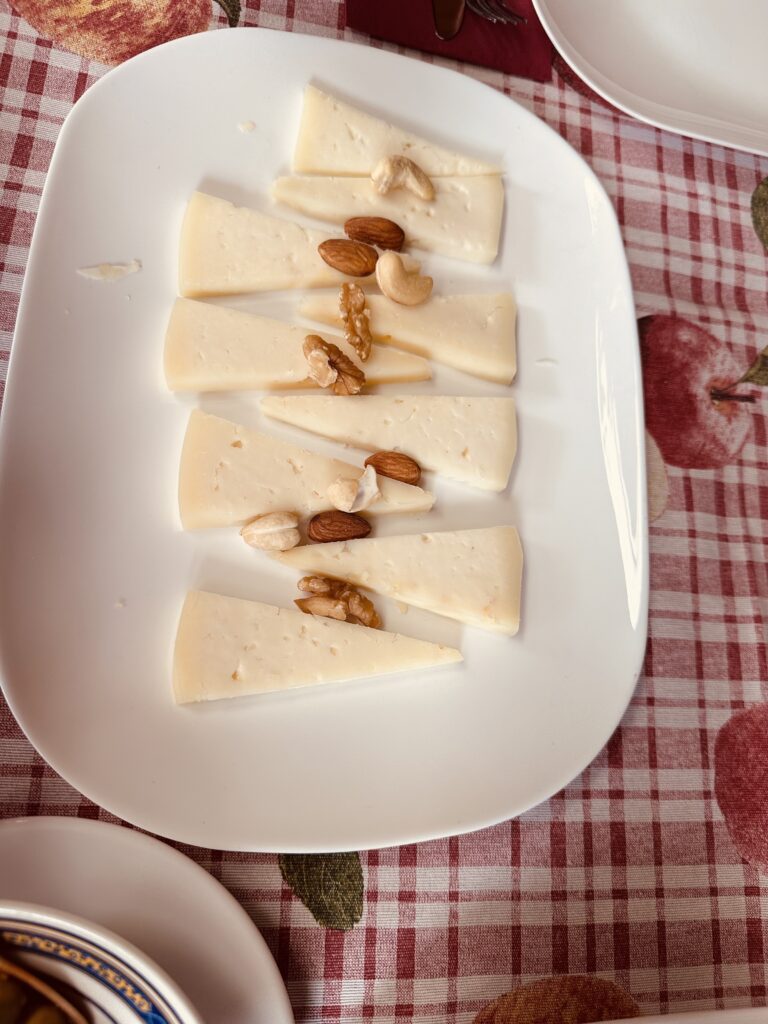
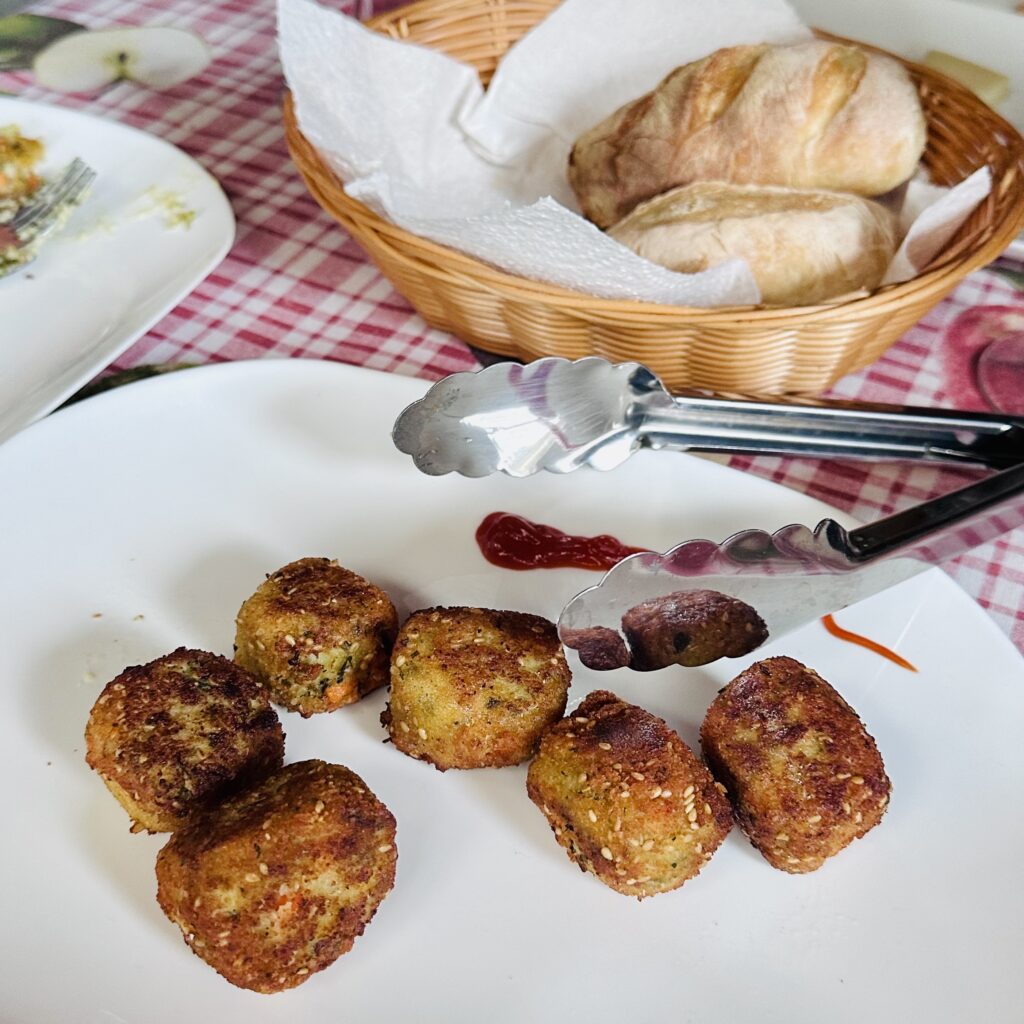
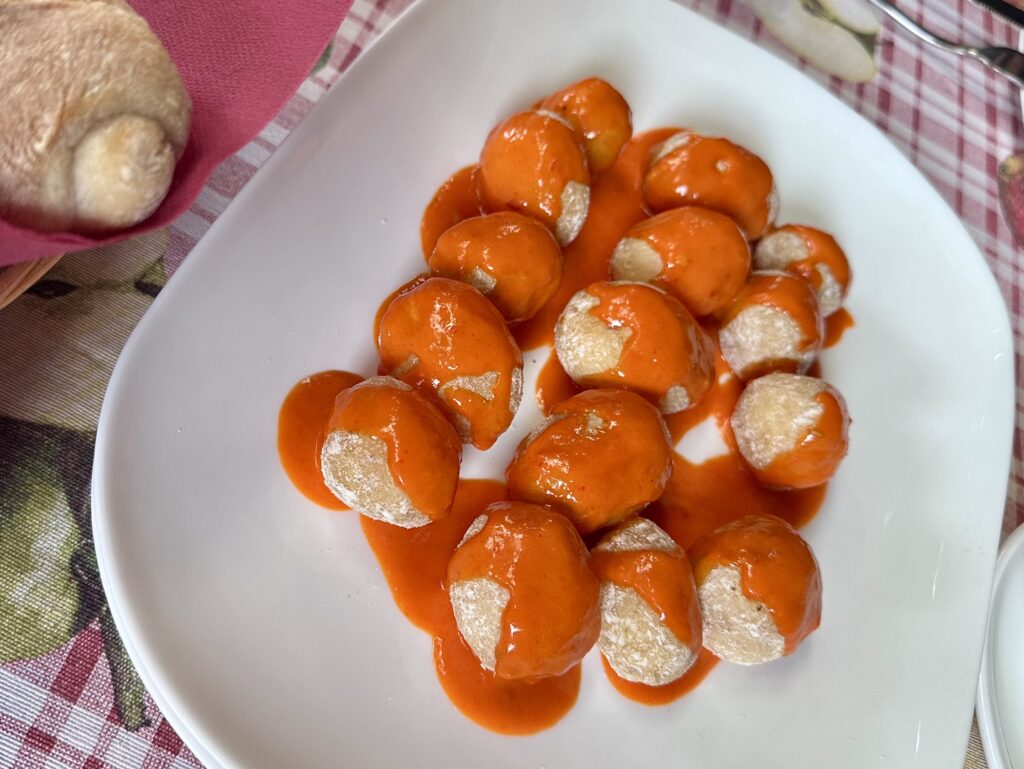
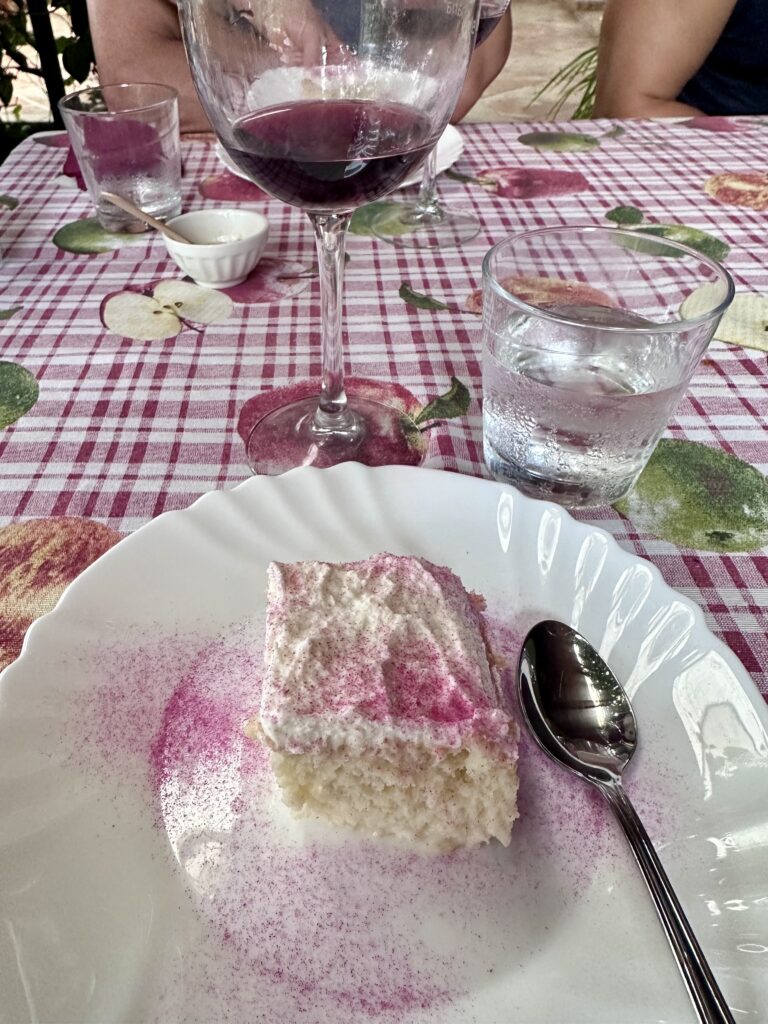
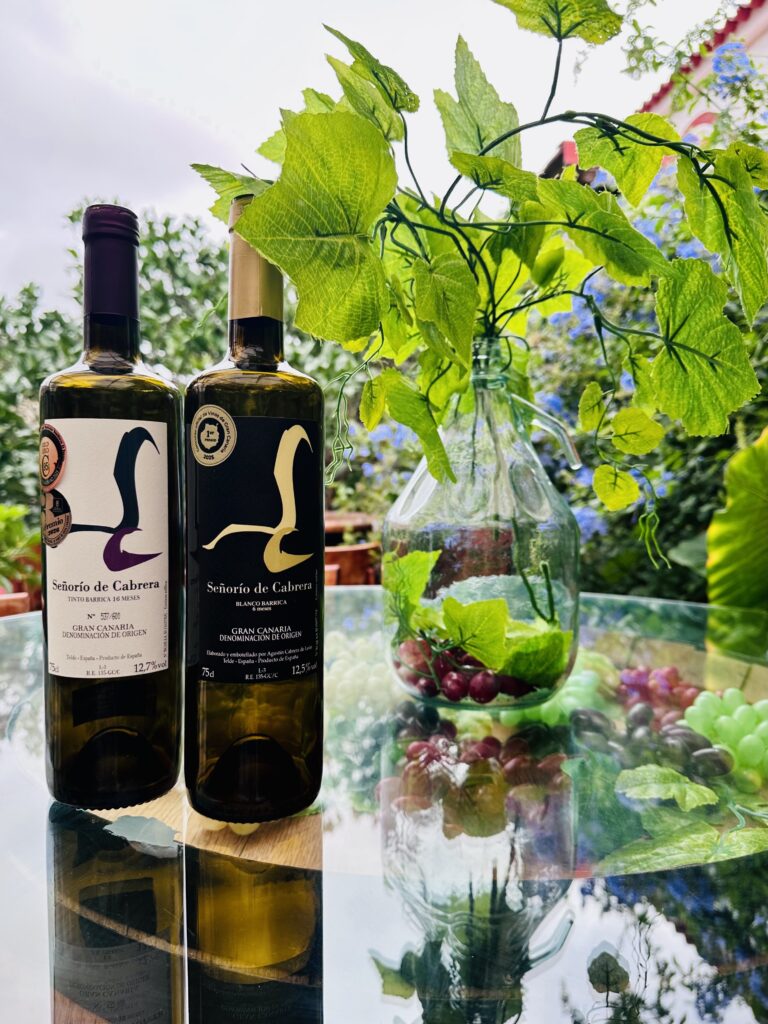
Their wines carry the DO Gran Canaria designation and include both whites and reds. The Señorío de Cabrera white wines include Malvasía and Moscatel, while the reds include island varieties such as Listán Negro and Tintilla. They are very quaffable and pair excellently with food. The winery is a small operation, not a drop-in tourist attraction. Get there by rental car or a prearranged tour/taxi. If you want the meal, you must book ahead by calling +34 680 10 89 10.
Witches Were Once Here
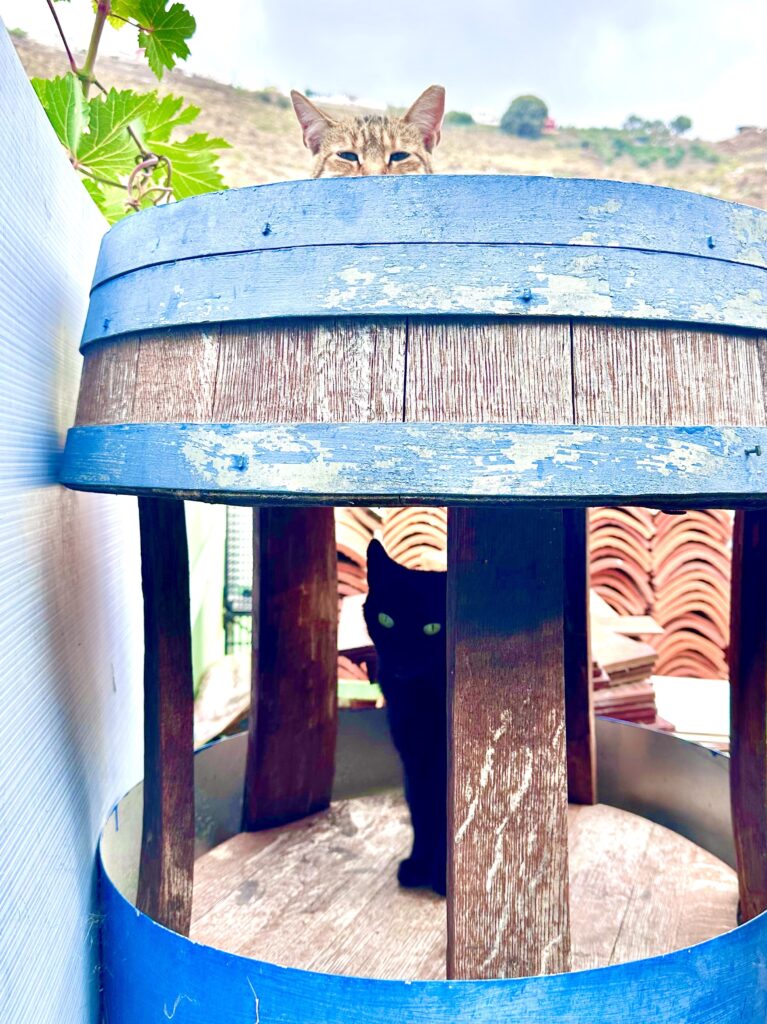
Perhaps there is a reason the wine was so wonderful: the weather is moodier in this part of the island, and there were so many feline guardians! The bodega is located in Telde, a region that historically embodied the contrast between Canarian and Castilian identities.
Before the Spanish conquest, Telde was one of the two major indigenous kingdoms (guanartematos) of the native Canarii people. It was also home to the indigenous high priests (faycanes) and witches (brujas), who practiced pre-Hispanic fertility rituals, folk medicine, and spiritualism long before European settlement. Catholic conquistadors, under papal orders, outlawed these pagan practices, and they viewed the ancient places as covens or bailaderos. Today, locals say they come from Telde with more than a little pride.
Comida Casera in a Cave
Imagine driving into a spectacular volcanic valley, towering rock walls rising above you, green vegetation clinging to the slopes, and ancient caves punctuating the mountainsides. Barranco de Guayadeque is a deep volcanic ravine between the municipalities of Ingenio and Agüimes, its valley stretching from the drier coastal region toward the island’s mountainous interior. The scenery is dramatic: steep, rugged slopes, endemic vegetation, cacti introduced from Mexico, cave dwellings, and winding roads. The ravine has natural and archaeological importance and contains evidence of the island’s Indigenous population, including caves historically used as dwellings, storage spaces, and burial sites.
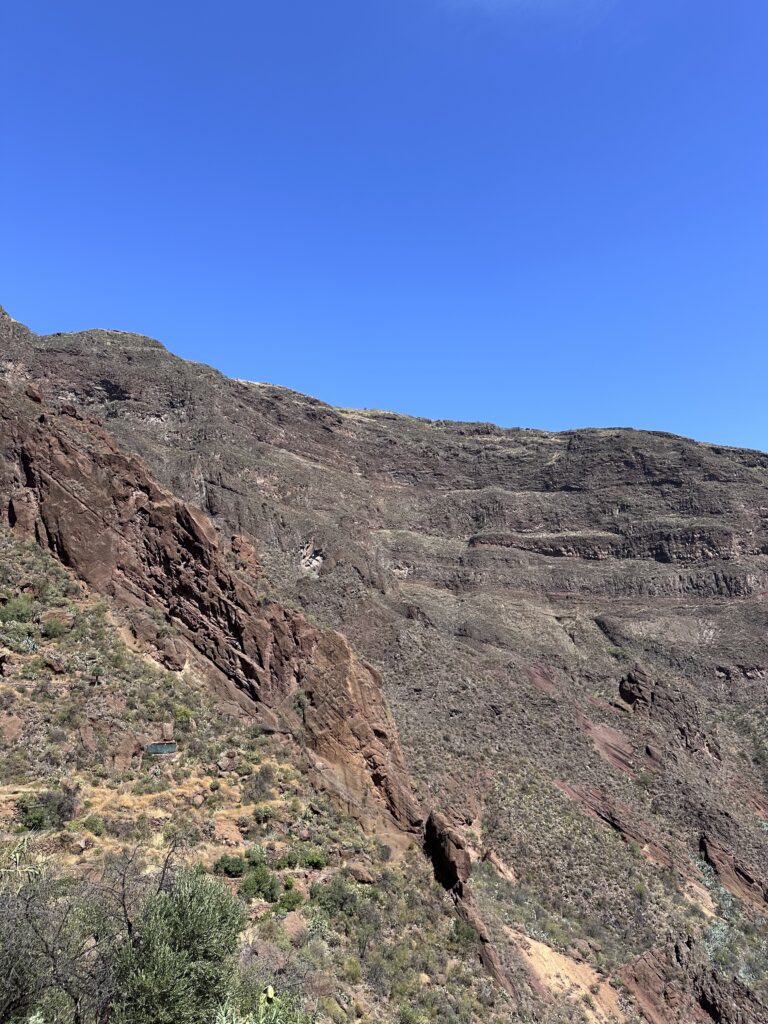
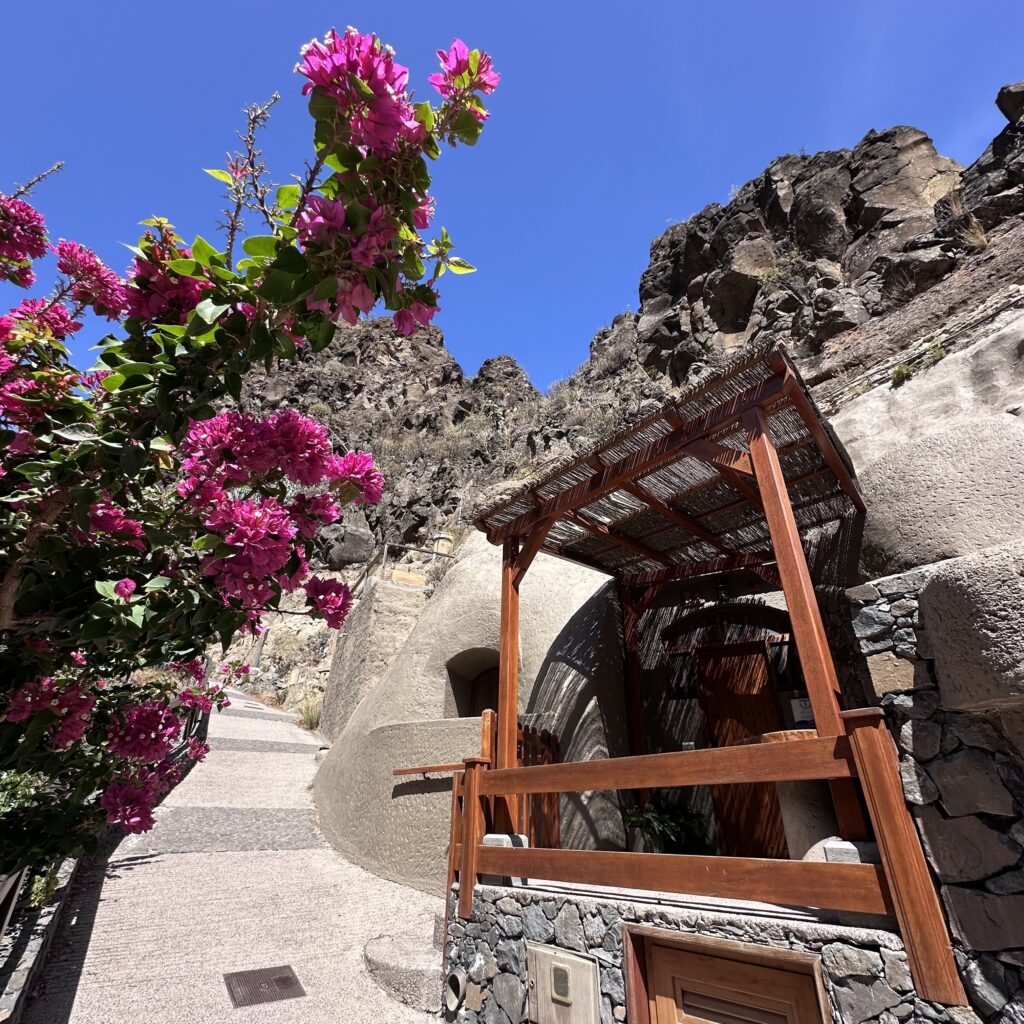
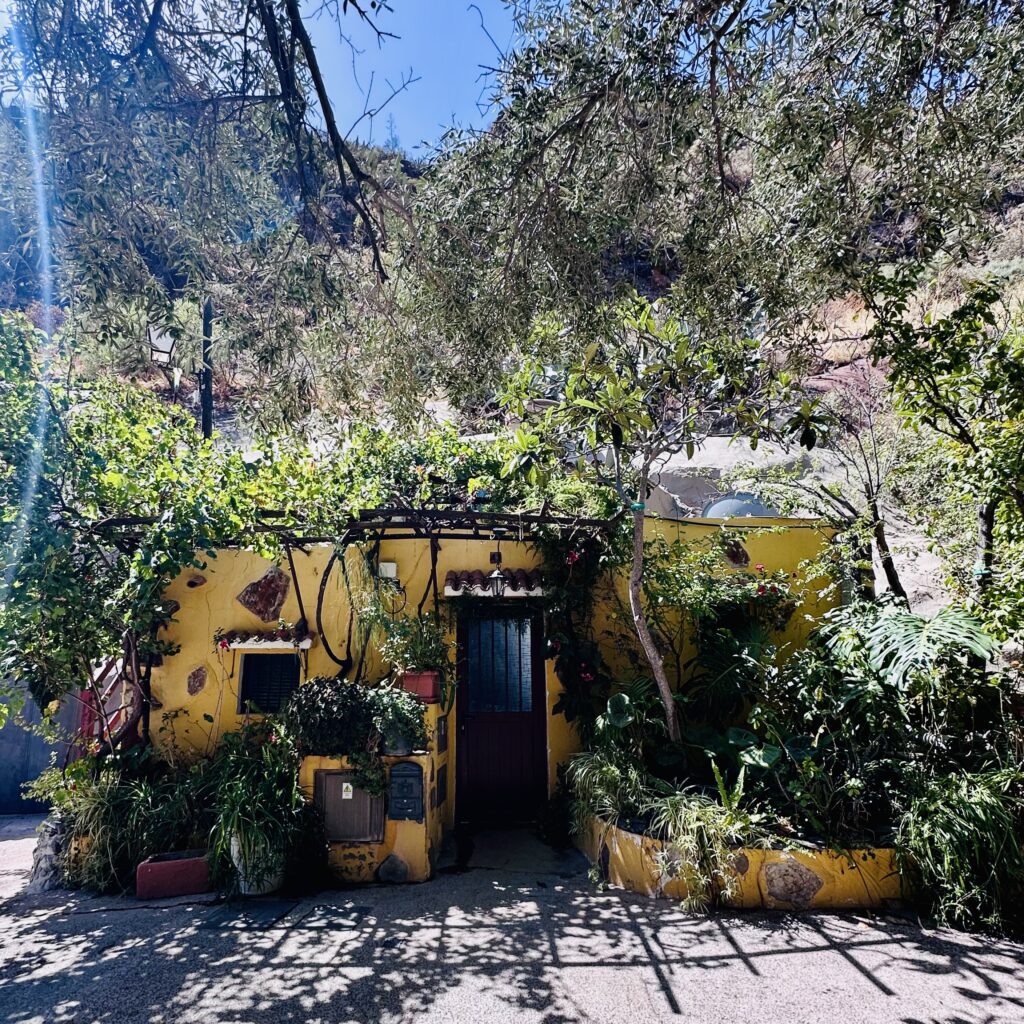
Barranco de Guayadeque. Photos: Merryn Johns
On a crest in the valley is a restaurant carved directly into the rock! Welcome to Restaurante Tagoror, one of Gran Canaria’s most distinctive places to enjoy a traditional Canarian lunch. Tagoror pairs rustic island cooking with an experience as much about the setting as the food. Inside, a network of excavated chambers carved into volcanic rock unfolds. Two main galleries branch into smaller, cave-like rooms. The atmosphere is earthy and almost cinematic. In fact, a music video was recently filmed there. Rock walls and ceilings surround the wooden tables, creating intimate spaces that echo joyfully. The name comes from a tagoror, an assembly or meeting place for indigenous societies of the Canary Islands.
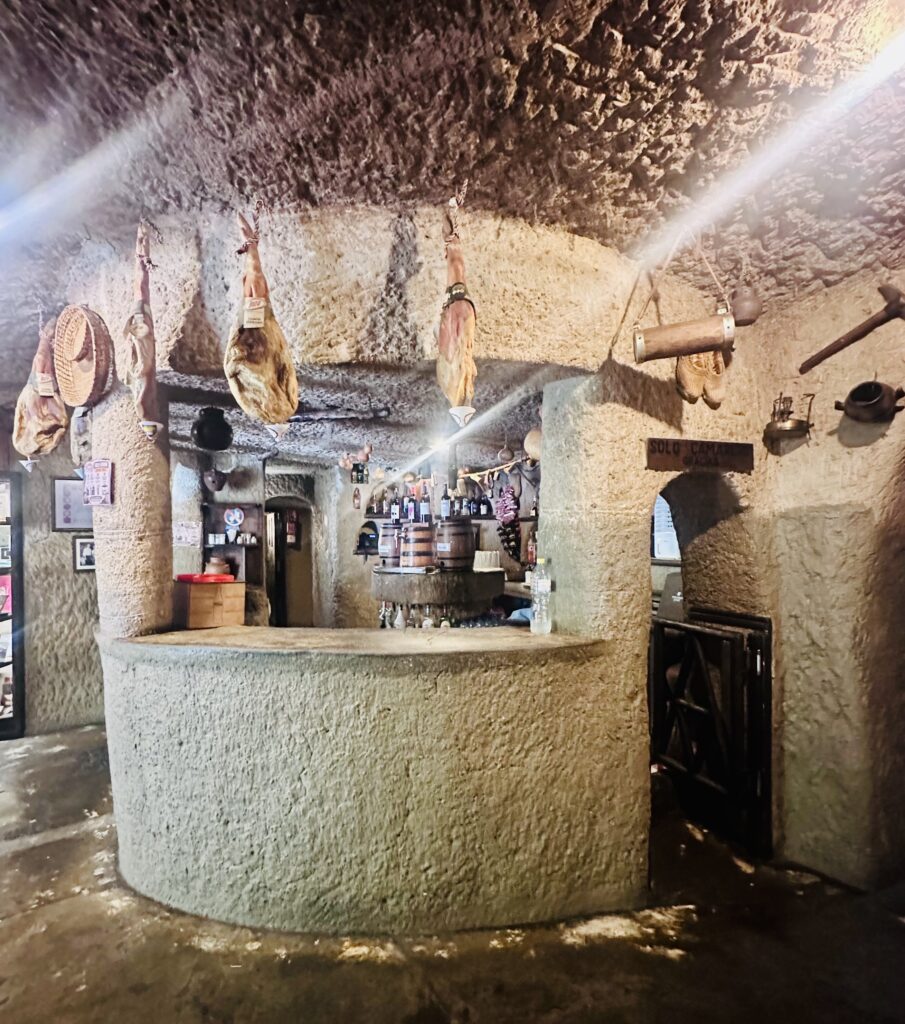
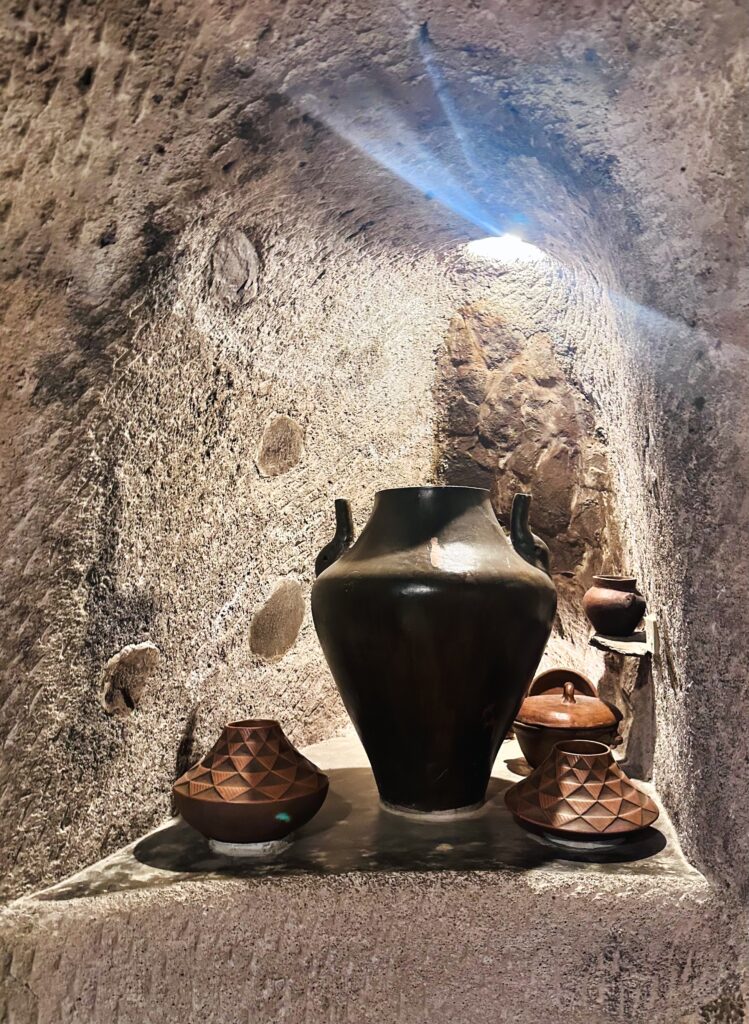
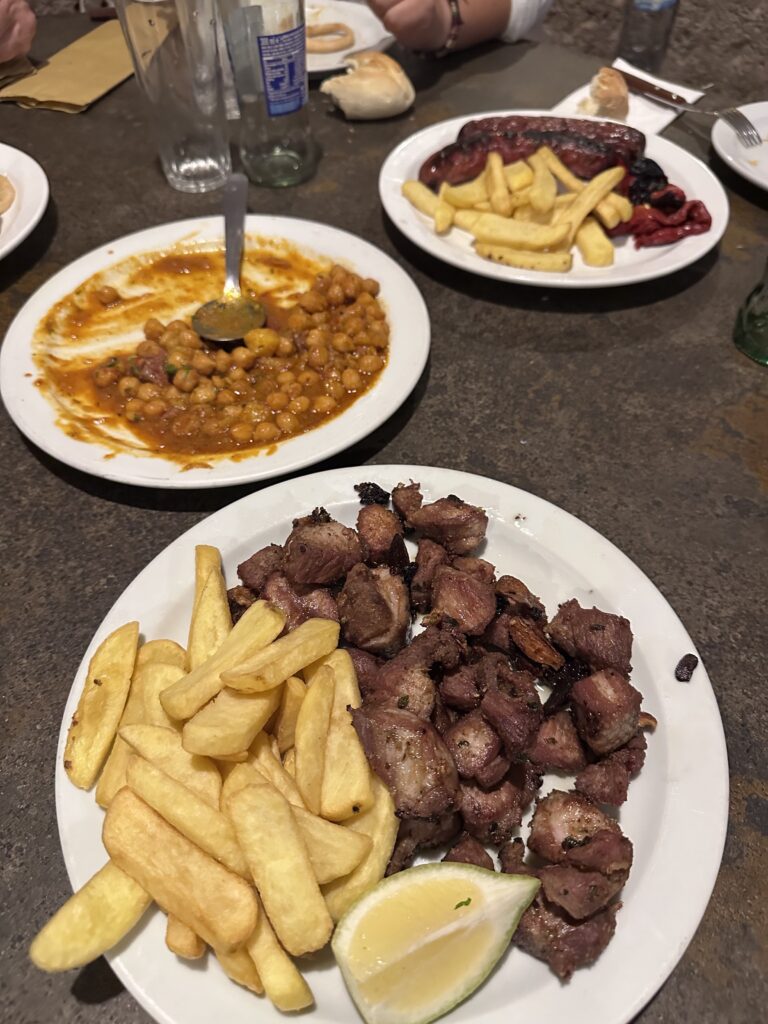
Bar-Restaurante Tagoror. Photos: Merryn Johns
The food is traditional Canarian—generous and hearty: grilled meats and stews, all prepared for maximum freshness, authenticity, and comfort. On a hot day, pair your papas arrugadas con mojo (tiny potatoes boiled in salted water until their skins wrinkle, served with red and green sauce) with an ice-cold beer.
A powerful, wild, yet tranquil vibration fills this area. During my research, I learned that in the 14th Century, European slave-raiding so angered the native population that they fought back against the missionaries, even throwing some of them into Jinámar Ravine, in a backlash of resistance that lasted almost 50 years before the ultimate Castilian conquest.
The easiest way to get there is by rental car or a prearranged taxi or private tour. From the southern resort area around Maspalomas, where we stayed, it takes roughly 45–60 minutes, depending on traffic and your starting point. From Las Palmas, allow approximately 35–50 minutes.
Break Bread in a Picturesque Village
Nestled in the island’s eastern highlands, Agüimes Village is Gran Canaria’s ultimate hidden gem for travelers seeking authentic Canarian charm as locals experience it. Walking its beautifully preserved historic streets feels like moving through a living, pastel-colored canvas, where narrow cobblestone lanes lead to quiet plazas lined with striking bronze sculptures and traditional stone architecture. Agüimes is on your way to or from the dramatic Guayadeque Ravine.
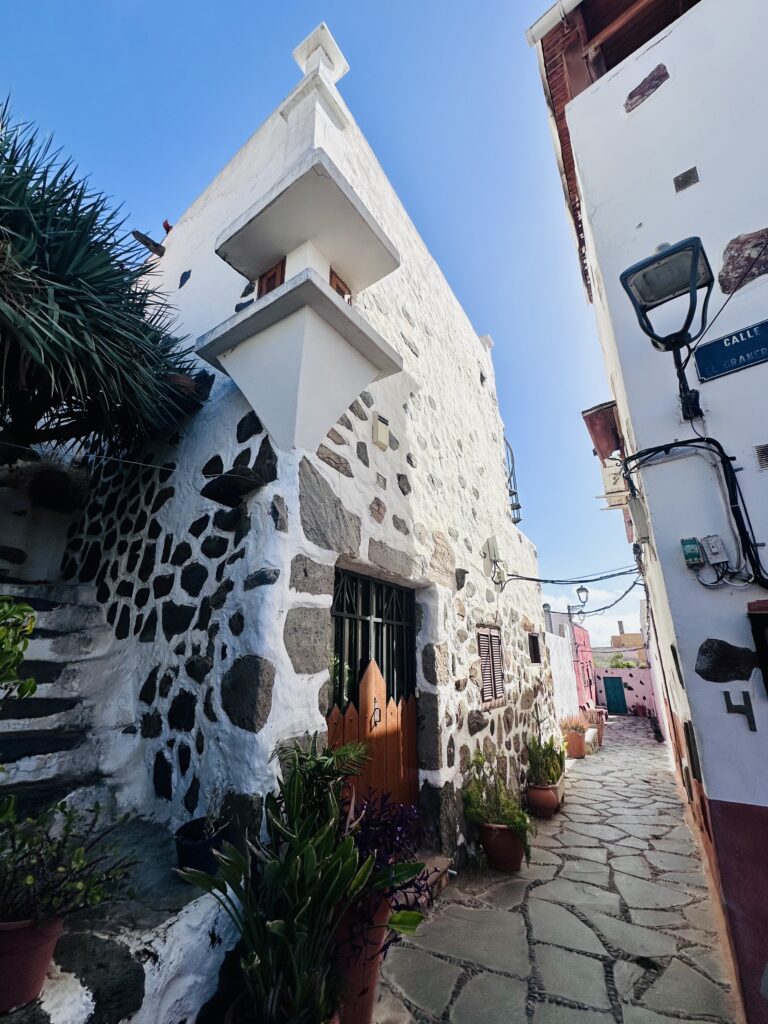
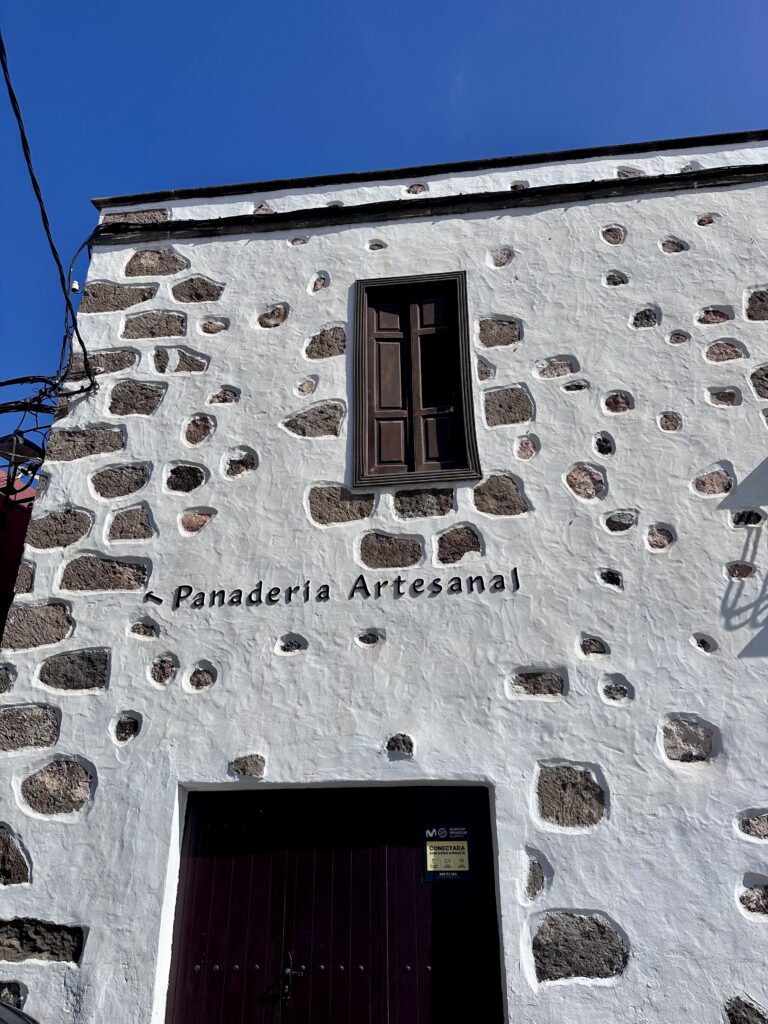
Agüimes Village. Photos: Merryn Johns
If you head up into the sloping streets of the historic village, you will find Panadería Villa de Agüimes, a highly rated, traditional artisan bakery tucked away on Calle Juan Alvarado y Saz. The quintessential bread roll you will find here—and in any café, bar, or bakery across Gran Canaria—is the bollo canario.
The nearby historic town of Ingenio best exemplifies Gran Canaria’s old-world roots, such as sugar-cane milling and embroidery (calados).
South to Sunny Maspalomas
The classic Gran Canaria beach vacation—particularly if LGBTQ travel is your preference—is in the south. Maspalomas and neighboring Playa del Inglés form the island’s great resort area, but the word “resort” doesn’t quite capture it. Behind the hotels lies an extraordinary natural landscape: the Maspalomas dunes, a protected expanse of golden sand sloping down to the Atlantic, and, behind them, natural wetlands and bird habitat.
To the west stands the Faro de Maspalomas, its iconic lighthouse. Construction began in the 19th century, and the lighthouse began operating in 1890. Today it is one of Gran Canaria’s most recognizable landmarks. The area around the lighthouse, palm oasis, beach, and dunes is particularly beautiful toward sunset.
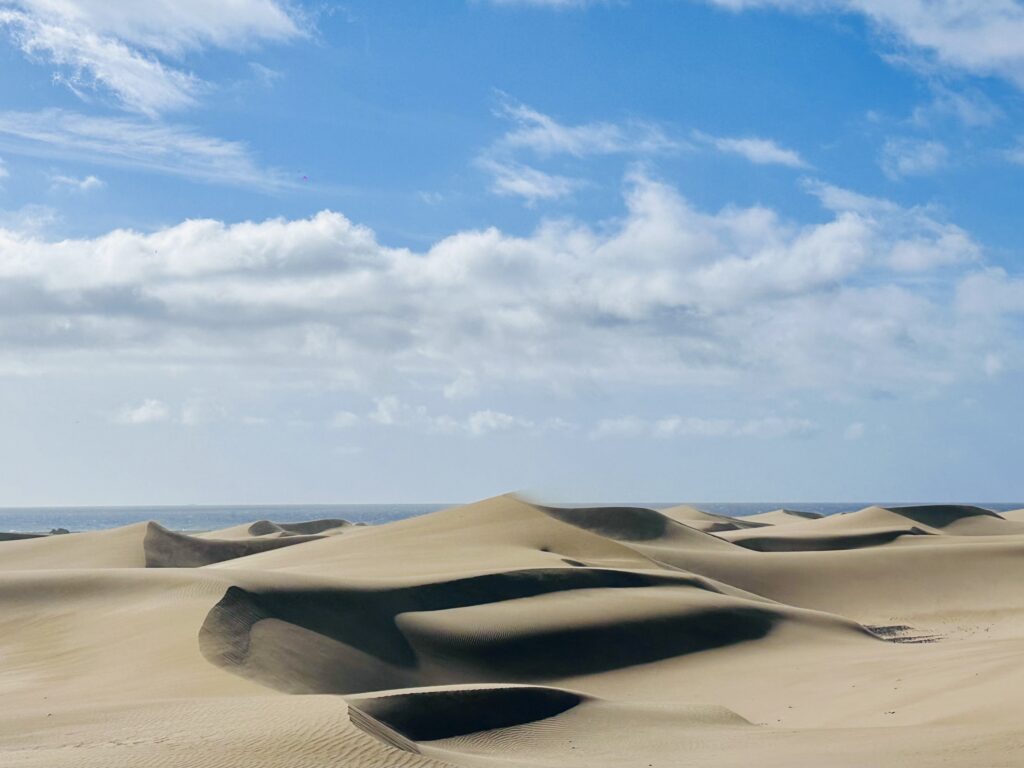
Maspalomas has a long-established LGBTQ identity that has integrated into the destination, not tucked away in one discreet neighborhood. You can stay in a luxury hotel, spend the afternoon on the beach, have dinner overlooking the ocean, and then head to the Yumbo Center for a night out—all without needing to treat LGBTQ life as a separate part of your vacation.
The official tourism board warmly markets Gran Canaria as a major LGBTQ destination, and the island’s “live and let live” attitude is one reason queer travelers have been coming here for generations. It also helps that this area is popular with travelers from more liberal parts of Europe, where enjoying life and corporeal pleasures is normal.
The Beach—and the Gay Beach
Playa de Maspalomas is big, beautiful, and gloriously informal, drawing diverse folks to this edge of the Atlantic. Along its long sweep of golden sand, you’ll find unofficially defined sections around the numbered beach kiosks, including a well-established naturist area and a popular LGBTQ stretch.
The gay nude beach, which I could actually peep from my suite’s balcony, is traditionally associated with Kiosk 6 or 7. Just look for the rainbow flag and the abundance of naked men! This is Spain, so you can buy wine on the beach, smoke, and walk around nude, should you wish to. The atmosphere is relaxed and international.
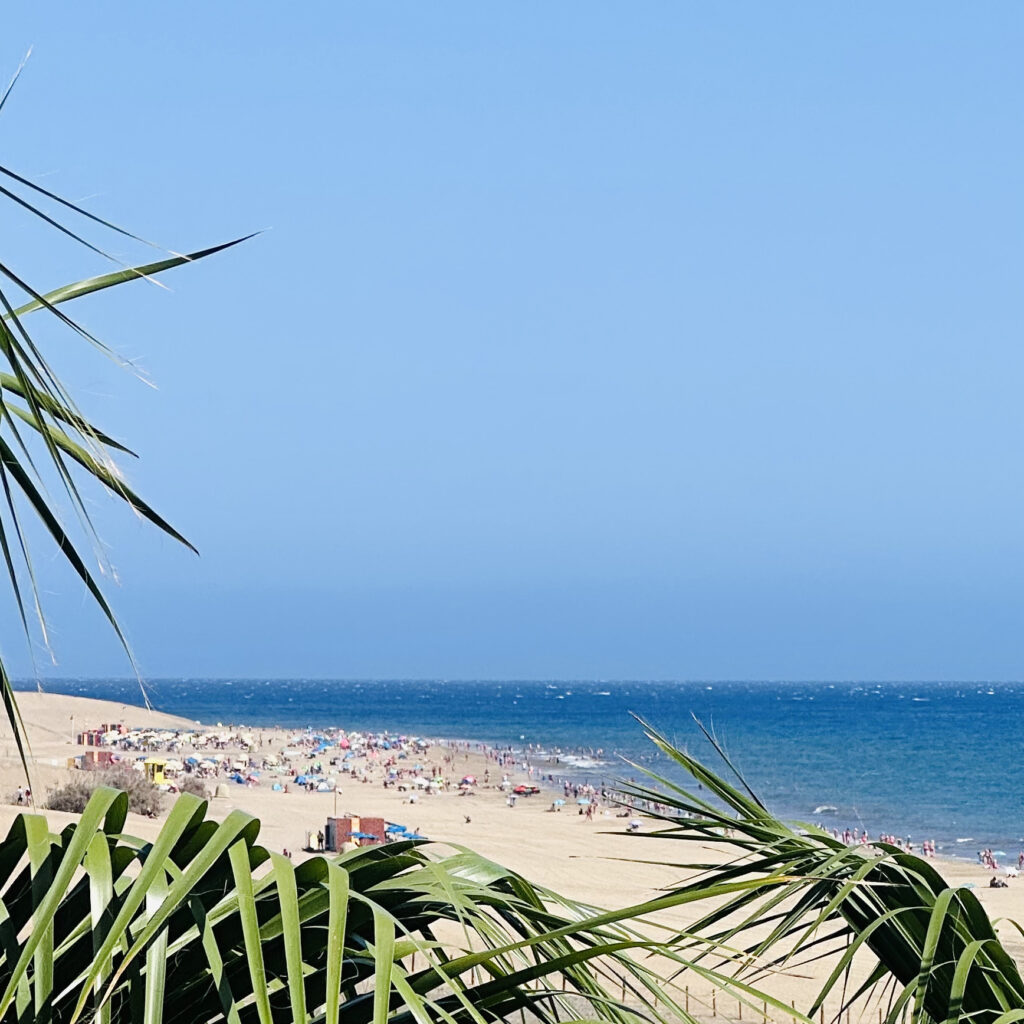
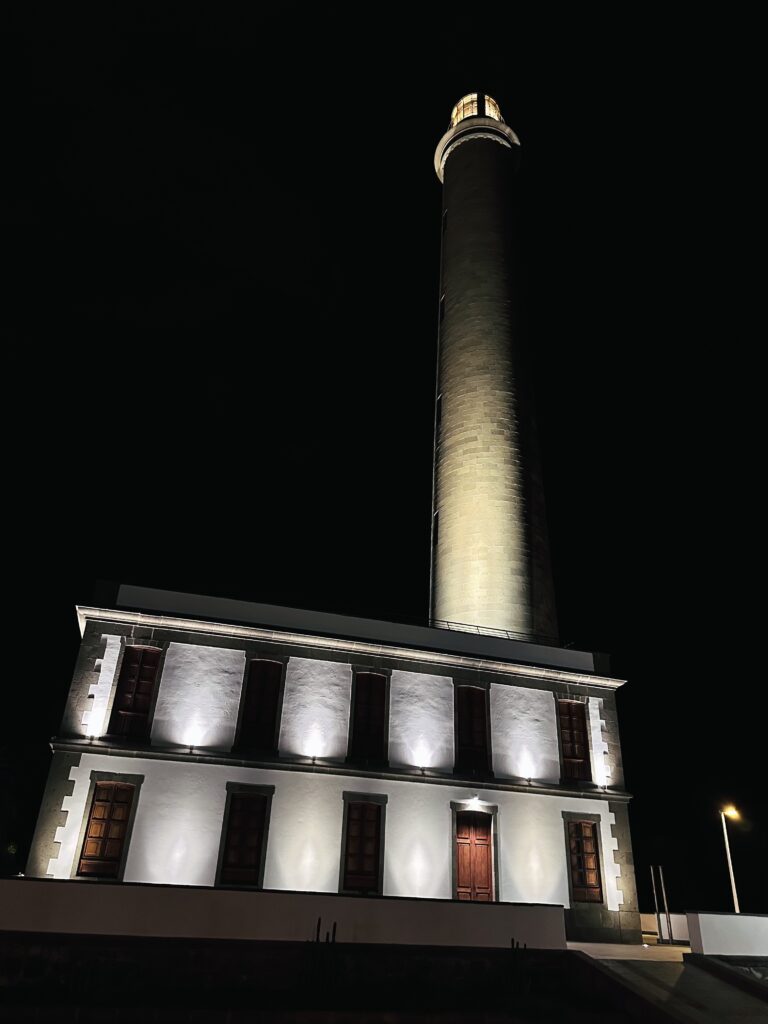
Photos: Merryn Johns
Because the dunes are a protected natural environment, stay on marked paths and avoid trampling fragile vegetation. To view the dunes without going to the beach, head to the Maspalomas dunes viewpoint near the southern end of Avenida de Tirajana, where marked paths lead into the reserve.
Another option is to approach from the Playa del Inglés side and walk toward the sea. The higher dunes present rippling golden sand on one side, with the contrasting blue Atlantic on the other. Go early or late in the day for beautiful light and slightly less intense heat. And bring water, a hat, sunglasses, and sunscreen. Sand is much harder to walk through than it looks, and if it’s windy, it blows up.
Where to Stay: Two Family-Owned Classics
Both of these hotels belong to the family-owned Seaside Collection, founded by German hotelier Theo Gerlach. His children, Anouchka and Gregor Gerlach, now continue the family business. But the two properties offer very different experiences.
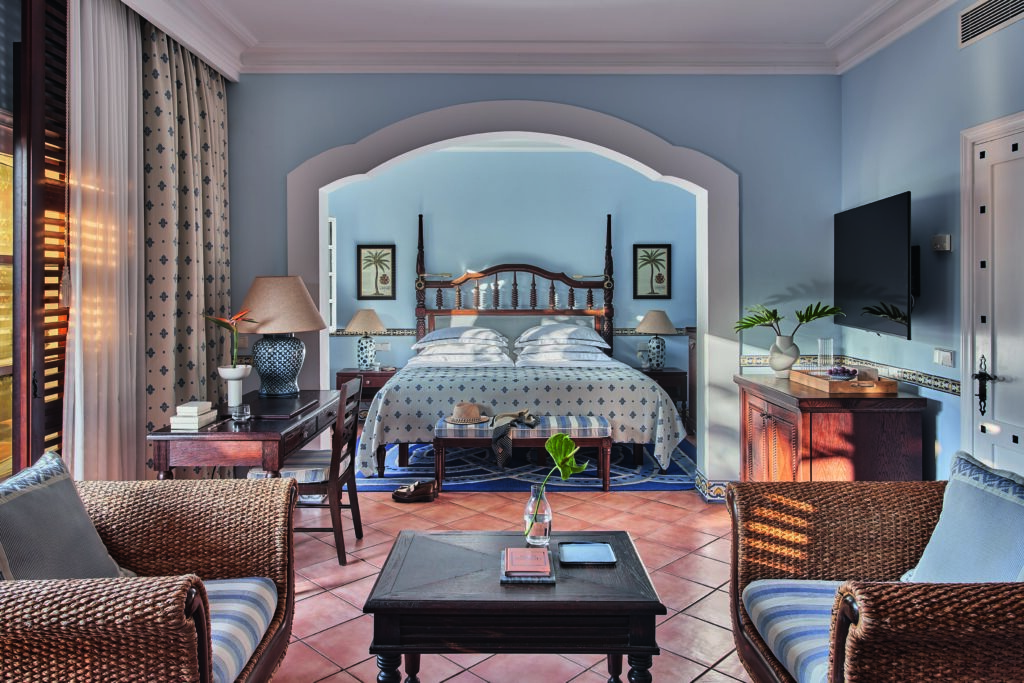
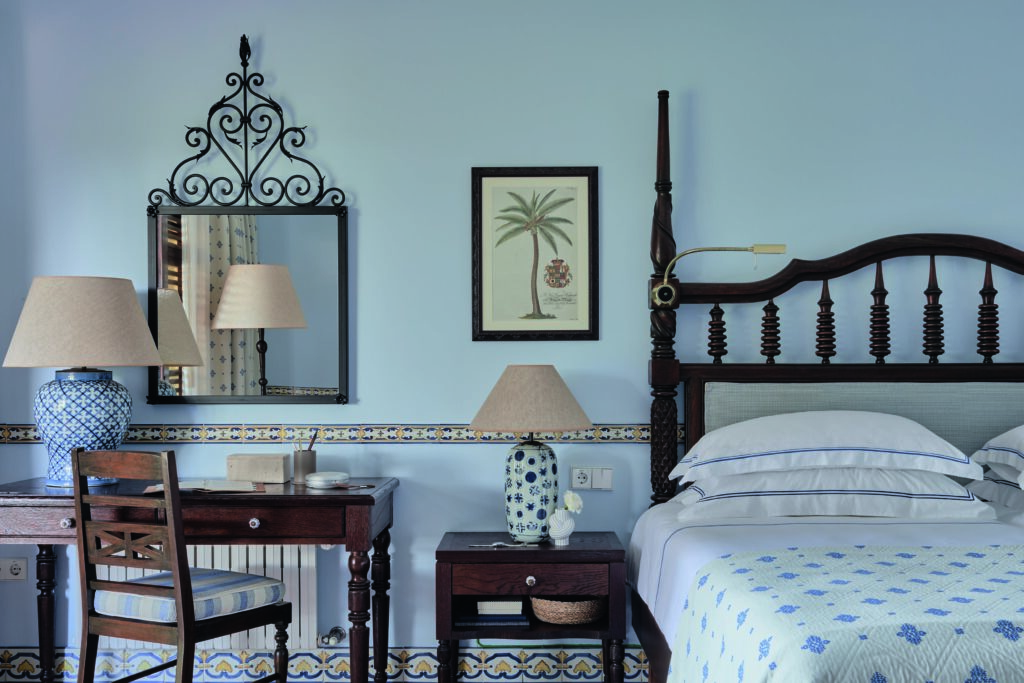
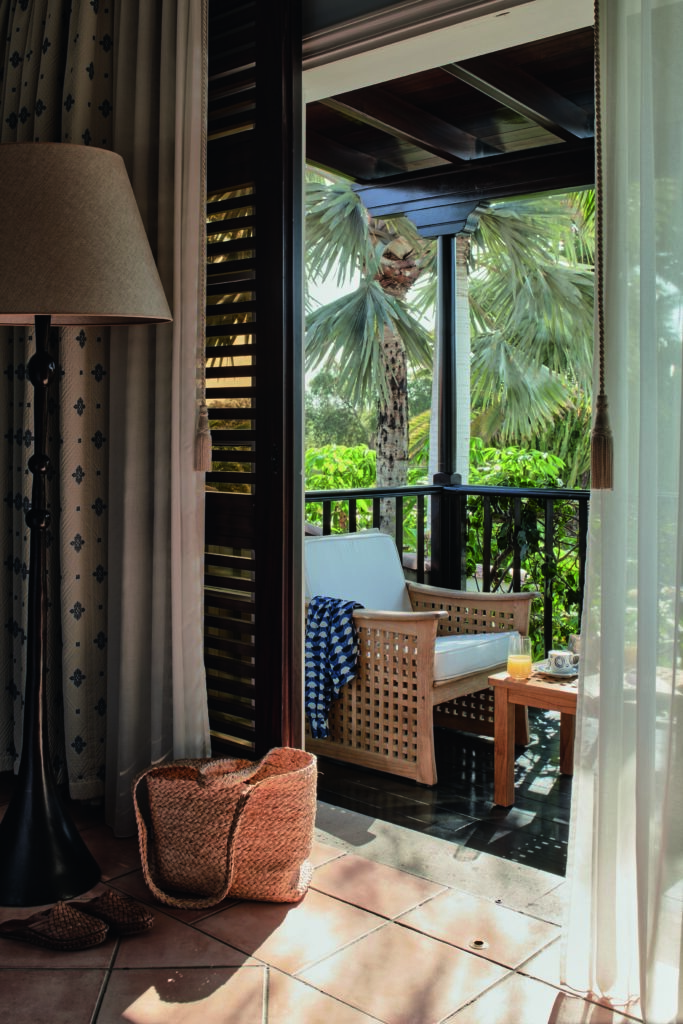
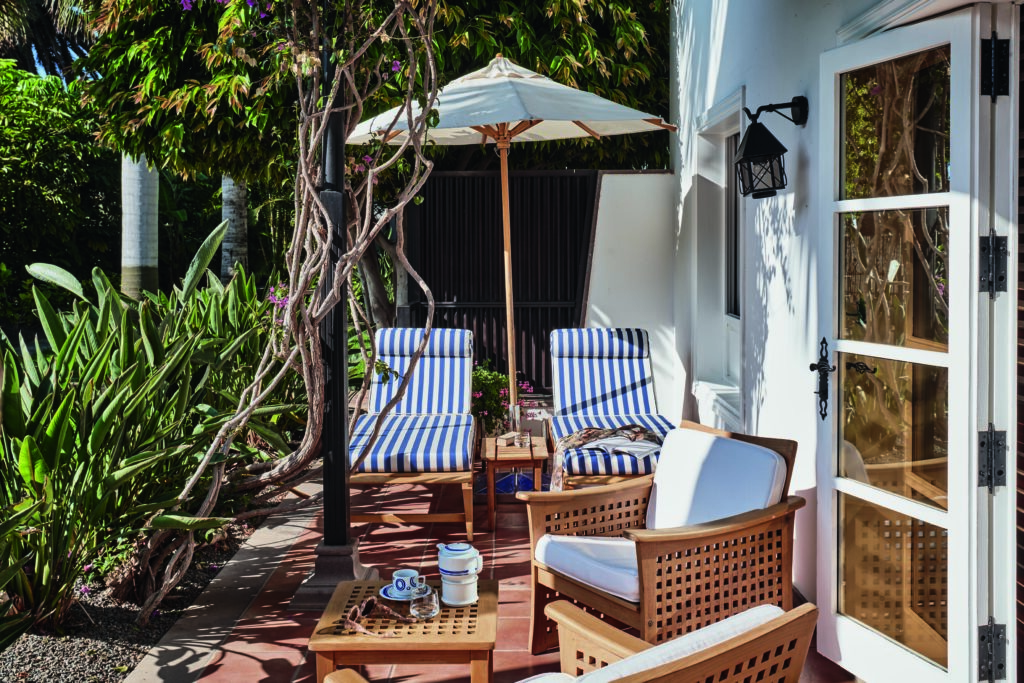
The Seaside Grand Hotel Residencia offers sophisticated tranquility on a grand scale. Set in the palm oasis of Maspalomas, this five-star luxury property feels more like a private Spanish estate than a conventional resort. It is close to the dunes and beach but tucked away enough to feel sedate and exclusive.
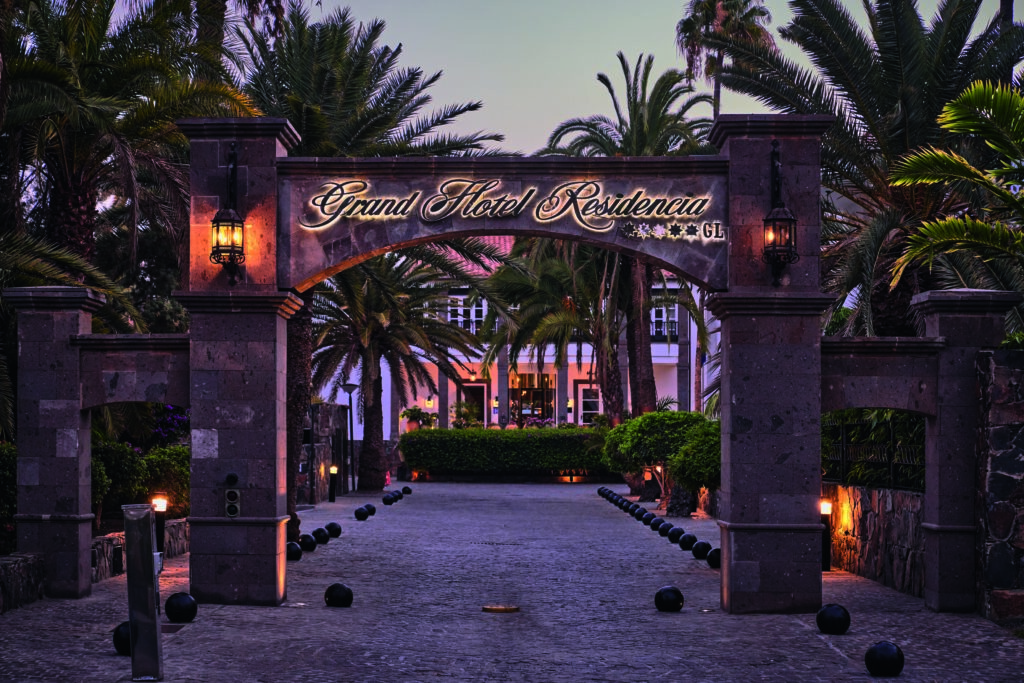
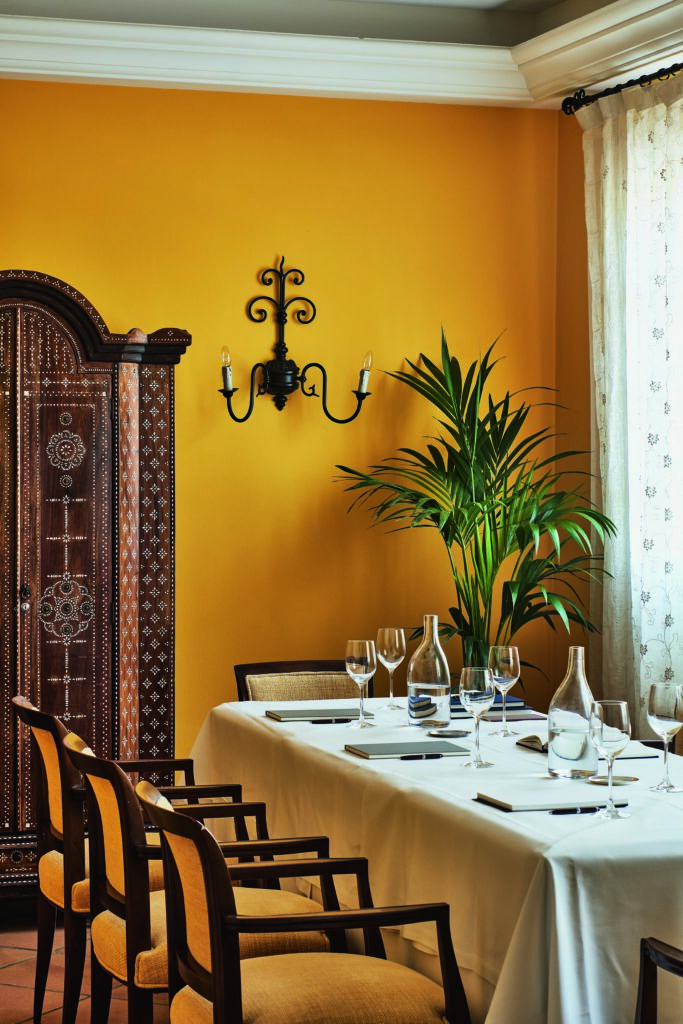
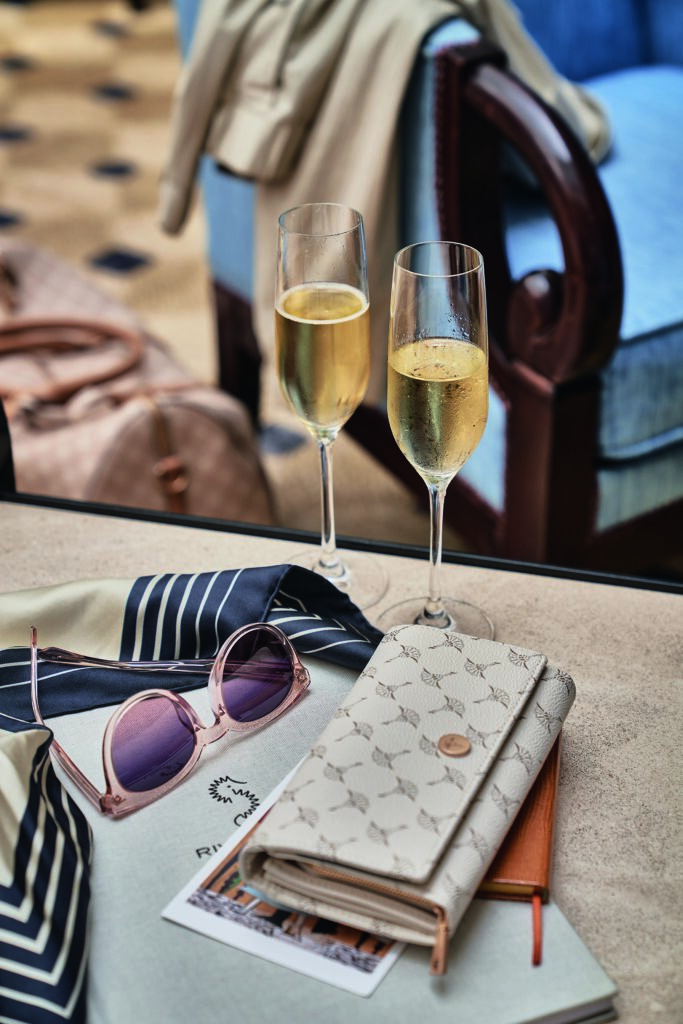
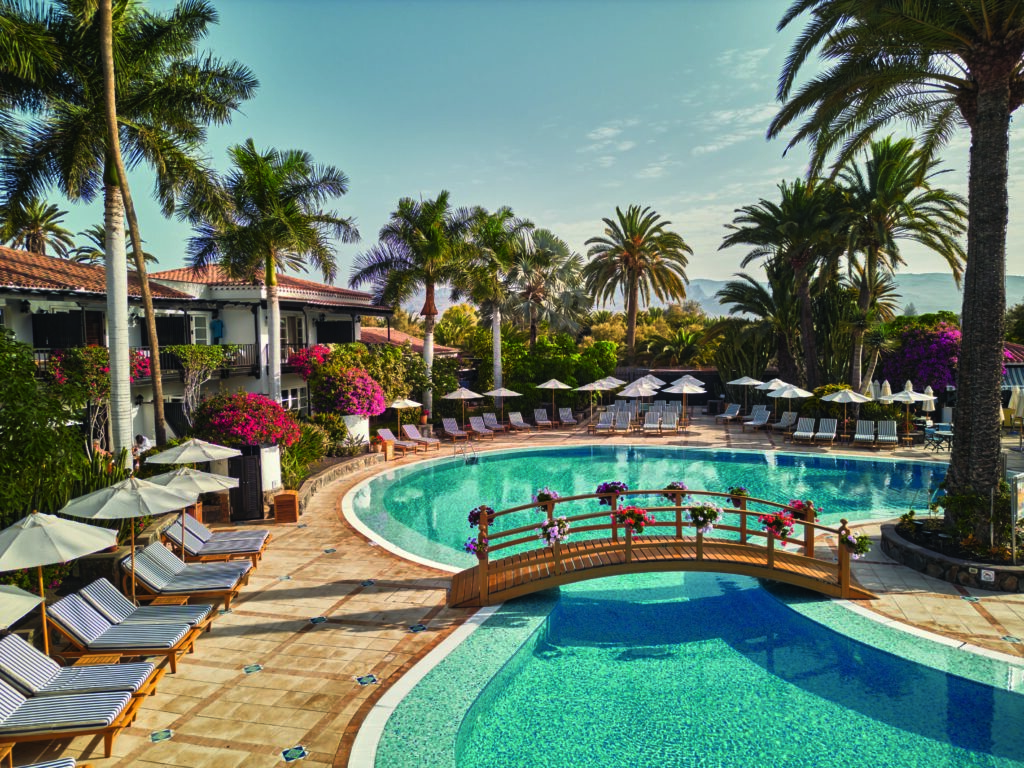
Photos: Seaside Grand Hotel Residencia
Expect elegant architecture, luxurious furnishings and amenities, lush gardens, personalized service, and gourmet food and wine. This property is Gran Canaria’s only member of The Leading Hotels of the World.
The Seaside Palm Beach is a completely different proposition—and a lot of fun. Built in 1975, it is one of Maspalomas’s landmark hotels, with a distinctive mid-century/retro aesthetic, colorful interiors, and a relaxed yet glamorous sense of place. This is where we stayed.
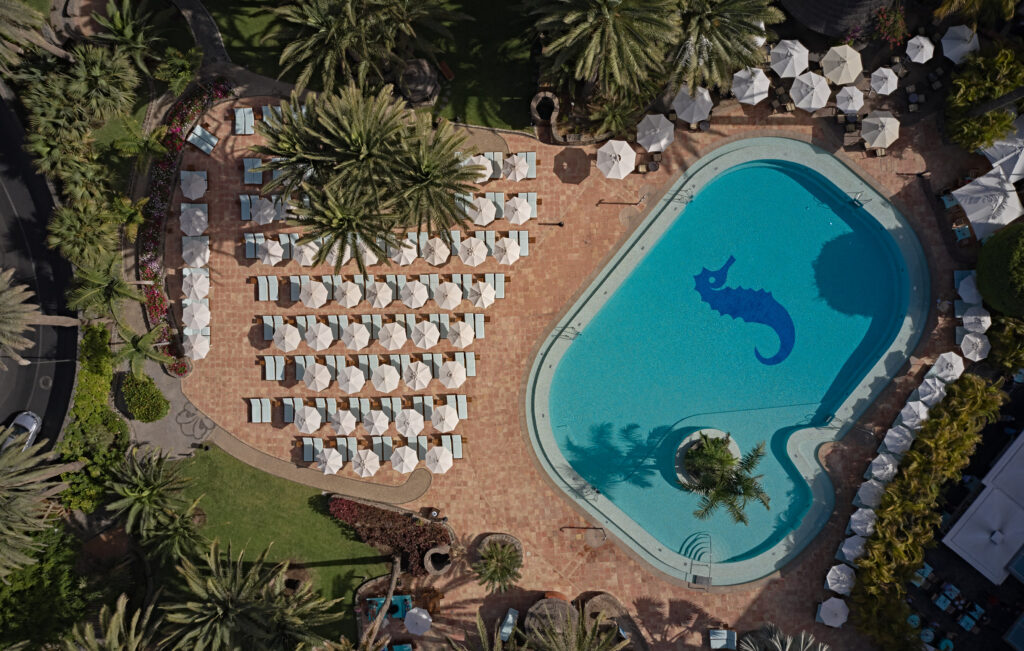
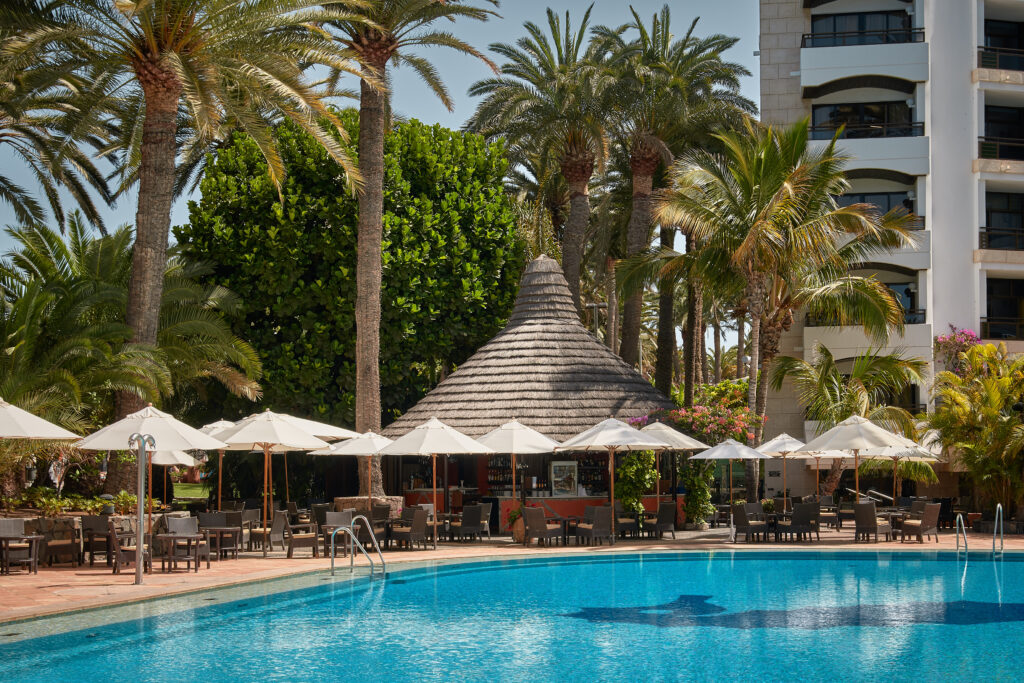
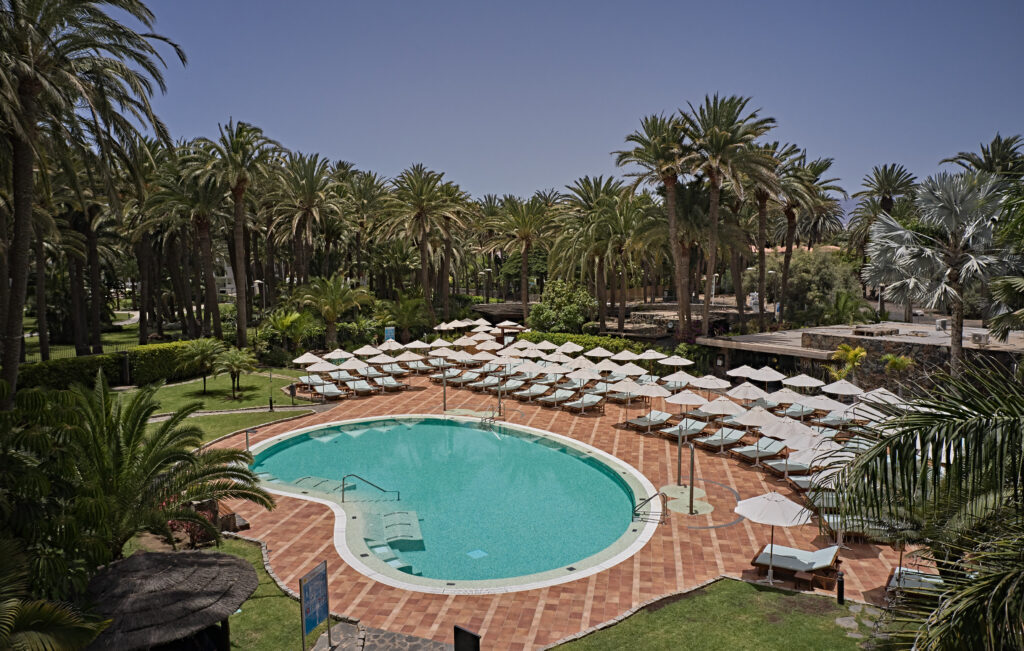
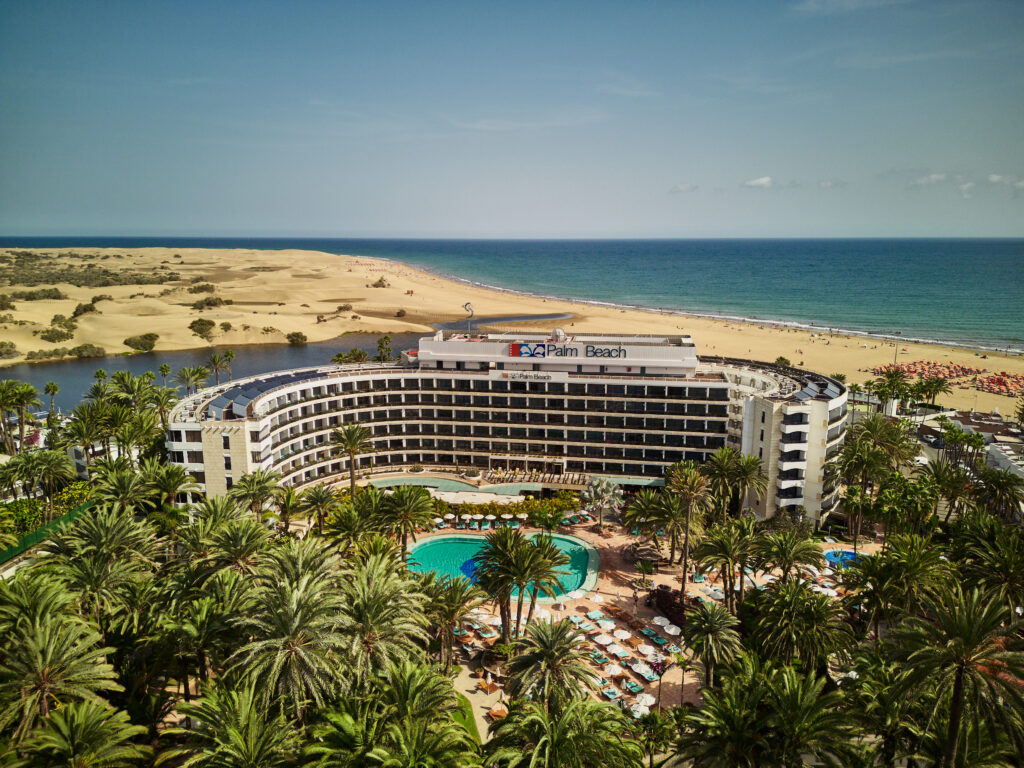
Photos: The Seaside Palm Beach
Its location is particularly appealing to LGBTQ travelers. You are close to the gay beach, the lighthouse, restaurants, and the evening action while still having a five-star hotel to retreat to afterward. Seaside Palm Beach is social and playful, with colorful rooms, tropical grounds, and a huge, deep swimming pool. There’s also a smaller saltwater pool reserved just for adults, plus a spa center. An African outdoor bar has live music most nights.
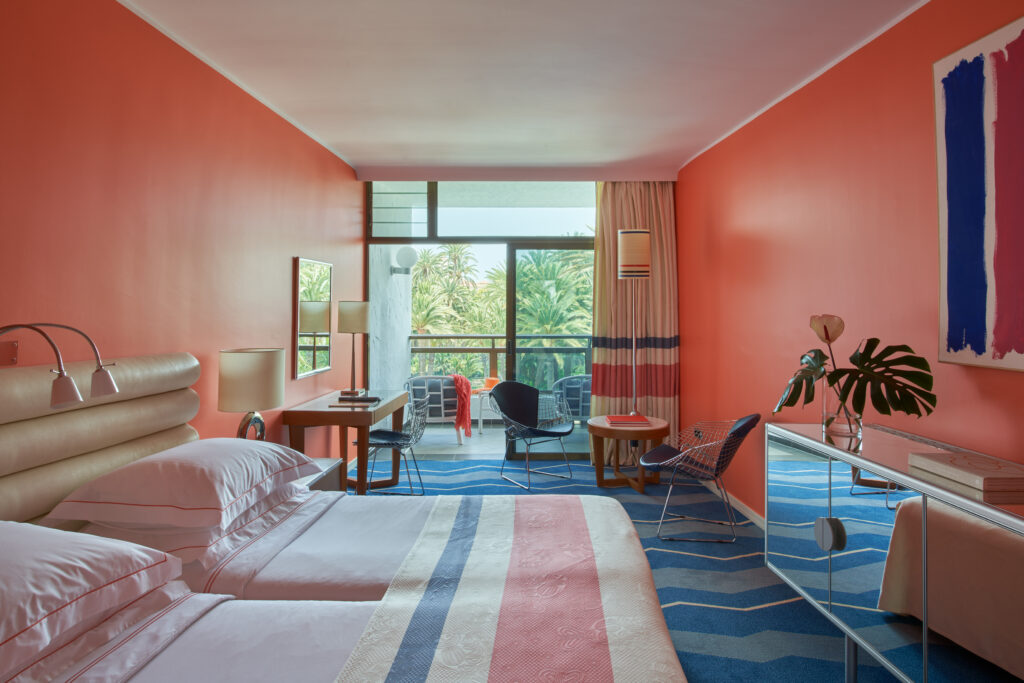
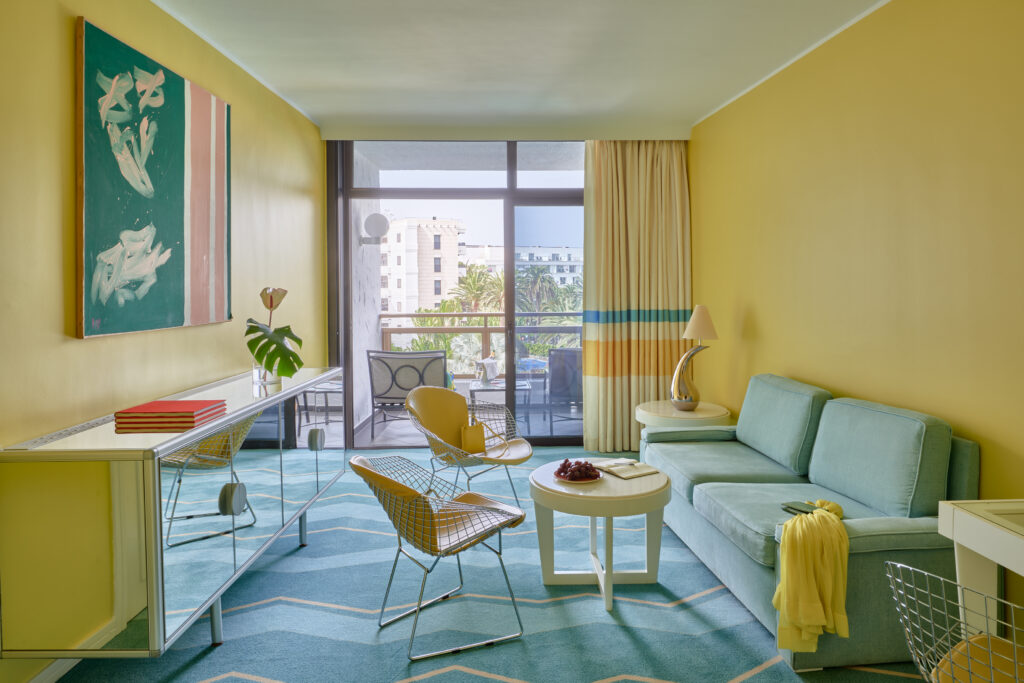
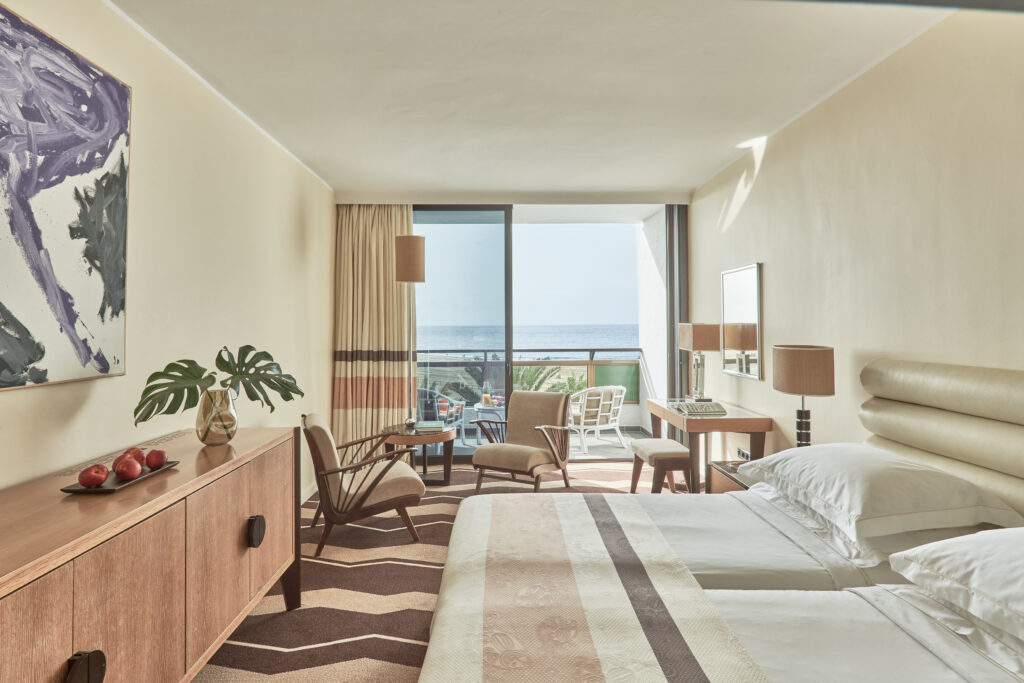
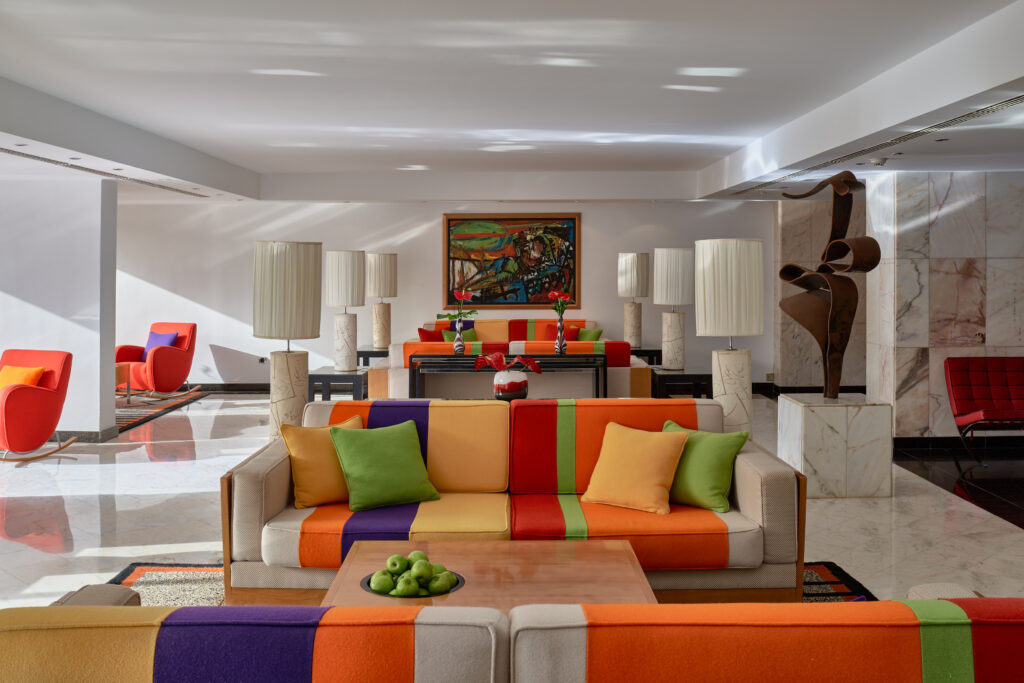
Photos: The Seaside Palm Beach
The buffet breakfast is terrific, and some of the themed buffet dinners are, too. Because many hotel guests are British, Scandinavian, or German, the hotel often features classic comfort food alongside the best local produce and fresh seafood. I’m still thinking about the jumbo grilled prawns I enjoyed on my first night.
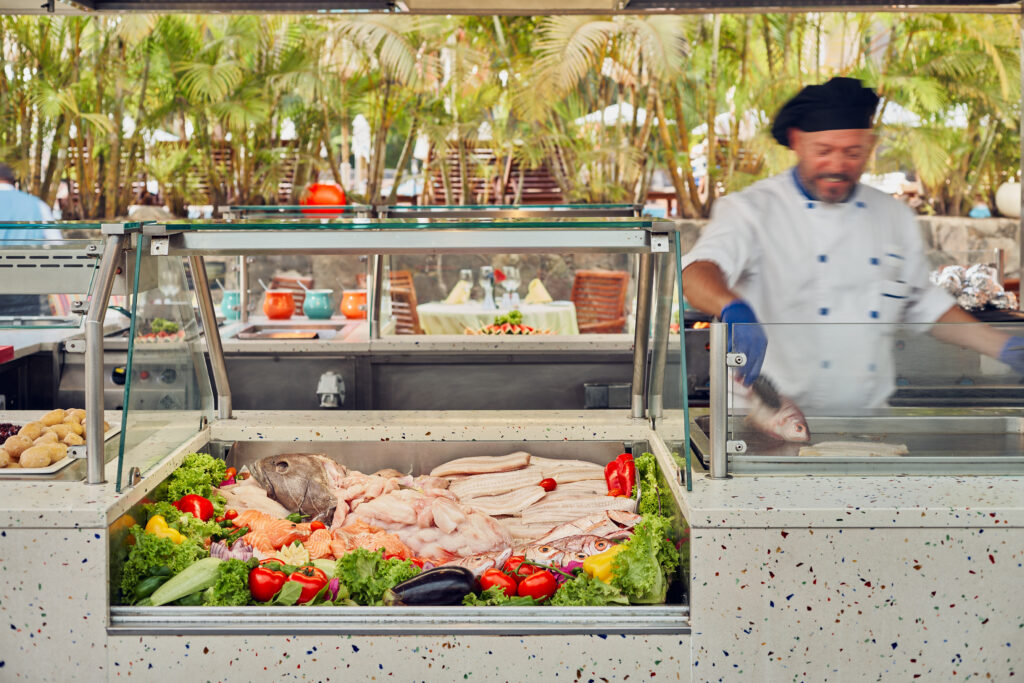
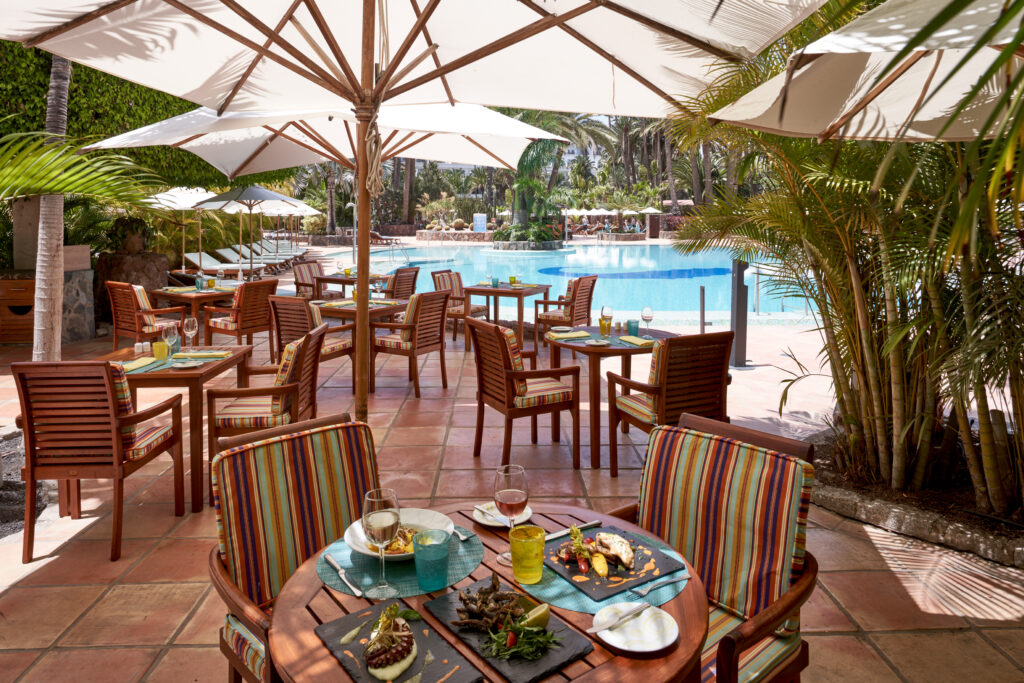
The Yumbo: Where the LGBTQ+ Party After Dark
If Maspalomas is the beach, Yumbo Center is the commercial headquarters. During the day, it is a shopping and entertainment complex—the world’s only LGBTQ mall. After dark, it becomes one of Europe’s most recognizable LGBTQ nightlife districts. Bars, drag shows, cocktail terraces, dance clubs, and venues cater to different parts of the LGBTQ community—from leather to lesbians to bears. You can have a quiet drink, watch drag, dance until dawn or simply sit outside and people-watch. You can get a haircut, pick up some new fetishwear, fuel up at the Chinese buffet or pizza place for just a few euros, sink a few cold ones at the Adonis Pub. Then see what’s happening in the darkroom at Tom’s Cruising Bar (guys only)…

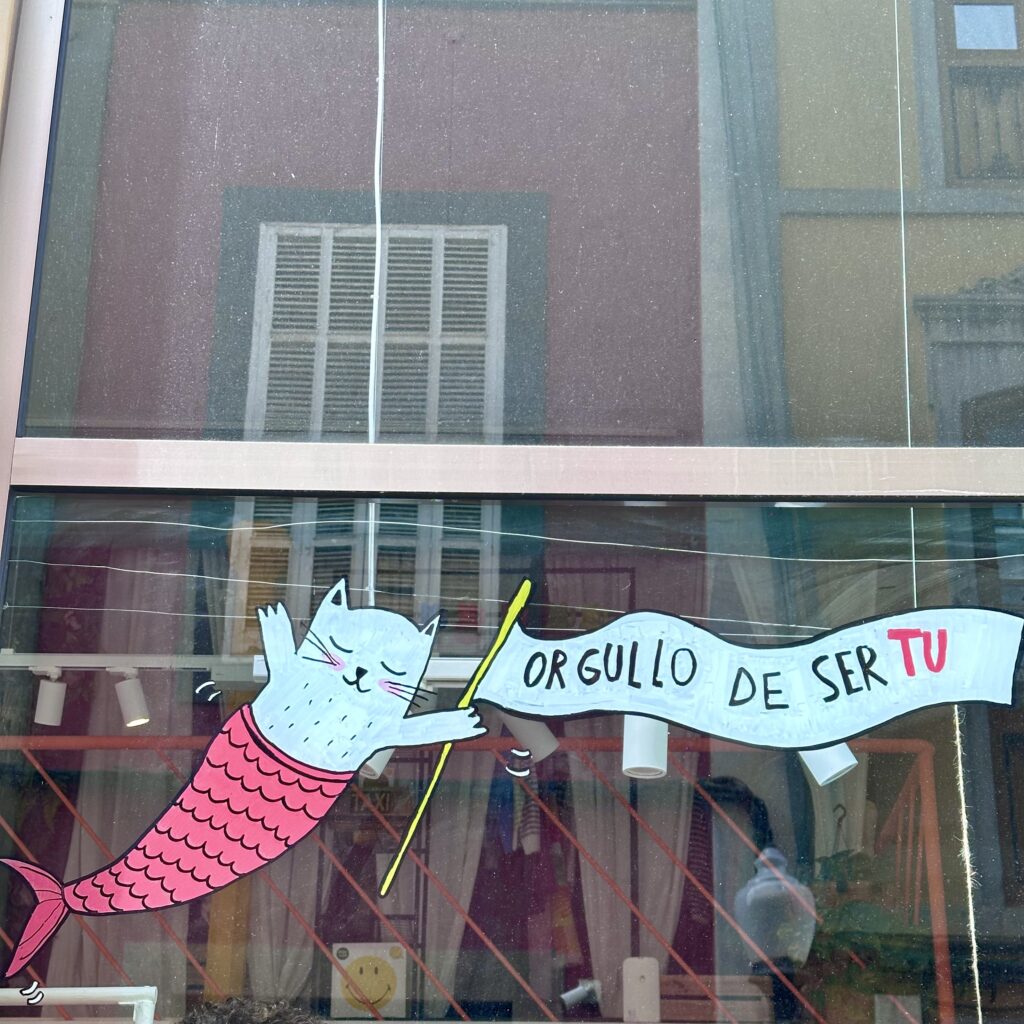
From the hotel, the Yumbo is a 15-minute taxi ride. It’s the quickest and simplest option, especially if you plan to have a few drinks. I promise you’ll stay longer than you think. Also, plan to go later, since all the action doesn’t start until about midnight.
When we visited Gran Canaria, Maspalomas Fetish Pride (October 1–12) was on, attracting an international crowd and a broad range of fetish communities. Then comes Winter Pride (November 2–8)—one of the island’s signature LGBTQ events, with parties, pool events, live entertainment, and the famous Pride Walk. Winter Pride is particularly appealing to North Americans seeking a warm-weather Pride escape as much of the continent heads into winter. But year-round, Gran Canaria is safe, sophisticated, and a unique Spanish experience well worth your time.
Dinner on a Tiny Heart-Shaped Island
We ended our trip with a visit to Anfi del Mar, a south-coast resort famous for its white beach, turquoise water, and sunset views. I immediately got Miami vibes, thanks to Bjørn Lyng, the Norwegian industrialist and entrepreneur, who created the massive resort property, including its manmade, heart-shaped Anfi Island. Local lore says Lyng had the isle built as a romantic gift for his wife. Fittingly, this was our alfresco farewell to Gran Canaria—with love.
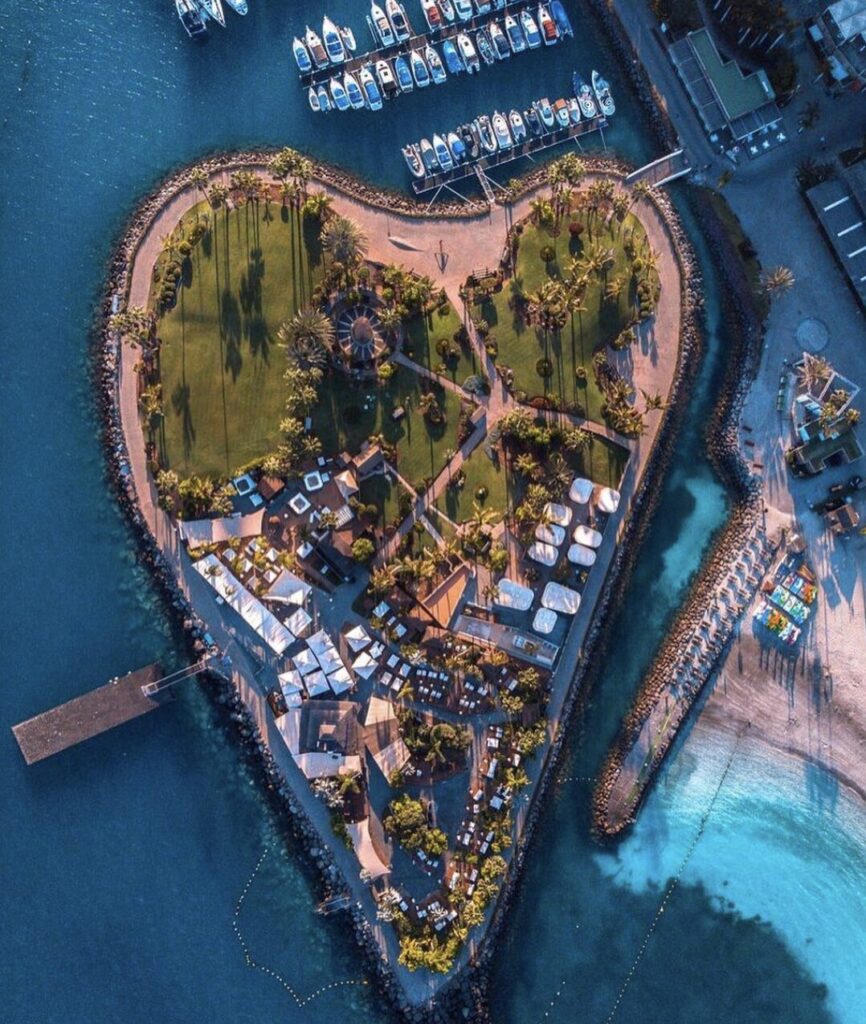
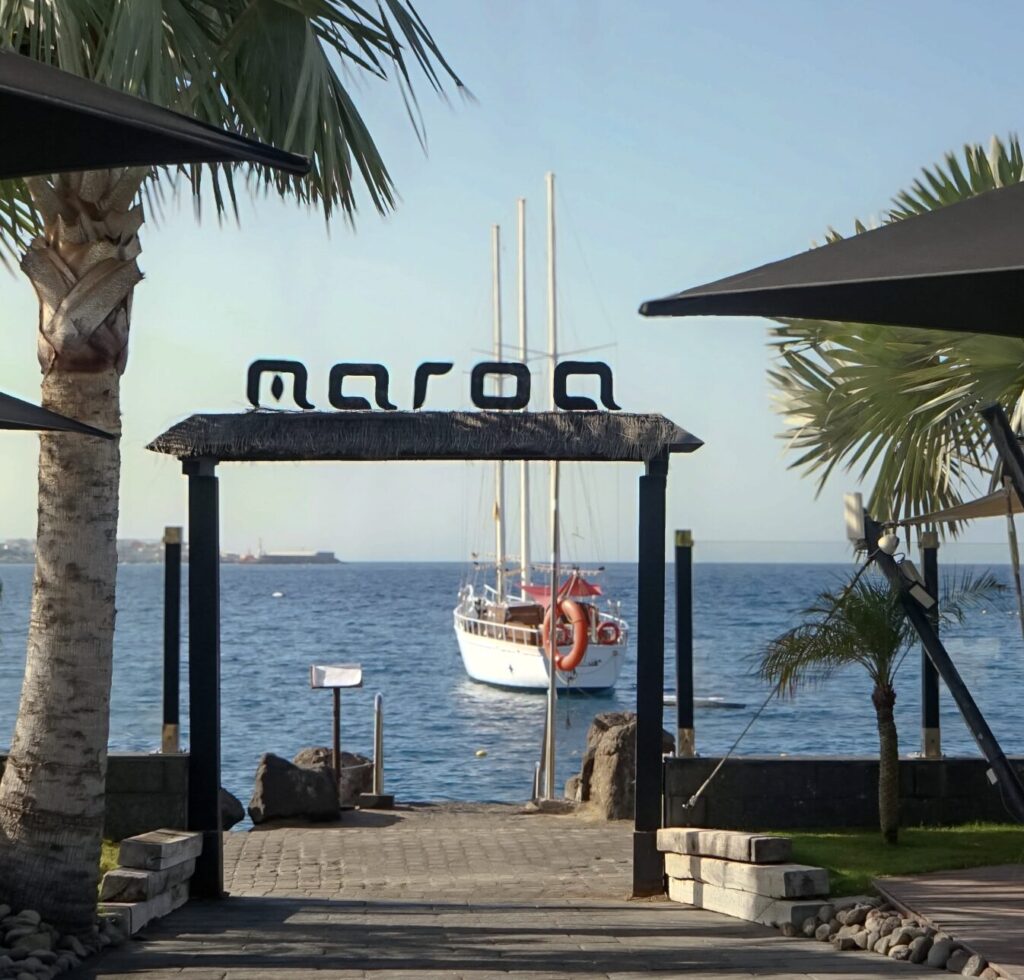
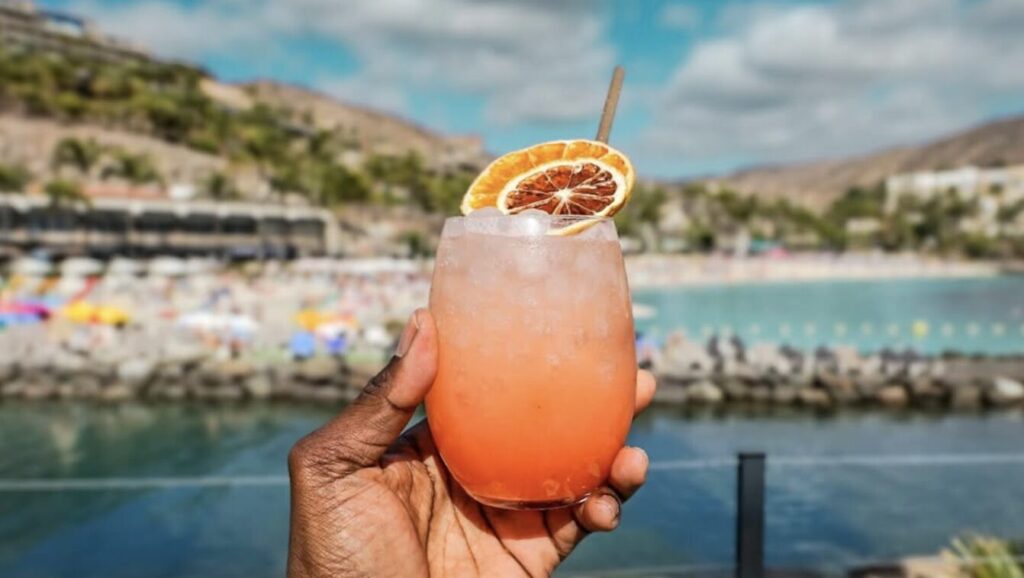
The main attraction, accessible via a footbridge and through park-like grounds, is Maroa Club de Mar, a sprawling beach club featuring a restaurant, a solarium, and a chill-out terrace. This is the place to come for a late lunch, dinner, or to just drink something cold (perhaps a well-chilled glass of Cava Brut Nature, Spain’s answer to dry Champagne), stare at the Atlantic, and a little people-watching. The food leans Mediterranean, with paella and grilled seafood, or international fusion like tuna tartare and sushi. We enjoyed a more sophisticated dinner menu than the casual setting suggested.
Your Canarian Food & Wine Checklist
No matter what dining establishment—casual to upscale—you’ll likely encounter Spanish favorites, international fusion, as well as some variety of the following traditional dishes:
Papas arrugadas with mojo: The island’s unofficial signature dish of boiled potatoes with red (peppers) and green (herbs) sauce, often served as a side with fish.
Gofio: Toasted grain flour used in everything from savory dishes to desserts. The local version of grits, but with a smoother texture.
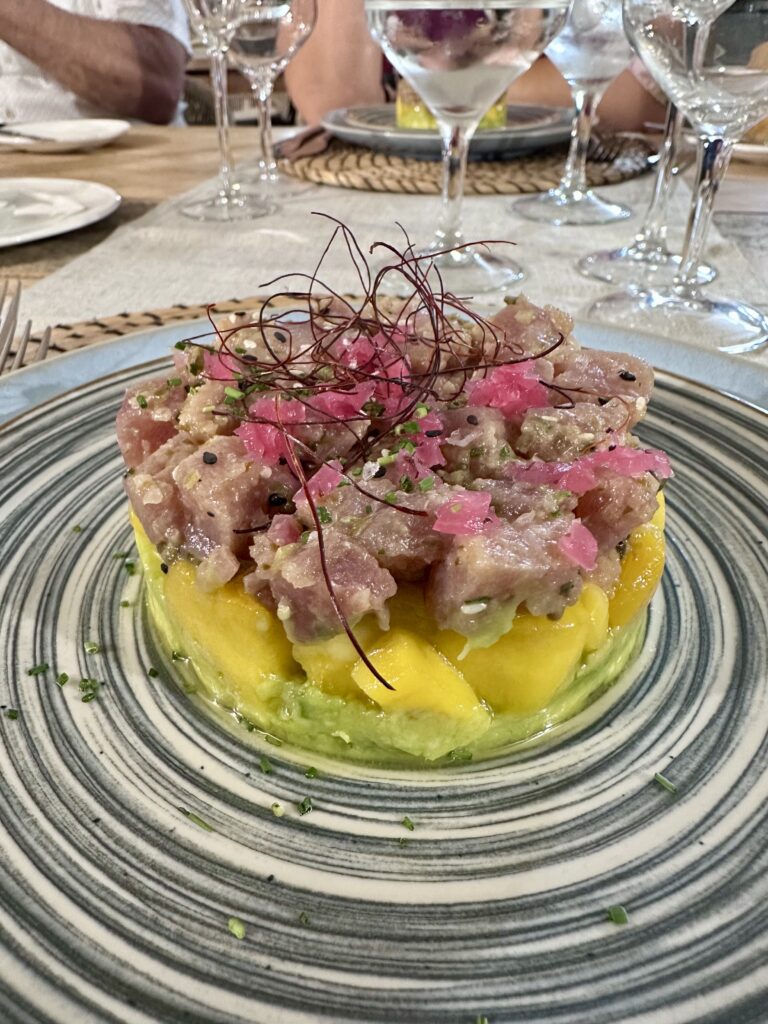
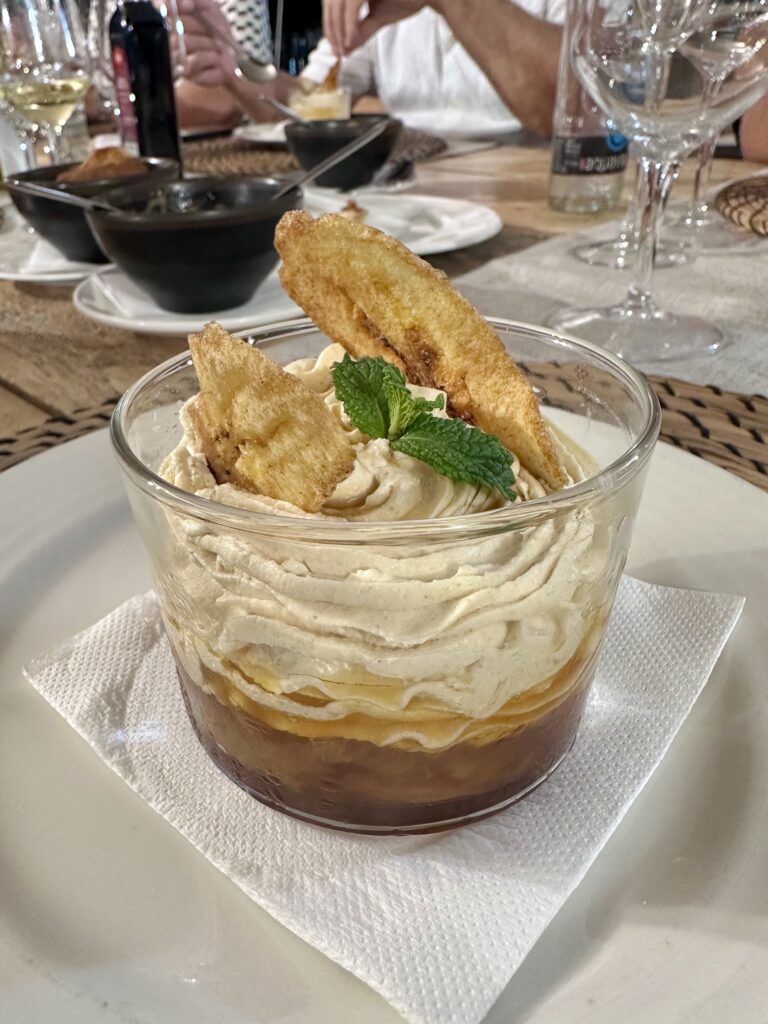
Two dishes from Maroa Club de Mar. Photos: Merryn Johns
Sancocho: Salted fish, traditionally served with potatoes, sweet potato, mojo and gofio.
Queso de cabra: Goat cheese is a Canarian staple and comes in many varieties, semi-hard, cured, and sometimes rubbed with paprika.
Ropa vieja: A hearty dish of shredded meat (flank steak, but often goat), chickpeas, and potatoes.
Cherne (Wreckfish/Stone Bass): A meaty white fish used as the core ingredient in the island’s famous sancocho canario stew or grilled in thick fillets.
Chorizo de Teror: A soft, spreadable sausage from the town of Teror.
Listán Blanco: This volcanic white wine is crisp, light, and dry, featuring sharp citrus notes, green apple, and a sea-salt salinity.
Know Before You Go
Weather: Maspalomas, Playa del Inglés and Meloneras tend to be warmer, drier and sunnier than Las Palmas and the north. The island’s trade winds and mountainous interior help create the difference. Average temperatures remain mild: winter days can be around the low 70s Fahrenheit, while summer is generally in the mid-70s to low 80s rather than relentlessly hot.
The best time to visit depends on what you want. For winter sun and LGBTQ events, November through March is the best time. If you just want to hit the beach and avoid crowds, choose spring. For warm, generally dry weather, with temperatures between 81 and 88 degrees Fahrenheit, summer is the season, although the island can get breezier and busier. And remember that Gran Canaria has microclimates. You can leave a sunny beach in the south and drive into cooler, cloudier mountain weather surprisingly quickly.
Getting there, getting around: Gran Canaria’s international airport (LPA) is on the island’s east coast. For North Americans, the easiest strategy is to connect through a major European hub like Madrid. Once you land, getting around is straightforward. Public buses—known locally as guaguas—connect the airport with Las Palmas and the southern resorts. Route 60 links the airport with Las Palmas, while routes including 66 serve Maspalomas and the southern resort area. A taxi is easiest if you’re carrying luggage or heading directly to your hotel. Renting a car is worthwhile if you plan to explore the interior, vineyards, and mountain villages.
Currency and tipping: The euro (€). Credit and debit cards are widely accepted, but it’s wise to carry some cash. Tipping is optional. Perhaps roughly 5–10 percent for particularly good service is appreciated, but you don’t need to automatically add 20 percent to every restaurant bill. In Spain, restaurant workers receive a full salary and contractual benefits—they do not rely on tips to make a living.
Language: Spanish is the official language. English is widely spoken in hotels and tourist areas, but a few Spanish phrases—Hola, Buenos días (or tardes), Adiós, Chao, Gracias, Muchas gracias, and Buen provecho—go a long way.
Time: The Canary Islands are on Western European Time—one hour behind mainland Spain.
Driving: Cars drive on the right. A U.S. driver’s license may not be sufficient for every rental situation, so check the rental company’s requirements before traveling.
Explore the island on the official tourism site for Spain. The official Gran Canaria tourism site is here.