
How Radical Travel Shaped the World’s Best-Known Feminist
We knew Gloria Steinem as a feminist leader, but she was also an ethical traveler who said, “Adventure starts the moment I leave my door.” Those adventures changed millions of women’s lives.
Gloria Steinem understood travel differently from most people. For her, the road was not about sightseeing, consuming difference, or collecting destinations. It was about listening—and about allowing unfamiliar people and places to unsettle the assumptions she had brought with her.
That idea became one of the central themes of her life and work, and eventually the subject of her 2015 memoir, My Life on the Road. “We learn most where we know the least,” she wrote.
Steinem died on September 2, 2026, at 92, bringing to a close a remarkable life that was, in many respects, lived between places.

Raised on the road
Travel was in Steinem’s DNA. Her father, Leo, was a traveling antiques dealer, and during her childhood he moved the family around the country in a house trailer. Michigan, Florida, California, and other parts of America became temporary homes.
Steinem’s mother, Ruth, had a very different relationship to travel, with the family’s constant movement contributing to her mental breakdown. Ruth had been a journalist before Gloria was born, but she gave up the profession for marriage and motherhood. Continual travel for her husband’s job meant instability, isolation, and anxiety about providing for her family.

For young Gloria, the road eventually came to mean adventure, independence and openness to the world. Her father’s restlessness taught her, she said, “the ability to live with insecurity and to be open to the next moment’s adventure.”
It also taught her that home and travel were not antithetical but symbiotic. “I can go on the road because I can come home. I can come home because I’m free to leave.”
After her parents separated when Steinem was about ten, Leo went to California, while Ruth and Gloria remained behind in Ohio, where Steinem became her mother’s caregiver. She was trapped in Toledo with a mother who became severely depressed or delusional.
For Steinem, freedom meant having both choices: the ability to leave home and the ability to return.
India changed everything
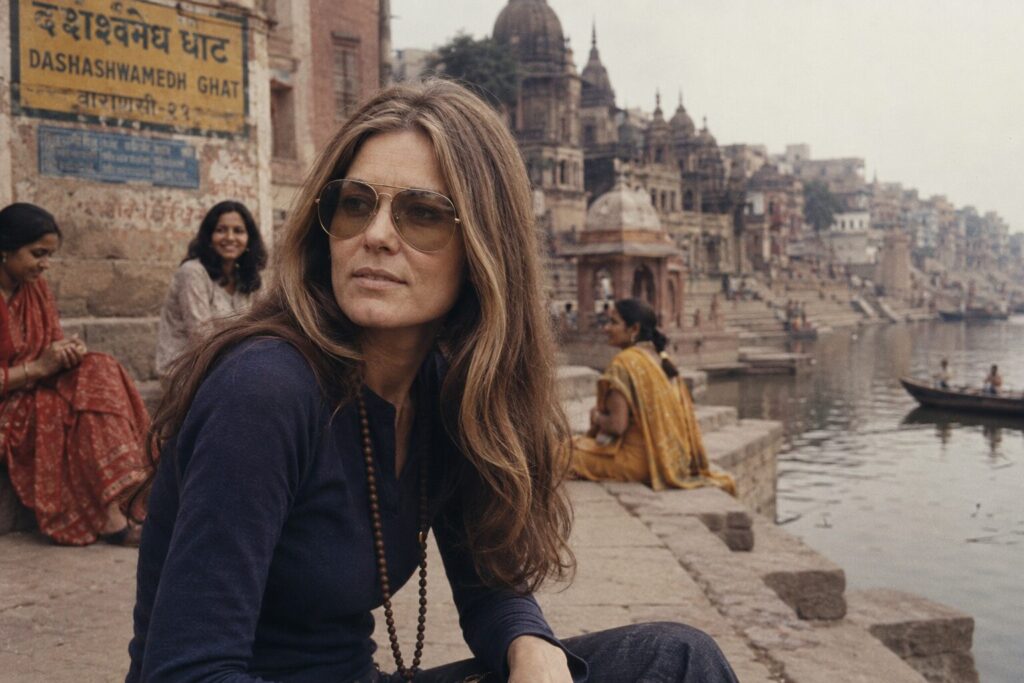
After graduating from Smith College in 1956, Steinem received a Chester Bowles Fellowship and spent roughly two years traveling and studying in India.
She attended Miranda House in Delhi, traveled by local buses and third-class trains, visited villages and spent time with women involved in Gandhian organizing.
India was an education in how little she knew as a Midwestern American.
Steinem discovered women of different ages sharing food and stories on trains, and she went into villages affected by caste violence.
Most importantly, she encountered the practice of talking circles—groups in which people sit together, take turns speaking, and listen to one another. In this way, the ‘other’ becomes ‘we.’
Steinem later described this as one of the most consequential discoveries of her life. It would become a cornerstone of her organizing philosophy and her preferred way of communicating.
“If I had to name the most important discovery of my life, it would be the portable community of talking circles,” she said.
She took that tool back to America at a key time in the civil rights movement.
Travel and feminist organizing
Steinem took lessons from travel and applied them to activism. Instead of simply visiting communities and objectifying them or reporting on them, she identified with the women there. Travel builds empathy, and empathy can help unpick old biases.
Steinem’s later feminist organizing, she suggested, was essentially a Western adaptation of what she had learned walking from village to village in India.
“Decisions are best made by the people affected by them,” she wrote.
Her travels through the United States became equally important. For decades, she flew from city to city—to college campuses, political meetings, women’s organizations, rallies, conferences, and—crucially—Native American communities. One of her closest friends and collaborators was Wilma Mankiller, the first female chief of the Cherokee Nation.
I’ll always remember spotting Steinem, as slender as a reed, striding through Dallas-Fort Worth International Airport on her way to or from somewhere. She would have been in her 80s at the time.
College campuses were particularly important to her. Steinem called them the “single largest slice” of her traveling life because they were laboratories for social activism and change. It was where she could reach young women. Female students make up approximately 58% of all U.S. college students.
Steinem also came to regard domestic travel as undervalued and possibly more instructive than an enviable international pilgrimage to a far-flung destination. For Steinem, travel shifted perspective and “specified” things. A statistic about poverty could remain abstract; sitting beside a person living in poverty was something else entirely.
India taught her the power of grassroots organizing and collective listening; later travels among Native American communities deepened her appreciation of communal decision-making and non-hierarchical forms of conversation. Africa, in Zambia, taught her about the resilience of women and the critical importance of grassroots education in combating systemic human rights violations like child marriage and female genital mutilation.
Steinem’s encounters with people across America also repeatedly challenged her assumptions about class, race, geography, and political identity. As she put it, the road takes us “out of our heads and into our hearts.”

Favorite places
Steinem never lost her affection for India. In a 2021 conversation, when asked to name her favorite city in the world, she immediately chose New York—but put Kerala, India second. Kerala, at the country’s southern tip, offered her something different from the frenetic urban India she first encountered: waterways, villages, lush landscapes and a strong tradition of social and political consciousness.
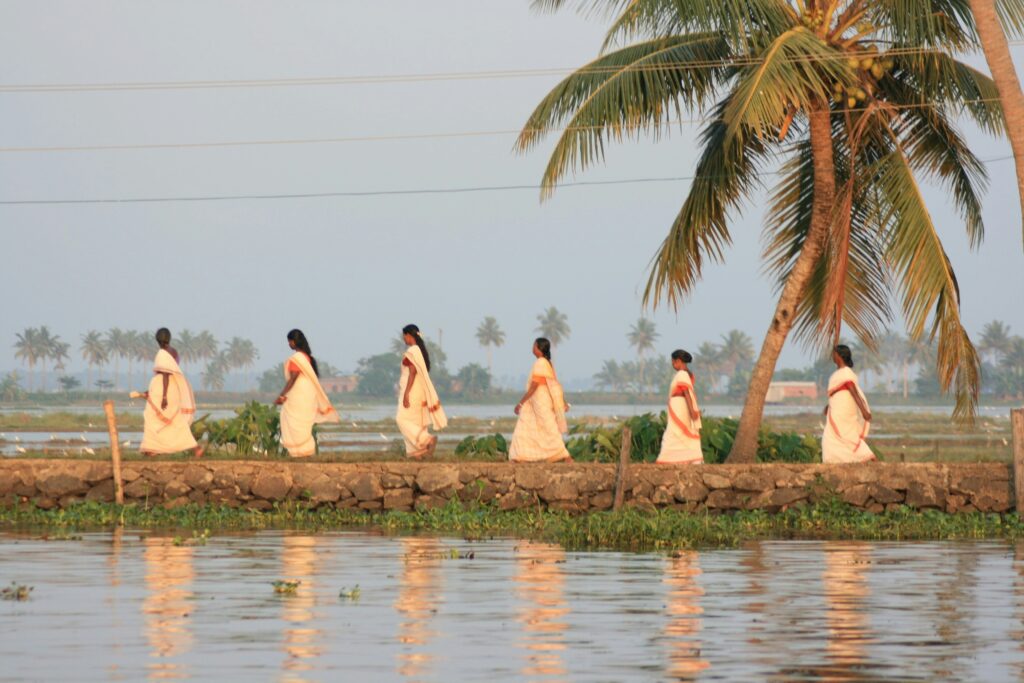
India remained, in her words, her “second home.” Her oldest friendships there endured for decades, including her friendship with feminist economist and organizer Devaki Jain, whom she met in Delhi in 1957.
If India was Steinem’s second home, Manhattan was her first. She moved to New York in her twenties and eventually settled into a brownstone on the Upper East Side, which she initially purchased with several other women. Steinem lived there for nearly six decades, expanding, improving, decorating, entertaining, and organizing. It became both sanctuary and headquarters—a place where journalists, feminists, politicians, artists, writers, and activists constantly crossed paths and developed projects.
It was where a handful of women gathered in 1971 and helped give birth to Ms. magazine. Later, the same rooms hosted figures including Bella Abzug, Alice Walker, Jane Fonda, Lupita Nyong’o, and Jenna Lyons. The band BETTY would often drop by for a visit.

For years, however, Steinem barely lived a conventional domestic life. She was traveling so frequently that her NYC home was effectively a pit stop between flights. “It took a while to learn that I didn’t have to live out of boxes and suitcases,” she said.
Steinem’s townhouse eventually became something like a three-dimensional scrapbook of her travels and relationships. The interiors were exuberant and personal: Near Eastern textiles, carvings, kilims, jewel-colored furnishings, richly patterned pillows, artwork, and objects collected throughout a lifetime. She discussed the importance of her home with Architectural Digest.
The objects were not souvenirs or trophies from ‘exotic’ places. They were reminders of people, movements, and experiences; they were not just possessions but the context for her practice. For example, a picture prominently displayed over the sofa in Steinem’s living room is titled “Boy Reading to Elephant” by the Canadian photographer and filmmaker Gregory Colbert. Elephants were, for Steinem, totemic throughout her life.
And so, the woman who had spent so much of her life moving finally created one of the most intensely rooted homes imaginable, and in her final years, she no longer toured but brought the “talking circles” to the brownstone.
Travel as a women’s issue
Steinem also recognized that travel itself had a gendered history. The great mythology of the road—from Homer’s Odyssey to Mark Twain to Jack Kerouac to Bruce Chatwin—has been overwhelmingly male.
Steinem argued that women had historically been discouraged from wandering, traveling alone, and claiming public space. She regarded independent movement as part of women’s liberation. To travel is human.
“Long before all these divisions were opened between home and the road, between a woman’s place and a man’s world, humans followed the crops, the seasons, traveling with their families, our companions, animals, our tents,” she wrote. “We built campfires and moved from place to place. This way of traveling is still in our cellular memory.”
In 1957, while traveling through London en route to her fellowship in India, Steinem realized she was pregnant—after breaking off an engagement back in the United States.
She underwent an abortion—a procedure that was illegal at the time and which she never regretted—and continued on to India. As dangerous or as devastating as that experience might have been at age 22, Steinem recognized it as transformative.
Or, as she observed: “The road is messy in the way that real life is messy.”