
Making a Stand for Stonewall in New York City
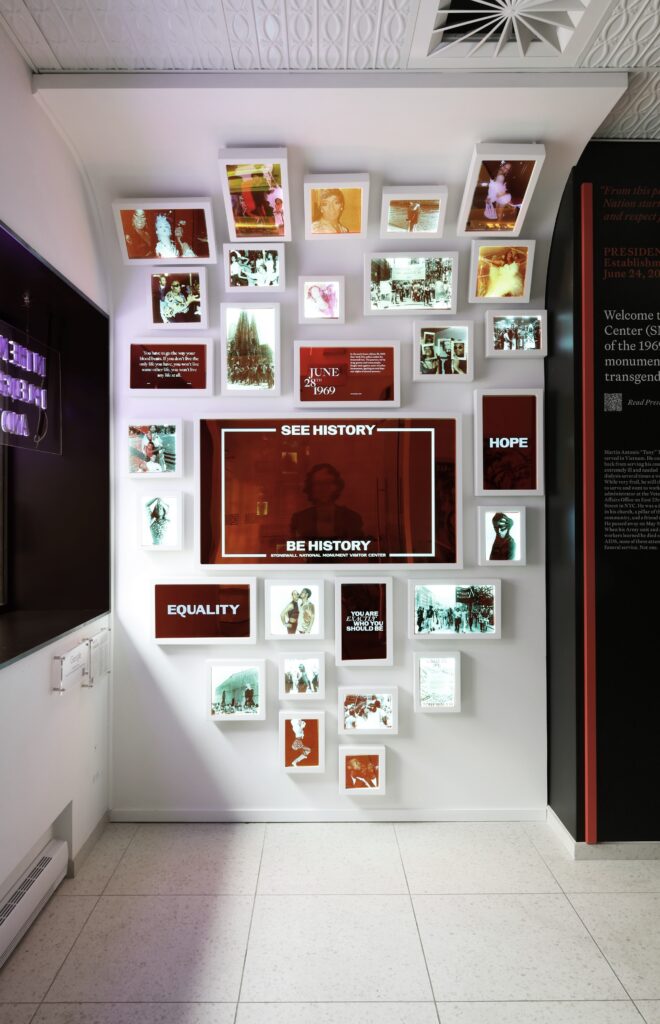
As I stepped into the Stonewall National Monument Visitor Center, the first thing that greeted me was my reflection framed by the words “See History Be History.”
It felt like both a welcome and an invitation. As part of the Wall of Solidarity—a lively exhibit celebrating love, community, and queer joy—the frame establishes the mood for what comes next. It’s not just a space to learn about history, but a place where you feel yourself become part of it.
Photo credits: Kent Johnson and EDG Architecture + Engineering
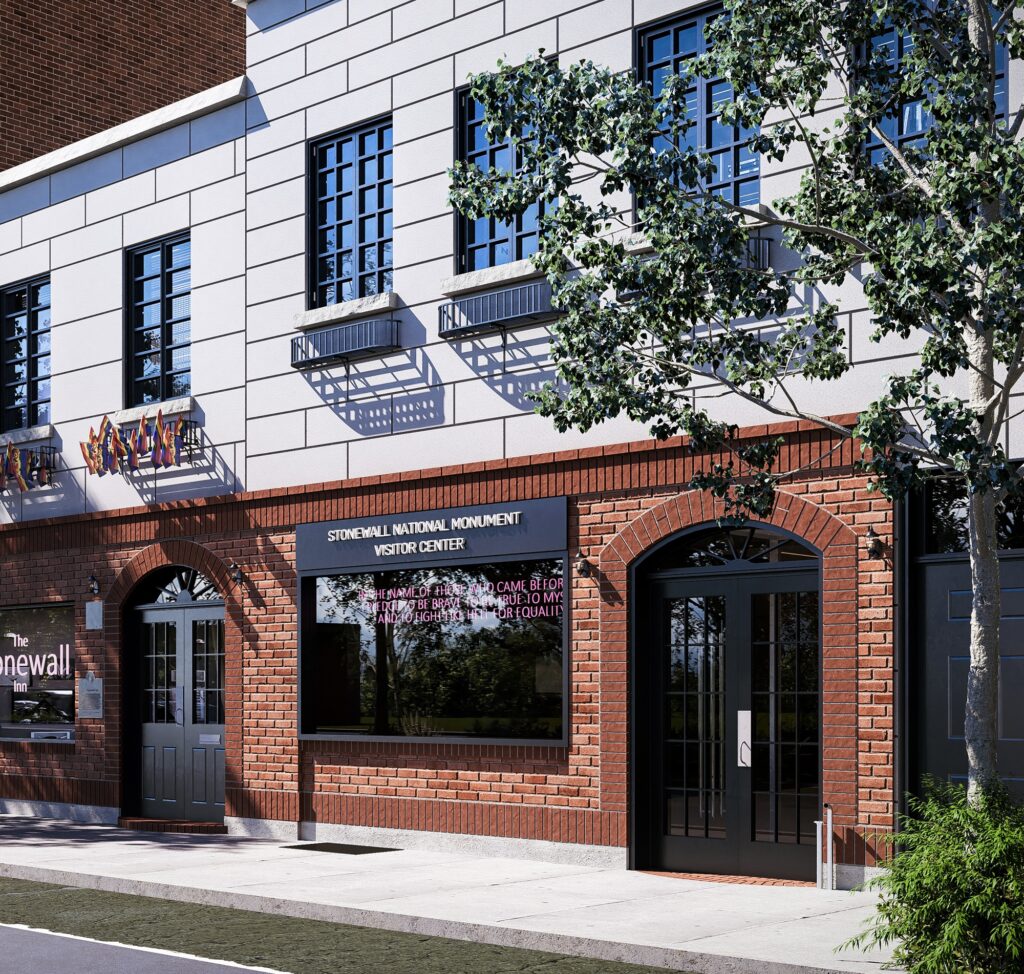
Located at 51 Christopher Street in New York City’s Greenwich Village, the Visitor Center occupies part of the original Stonewall Bar. Much of the original interior of the Stonewall Bar had been lost. However, one architectural detail, the Archway was able to be preserved. Privately operated by co‑founders Ann Marie Gothard and Diana Rodriguez, the Visitor Center is the result of six years of dedication to returning this historic site to the LGBTQ+ community. For Diana, the project is especially meaningful.

She comes from four generations of military service members, including her Uncle Tony, a Vietnam veteran who returned home seriously ill but continued serving others as an administrator at the Veterans Administration (VA) in New York City. When he passed away at just 47, his family learned he had died of AIDS. No colleagues from his military unit or the VA attended his funeral. Today, the flag laid on his coffin, along with his medals and dog tags, are displayed inside the center. The tribute honors him—and countless members of a generation lost to HIV/AIDS whose stories often went unrecognized.
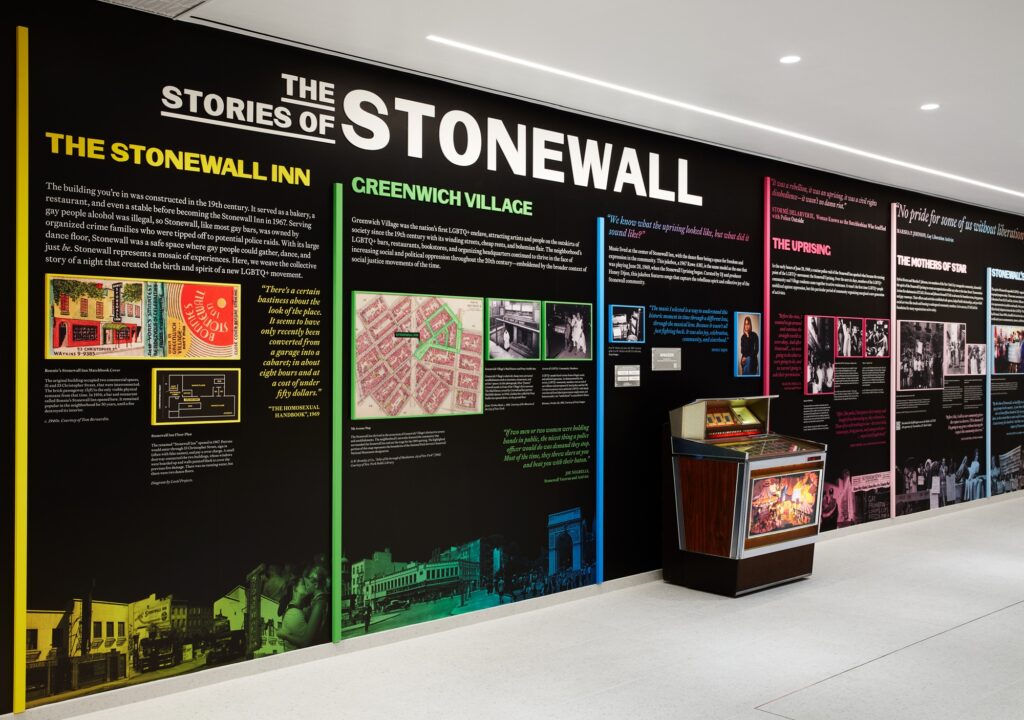
Inside the 2,100‑square‑foot space, 57 years of queer history have been carefully curated into a series of immersive exhibits. The Stories of Stonewall grounds visitors in the evolution of the building, the neighborhood, and the uprising that reshaped LGBTQ+ activism. The exhibit also honors Marsha P. Johnson and Sylvia Rivera, two revolutionary figures in trans history whose courage and advocacy helped drive the movement forward.
One of the most powerful add-ons comes from Mark Segal, who was at Stonewall on the night the rebellion began. As curator of the exhibit’s historical context, he shares firsthand memories of the events leading up to, during, and after June 28, 1969. His experience brings a personal immediacy that turns history into something vividly alive.
A particularly memorable touch is a fully functioning 1967 Rowe AMI jukebox featuring a playlist curated by DJ Honey Dijon. Marsha P. Johnson recalled that “I Heard It Through the Grapevine” by Marvin Gaye was playing during the police raid. Hearing it now deepens its symbolism. In an era when queer spaces couldn’t advertise their existence and gathering openly could be dangerous, people often found places like Stonewall through whispers and quiet networks—you genuinely “heard it through the grapevine.”
As you explore the photographs, stories, and music, the night of the Stonewall Rebellion feels closer than expected. The space pulls you into the emotions of that moment when frustration, courage, and unity combined to spark a movement that changed LGBTQ+ history.
That sense of continuity carries into the Stonewall National Monument Theater and the Stonewall Generations exhibit. Visitors can watch videos and listen to reflections from activists and allies—including Marsha P. Johnson, Sylvia Rivera, Mark Segal, Adam Lambert, and Chelsea Clinton—who speak about the ongoing struggle for LGBTQ+ equality and how the legacy of Stonewall shapes the activism of today. Their voices form a bridge between past and present.
The Visitor Center encourages participation through two interactive exhibits created in partnership with the Parsons School of Design: (We)ave Made History and Setting the Table. (We)ave Made History highlights young activists shaping the future of the movement. It represents where LGBTQ+ advocacy is headed, complementing the rest of the center’s focus on where the community has been.
Setting the Table reimagines the dinner table as a symbol of queer gathering, chosen family, and connection. Visitors are invited to answer a simple question: Who would you invite to dinner? Responses are written on napkins and placed at a setting on the table. Some are heartfelt—such as “My Bubi, because she passed when I was young and I wanted more time with her.” Others bring humor and joy, like “RuPaul and the last dinosaur before the meteor hit.”
Yet the feeling that stayed with me most wasn’t tied to a single artifact. It was the overall atmosphere. Even surrounded by strangers, I felt connected, safe, and free to absorb the experience without hesitation. The center radiates the same spirit of community and courage that Stonewall has come to symbolize.
No matter how you identify, the Stonewall National Monument Visitor Center welcomes everyone. Its message—rooted in belonging, support, and love—is universal. And that makes it an essential and unforgettable stop on any trip to New York City.
To learn more and to plan your visit, go to stonewallvisitorcenter.org.