
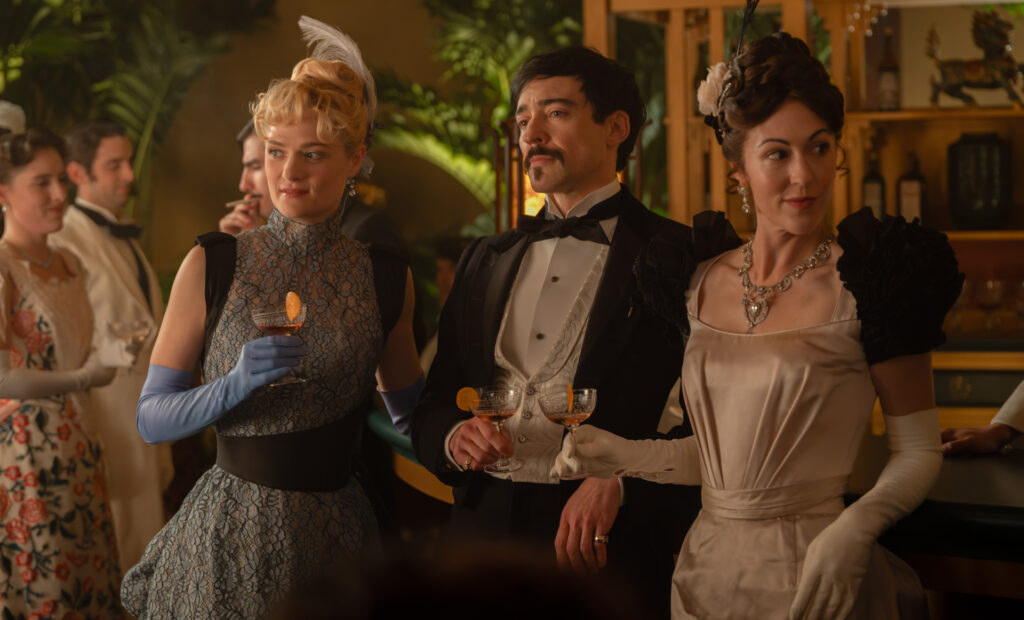
Step Into the Gilded Age: HBO’s Lavish Period Drama Returns for Season 4
From glittering ballrooms and spectacular gowns to ruthless social rivalries and fortunes built on railroads, HBO’s The Gilded Age is a sumptuous invitation to an America in the throes of transformation.
Created by Julian Fellowes, the mastermind behind Downton Abbey, the opulent historical drama brings 1880s New York society to life, where established dynasties guard their privileges and ambitious newcomers attempt to buy their way into the most exclusive circles. But beneath the exquisite costumes, elaborate dinner parties, and magnificent mansions lies a story about power, money, marriage, race, class, and the price of ambition. If the latest season’s official synopsis is any indication, the social warfare is far from over.
The series returns for its fourth season on Sunday, November 1, 2026, at 9 p.m. ET on HBO and HBO Max, with eight episodes debuting weekly.
Select media were invited to a New York City press conference, held—appropriately—at the Plaza Hotel, where the cast shared a little about what’s in store for their characters.

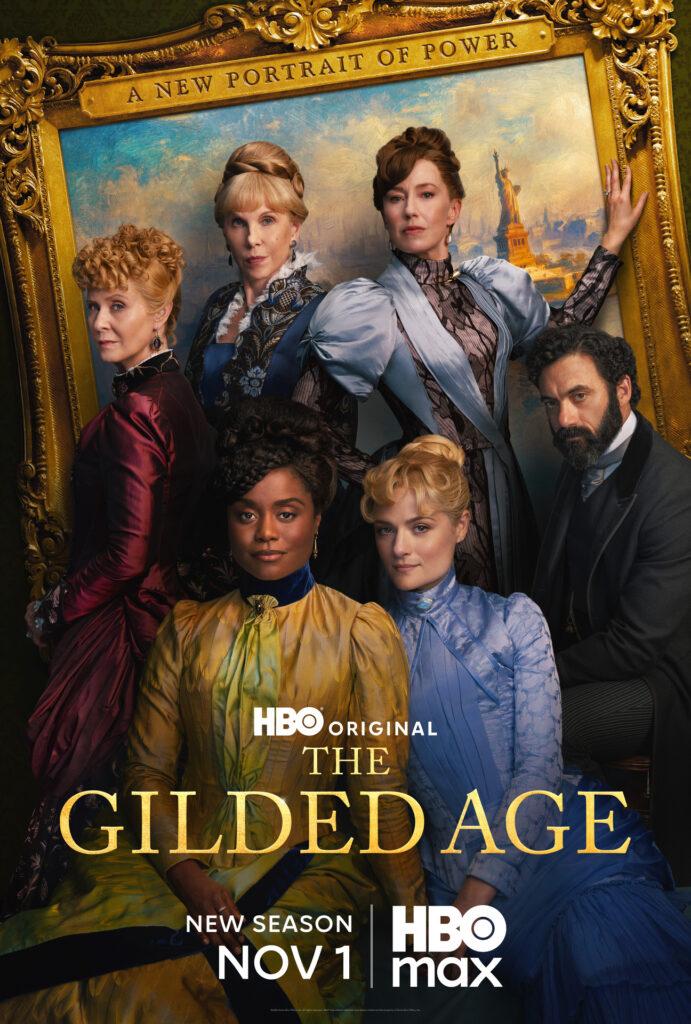
What Is The Gilded Age About?
The story begins in 1882, when Marian Brook (Louisa Jacobson), a young woman from Pennsylvania, arrives in New York City following the death of her father. She moves in with her formidable old-money aunts, Agnes van Rhijn (Christine Baranski) and Ada Brook (Cynthia Nixon), and finds herself immersed in a world governed by rigid social codes, family connections, and carefully guarded reputations.
Across the street lives the Russell family. Railroad tycoon George Russell (Morgan Spector) has accumulated a staggering fortune, while his ambitious wife, Bertha Russell (Carrie Coon), is determined to secure the social recognition she believes their wealth deserves. The problem? New York’s established elite don’t necessarily see money as a substitute for pedigree.
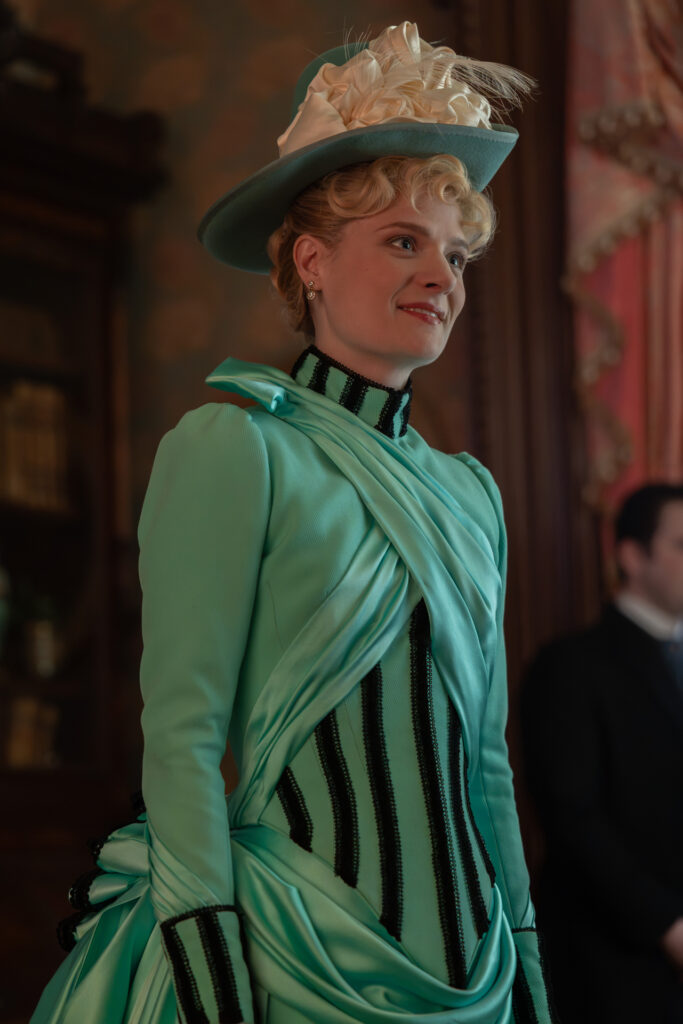
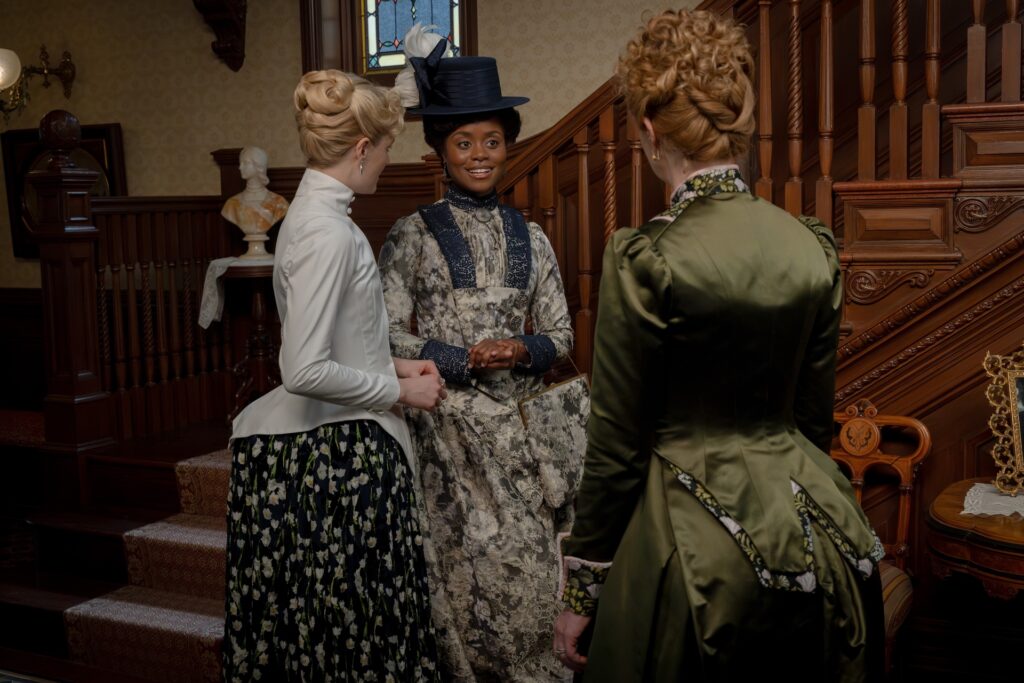
Yet the show extends beyond Manhattan’s drawing rooms. Marian’s search for independence, aspiring writer Peggy Scott’s (Denée Benton) professional ambitions as a journalist, and the experiences of Black New Yorkers reveal the opportunities and prejudices of a society undergoing profound change. As railroads, industrial fortunes, new technologies, and shifting social expectations reshape America, the characters must decide how much they are willing to sacrifice to get what they want.
“Peggy is a trailblazer in the sense that she doesn’t have a lot of people to model her dreams [on], which I love; like, a class of professional working women wasn’t something that really existed widely at that time,” said Denée Benton. And in some ways, this show is all about the women and how they orchestrate the societal machinations of the era.
Season 4: The Price of Getting Everything You Want
The previous season ended with several relationships and families in flux. George and Bertha Russell’s marriage was badly damaged after George survived an assassination attempt and confronted his wife’s relentless social maneuvering. Their daughter, Gladys, married the Duke of Buckingham and was revealed to be pregnant. Peggy became engaged to Dr. William Kirkland, while Marian and Larry Russell moved toward reconciliation. Meanwhile, Agnes finally allowed her sister Ada to take a more prominent role in the van Rhijn household.
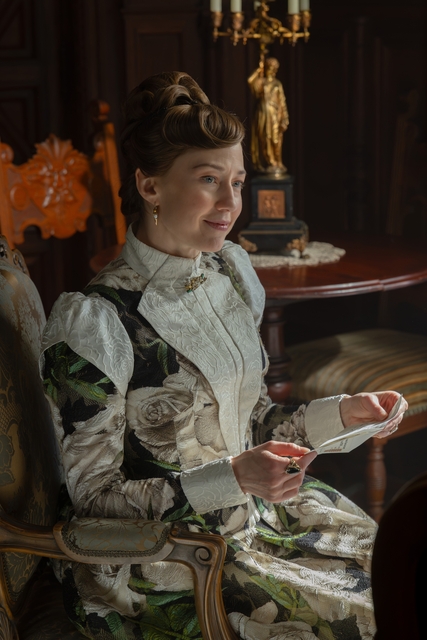
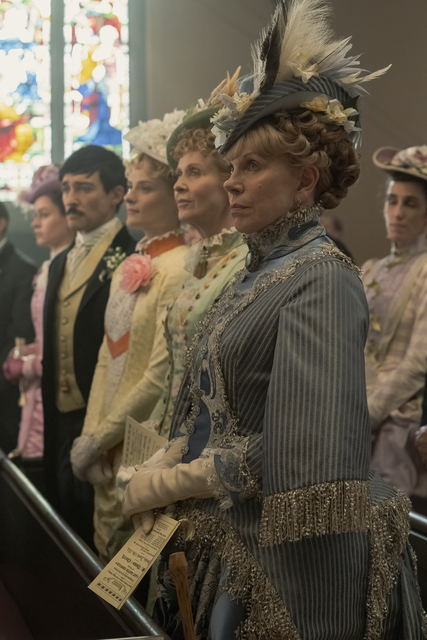
Bertha Russell faces the consequences of ambition
Bertha has fought tirelessly to break into New York’s most exclusive social circles, but her success has come at a personal price. Her marriage to George is in jeopardy, and she must confront the consequences of treating family relationships as a social strategy. Can she retain her newfound status without losing the people who matter most to her? For a woman who has spent years pursuing acceptance, discovering that victory may not bring happiness could prove particularly painful.
When asked if Bertha Russell is happy, Carrie Coon ponders her answer carefully. “So much of what it means to be a woman in the world is about survival. Of course, Bertha has every advantage in the world, as do I. I live a life of tremendous privilege. And yet, the dance I am doing as a mother and a working mom in a society where both of those things are somehow wrong is not an easy one. …
“But I feel like a woman like Bertha is not thinking about that. Maybe there’s contentment, but [with] somebody like Bertha, it’s an unfillable hole. That engine is always running. So happy, maybe not, but moments of it, like everybody. That’s the human condition. Moments of pleasure in the midst of survival.”
Agnes van Rhijn losing power, plots her comeback
Never one to surrender gracefully, Agnes sees an opportunity to restore her position in society. Her rivalry with Bertha remains a major source of tension, with the prospect of a dinner for President Grover Cleveland adding another potentially explosive social occasion to the calendar. The old guard may be under pressure, but Agnes is not ready to concede defeat.
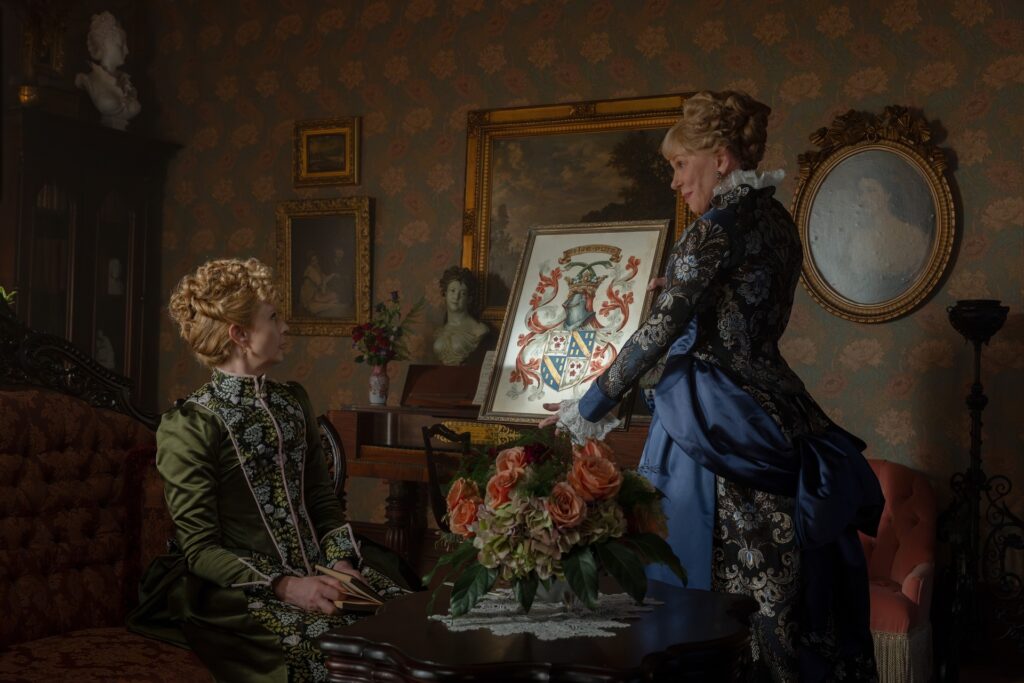
Cynthia Nixon spoke on behalf of her on-screen sister, Christine Baranski and revealed that Agnes’s arc this season is “unhinged.”
“Christine would say, if she were here, that the way in which these two are sisters and have lived together for so many decades, that they’re like a married couple, very much. She always says that the hardest thing to fake is intimacy, and that she and I were just so lucky that we came ready-made with that. And you know, Ada is the person with more feeling, right? And Agnes is the person with more authority, and gradually the world has turned upside down.
“And so, one of the delightful and hilarious things that we get to see this season is unhinged Agnes. Agnes no longer has her power base or her money base, so what are essentially small things grow in importance to the point of mania because the part sort of becomes a stand-in for the whole. So, for years of having seen Ada grieving and elated and just a very emotional being, and Agnes putting the kibosh on that—now we see the unhinged Agnes who, trying not being rooted in power, and Ada helping but also stepping back a little, also enjoying it a little bit.”
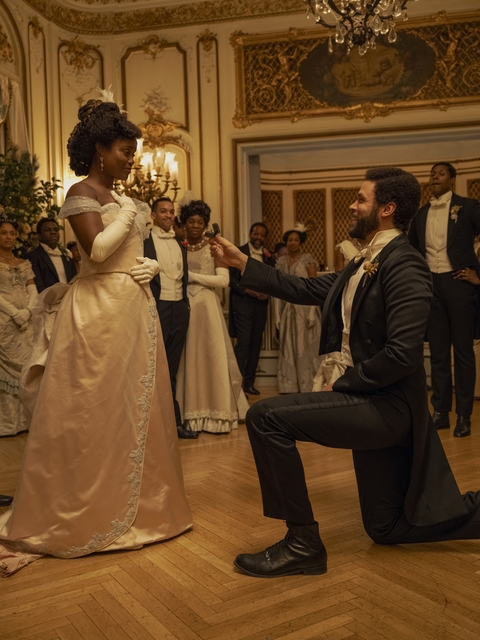
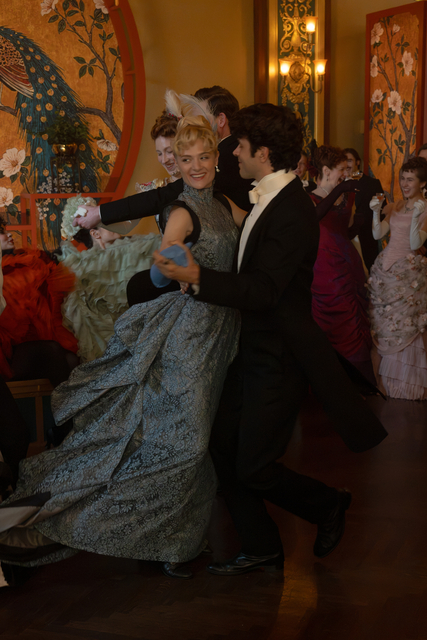
Marian and Peggy pursue different futures
Marian is forging a new path, continuing her struggle to reconcile personal independence with the expectations placed on women of her station. “I feel this as the youngest sibling in my family,” revealed Louisa Jacobson, who is the youngest of Meryl Streep’s four children. ‘You look around, and you see how people are living their lives, and you say, ‘I want to do that, but I don’t want to do that, and I don’t want to be a pawn in society. I want to have a purpose in my life, and I want to be of service.’ And I think Marian—you’ll see in the later episodes where she’s working—but I think work is very important to her, specifically social work.”
“I think Marian looks up to Peggy in a lot of ways,” said Jacobson. “She was the first friend that she had coming to New York. So she had an example to follow.”
Meanwhile, Peggy must navigate acceptance by her future husband’s family. Her professional ambitions and experiences as a Black woman in a racially divided society give her storyline a perspective that extends beyond the conventional battles of high society.
The Russells’ world grows even more complicated
The season’s wider ensemble promises further entanglements involving marriage, money, family loyalty, and social standing. The arrival of prominent historical figures and new characters also offers opportunities to explore how industrial wealth and America’s changing power structure intersect.
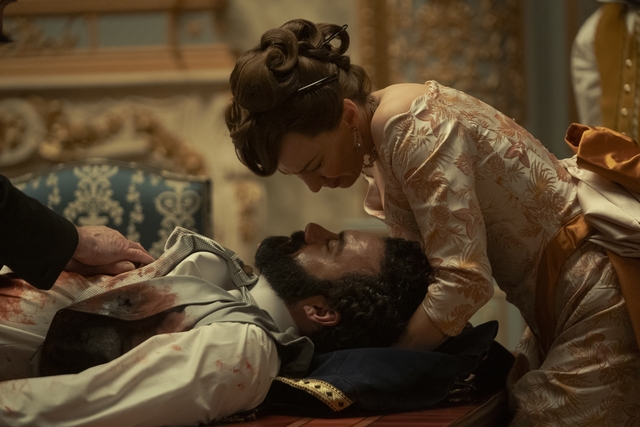
“George (Morgan Specter) needs to get his act together,” said Carrie Coon. “There, okay, now this is pre-psychology; we don’t have a concept of the self. And so, George is living a very unexamined life right now. He’s really going through it. He hasn’t quite metabolized what happened to him, so he cannot communicate it to me. So, I expect that time heals all wounds, and that just proves to be not true this year. It’s going to take a lot more work than just time. But Gladys is doing great, and Bertha feels vindicated.”
“Do I get a rebuttal?” said Morgan Specter. “I do think George and Bertha are kind of both right. I mean, I think the thing Bertha fails to see is the influence of her own ambition and lust for power. And I think, yes, she’s broadly vindicated by the fact that Gladys and the Duke’s relationship seems to have sort of flowered in a nice way. But I also think, you know, that scene on the boat, when they first leave and he’s like, all right, time to just do sex now—I feel like that was something you just delivered your daughter into and maybe that wasn’t so nice.”
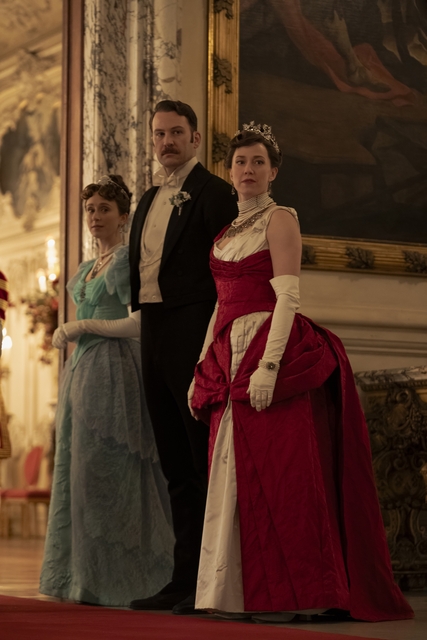
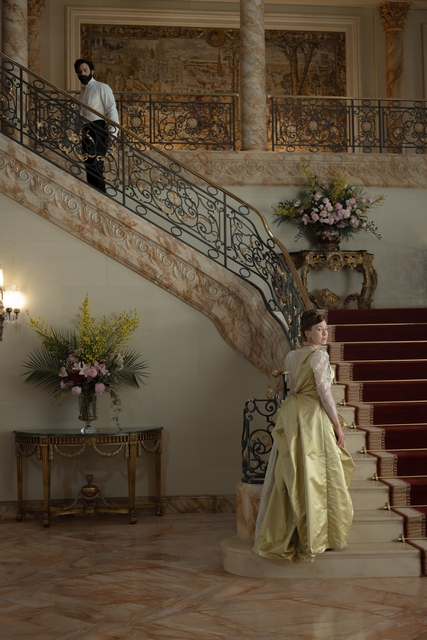
Taissa Farmiga, who plays their daughter Gladys, said, “I think this season we are sort of adapting our parents’ principles more so than ever and for the first time, Gladys is becoming a woman who’s commanding authority and respect, including from her mother, and I think it’s beautiful that they’re starting to see eye to eye and a mutual respect is growing.”
Oscar rebuilds his life, with a little help
Oscar van Rhijn continues to hide his sexuality and rebuild his fortune. For Blake Ritson, the character carries a powerful message.
“I suppose playing Oscar, who is a gay character, in a time when there were huge legal and social ramifications to being found out to be gay, you could say that this is kind of locked in its periodness and that the stakes were much higher then, but I’ve been really overwhelmed by how people have reacted to the coming-out scene in season three,” said Ritson. “I think it’s worth remembering that The Gilded Age is a show that comes out in over 60 countries, and there are still many, many cultures and contexts where coming out is not an easy thing. It is painful; it’s illegal in some countries, obviously, to this day.”
“I thought it was interesting that they seeded the meeting with Oscar Wilde earlier, because, obviously, you know, in 1895 he was imprisoned for being gay. So, there was a very real threat.”
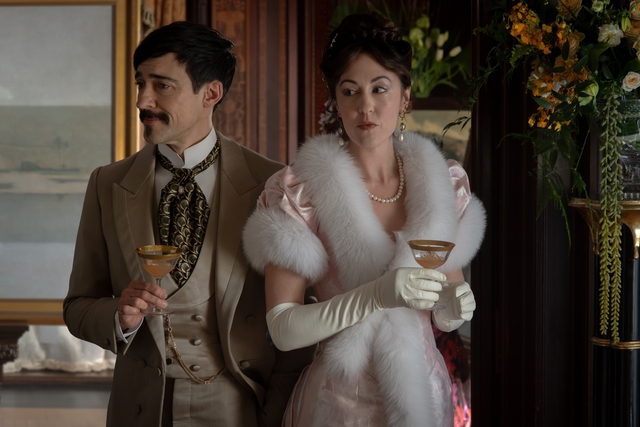
His accomplice is former maid Enid Turner (Kelley Curran), who has risen through the ranks of society through marriage to an older and now deceased industrialist.
“She knows how to play the role,” said Curran. “She’s been watching these people her whole adult life and moving among them. You see her taste evolve through the seasons, and she knows when she’s performing for old money, when she is performing for new money, and when she’s at home with her buddy. So, it’s just like, it’s incredible.”
“It’s quite a fresh dynamic in the show,” said Ritson. “I think we see a lot of characters operating in very public forums, where everyone has to behave with impeccable etiquette. That’s easy for you to say. But here, we see characters, you know, they spend a lot time lounging around their house and it’s lovely. There’s no one else watching. They’re just, it’s just two individuals having this lovely kind of fresh dynamic. It’s been very joyful to play it.”
The series returns for its fourth season on Sunday, November 1, 2026, at 9 p.m. ET on HBO and HBO Max, with eight episodes debuting weekly.
The Gilded Age in Real Life: Landmarks to Visit
For viewers inspired to experience the real world behind the drama, New York City and nearby Newport, Rhode Island still offer extraordinary glimpses of the architecture, grand hotels, and extravagant lifestyles that defined the era. The world of The Gilded Age has not entirely disappeared. Although New York City modernized and demolished many of Manhattan’s great private palaces, some mansions, museums, churches, and historic hotels preserve the period’s grandeur.
1. Villard Mansion at Lotte New York Palace, 455 Madison Avenue, Midtown Manhattan
One of the most atmospheric places to begin is the historic Villard Mansion, built in 1884 and designed by McKim, Mead & White. Its richly detailed interiors and Renaissance-inspired architecture offer a rare glimpse of the domestic elegance enjoyed by New York’s wealthy elite. The mansion is part of the Lotte New York Palace complex, which combines historic architecture with contemporary luxury. Hotel guests can join a complimentary, one-hour historian-led tour on Saturdays at 10 a.m.; check with the hotel for availability and arrangements. Official hotel website
2. The Frick Collection, 1 East 70th Street, Upper East Side
Industrialist Henry Clay Frick’s mansion is one of the city’s great surviving examples of elite domestic architecture. Today, it houses the Frick Collection, which displays European paintings, sculpture, and decorative arts in an intimate historic setting. It is an ideal stop for anyone interested in the relationship between enormous industrial fortunes, art collecting, and the desire to create a grand private residence. The museum reopened after an extensive renovation in 2025. Visitor information and hours
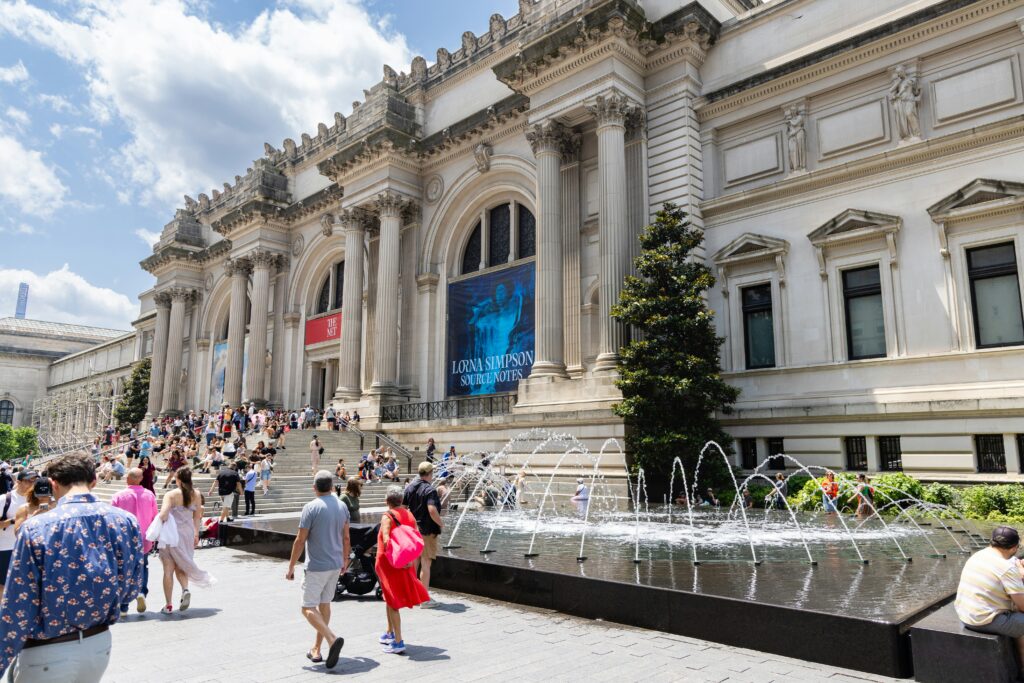
3. The Metropolitan Museum of Art, 1000 Fifth Avenue, beside Central Park
The Met is a treasure trove for fans of the era, with collections of American decorative arts and historic interiors. One particularly relevant installation is the dressing room from the Worsham-Rockefeller House, created in 1881–82 and now displayed in the American Wing. Pair a museum visit with a walk along Fifth Avenue, imagining the enormous private homes that once lined the street. The Met’s collections offer a fascinating look at the furnishings, craftsmanship, and artistic tastes of America’s wealthiest families. Plan your visit
4. St. Patrick’s Cathedral, Fifth Avenue at 50th Street
Although construction began before the height of the Gilded Age, St. Patrick’s Cathedral became an important landmark in the city the show’s characters inhabit. Its soaring Gothic Revival architecture and prominent Fifth Avenue location provide a striking reminder of the religious and civic institutions around which New York’s social life revolved. It also makes a natural stop while exploring Midtown’s historic architecture and the nearby Villard Mansion.
5. The Breakers, Newport, Rhode Island, 44 Ochre Point Avenue, Newport
For the full Gilded Age experience, Newport is essential. The Breakers, built for Cornelius Vanderbilt II in 1893–95, is Newport’s grandest mansion and a symbol of the Vanderbilt family’s extraordinary wealth. Think marble, elaborate ceilings, monumental rooms, and grounds overlooking the Atlantic. The estate is often associated with the very summer society that the television series recreates. It is open to the public, with tours that illuminate the lives of the Vanderbilt family and the people who worked in the house. Newport Mansions visitor information
6. Marble House and Rosecliff, Newport, Rhode Island
Two more spectacular Newport estates deserve a place on the itinerary. Marble House was built for William K. Vanderbilt and his wife Alva, while Rosecliff became famous for its grand ballroom and lavish entertainments. Both capture the era’s competitive extravagance, when the wealthiest families built summer homes that rivaled European palaces. Newport’s historic properties also feature prominently as filming locations in the series. Check the official mansion calendar before visiting, as opening schedules vary by season. Explore the Gilded Age in Newport
Where to Stay: Hotels With Gilded Age Connections
You don’t need a private fortune or an invitation from Mrs. Astor to experience a little of the era’s grandeur. These hotels offer historic architecture, period atmosphere, or a direct connection to the world of America’s industrial elite.

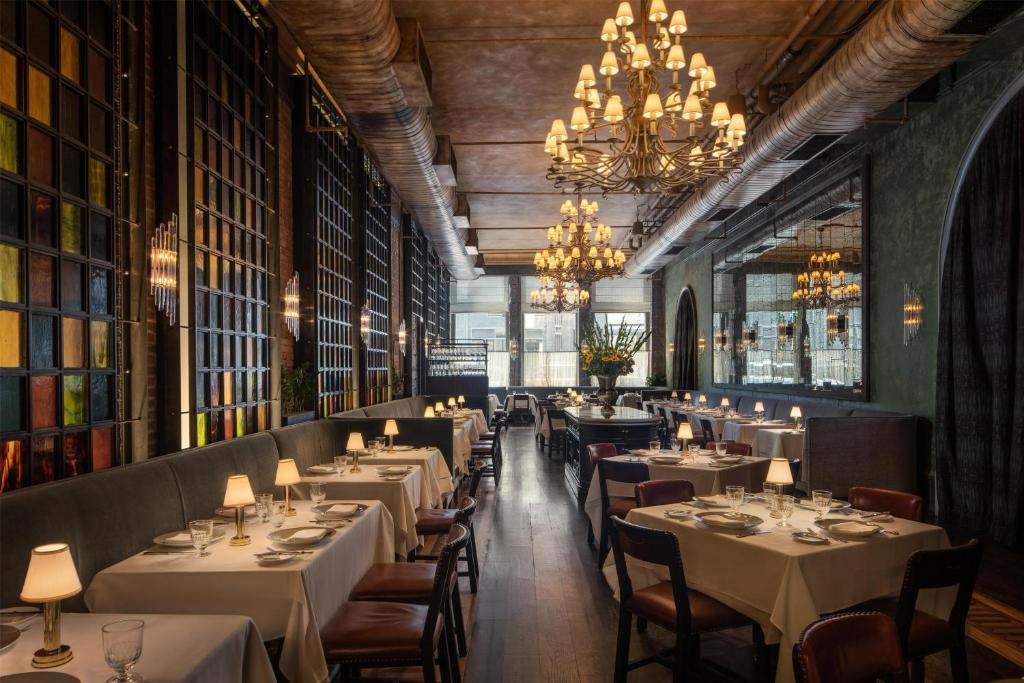
Lotte New York Palace — Manhattan
The most direct choice for fans who want to sleep in the vicinity of an authentic Gilded Age mansion. The Villard Mansion, incorporated into the hotel complex, dates to 1884 and offers a tangible link to the city’s grand residential past. The hotel combines that historic setting with modern luxury, dining, and easy access to Fifth Avenue. Explore the hotel or book here.
The Beekman, A Thompson Hotel — Lower Manhattan
For a different architectural mood, The Beekman occupies the landmark Temple Court building, whose dramatic nine-story atrium and ornate ironwork evoke the city’s Victorian commercial past. It is not a surviving private mansion, but it offers an atmospheric stay in a historic building from the broader era of New York’s rapid expansion. Hotel information or book here.
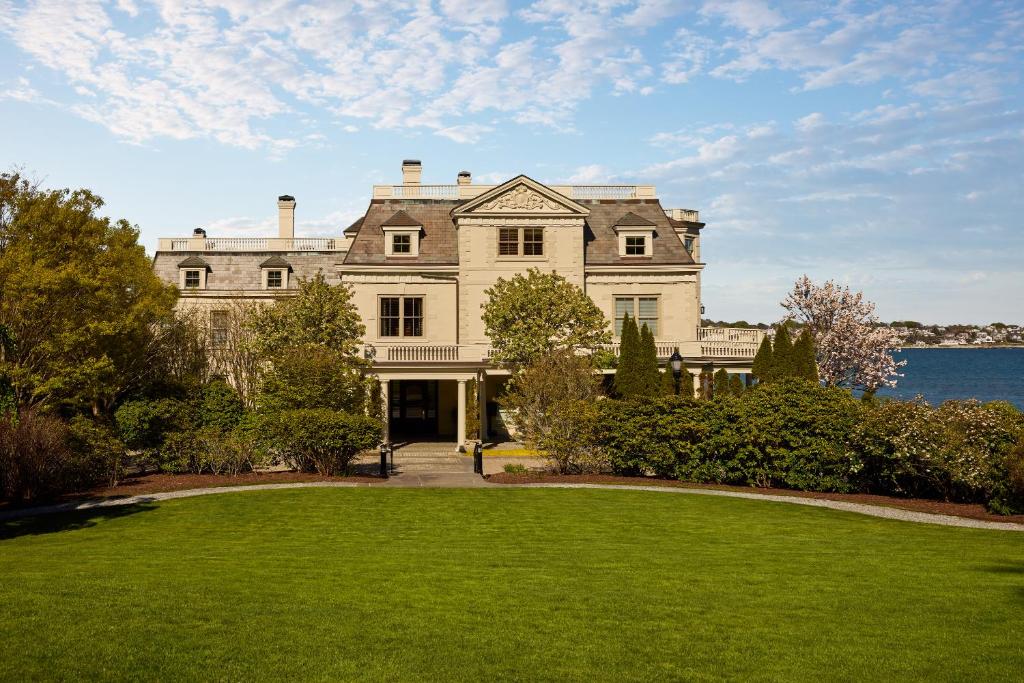
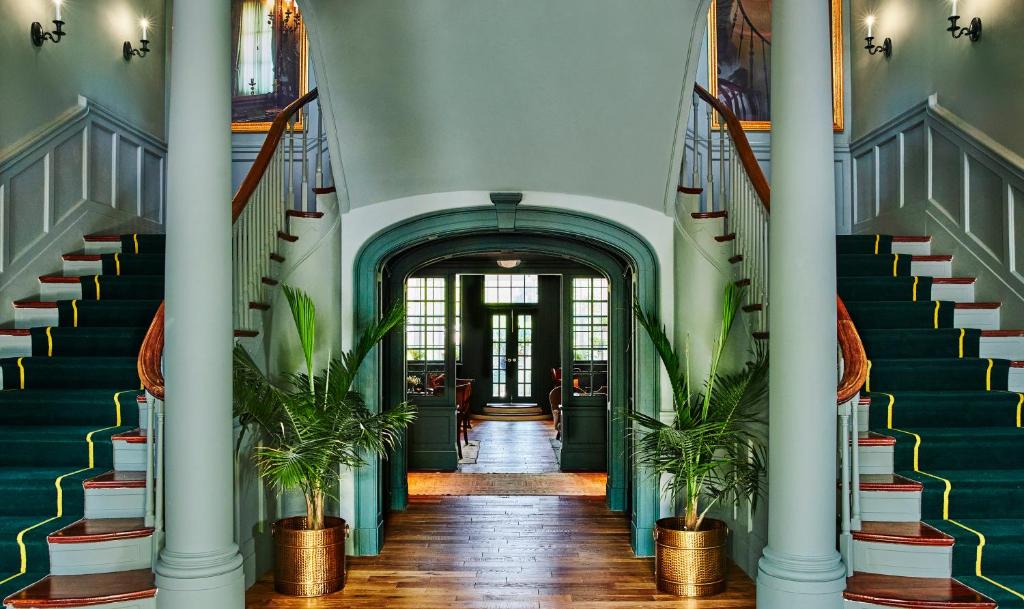
The Chanler at Cliff Walk — Newport
For a more intimate Newport experience, this historic mansion-turned-hotel sits along the celebrated Cliff Walk. Its period architecture and individual guest rooms provide a romantic alternative to a conventional resort stay, with the city’s famous Gilded Age estates nearby. Explore the hotel or book here.
The Vanderbilt, Auberge Resorts Collection — Newport
This historic Newport mansion has a particularly fitting name for a Gilded Age escape. Its elegant interiors and residential scale evoke old-world luxury, while its downtown Newport location makes it easy to explore the waterfront, historic streets, and nearby mansions. Explore the hotel or book here.