
Bolivia Goes Queer: A New Chapter for LGBTQ+ Travelers
On August 7, 2026, Bolivia recorded its first-ever legally recognized same-sex civil marriage for a lesbian couple in Santa Cruz following a multi-year court battle. Let’s take a closer look at this destination!
Bolivia has always been a country of dramatic contrasts: snow-capped Andes rising above the clouds, surreal salt flats stretching toward the horizon, Indigenous traditions woven into modern city life—and, increasingly, a queer rights movement that refuses to stay in the shadows.
Now there is a particularly historic reason for LGBTQ+ travelers to put Bolivia on their radar. On August 7, 2026, Fabiana Justiniano and Scarlett Rocha became the first same-sex couple to legally marry in Bolivia, following a four-year legal battle. Their wedding took place in Santa Cruz de la Sierra after Bolivia’s constitutional tribunal ruled in March that civil authorities should issue their marriage license.
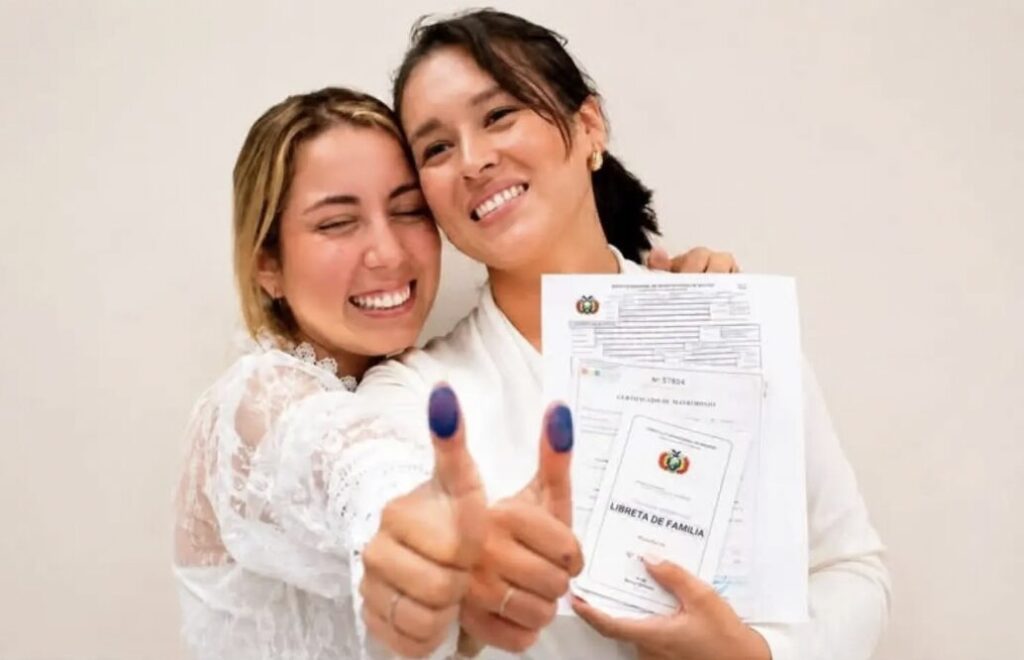
That is an extraordinary development in a country whose 2009 Constitution still contains language defining marriage as between a man and a woman. In other words, Bolivia’s LGBTQ+ legal landscape is changing faster than its constitutional text. The couple’s victory could provide a precedent for other same-sex couples seeking recognition.

So, is Bolivia ready for queer travelers? Increasingly, yes—but with some important caveats.
A Love Story Four Years in the Making
The story of Justiniano and Rocha is particularly significant because their victory did not simply arrive through a change in legislation.
The couple initially encountered resistance when they attempted to obtain legal recognition. They challenged the decision through Bolivia’s courts, invoking both domestic constitutional protections and international human-rights obligations. The case eventually reached the country’s constitutional tribunal, which ruled in their favor in March 2026.
Their August wedding therefore represents more than one couple’s happy ending. It potentially opens a legal door for other LGBTQ+ Bolivians.
There is an important distinction for travelers, however: Bolivia has not suddenly passed a comprehensive marriage-equality law. The August 7 marriage resulted from a court ruling, and the broader legal implications remain a developing story. The constitutional court’s review could determine how firmly the precedent becomes established. Bolivia is a country in the middle of a legal transition rather than one that has neatly arrived at marriage equality.
LGBTQ+ Rights: Better Than You Might Think
Bolivia’s 2009 Constitution was surprisingly progressive in one important respect. Article 14 explicitly prohibits discrimination based on sexual orientation and gender identity, alongside numerous other grounds. It also says foreigners in Bolivia enjoy the rights guaranteed by the Constitution, subject to its restrictions.
Consensual same-sex sexual activity between adults is legal, and the U.S. State Department says there are no legal restrictions on gay and lesbian travelers, LGBTQ+ events, or the provision of services based on actual or perceived sexual orientation. It describes Bolivia’s major urban centers—including La Paz, Cochabamba and Santa Cruz—as generally tolerant of gay and lesbian travelers.
Bolivia also has one particularly important piece of legislation for transgender people. The 2016 Gender Identity Law, Law No. 807, created a procedure allowing transgender people to change their legal name, sex marker, and photograph on identity documents. Bolivia’s Ombudsman’s Office describes the law as a historic advance, while acknowledging that implementation has faced administrative and social barriers.
There is an important catch: a 2017 Constitutional Court decision subsequently restricted some of the law’s effects, and transgender Bolivians continue to face significant discrimination and barriers in employment, health care and other areas.
So the legal picture is distinctly mixed: strong constitutional language against discrimination, important advances for trans legal identity and now a groundbreaking same-sex marriage precedent—but imperfect enforcement and plenty of social conservatism.
Bolivia’s Queer History Goes Back Further Than Pride
One of the most fascinating things about LGBTQ+ Bolivia is that queer visibility did not begin with modern Pride marches. Look toward Bolivia’s extraordinary carnival traditions and you will find a remarkable chapter of trans history.
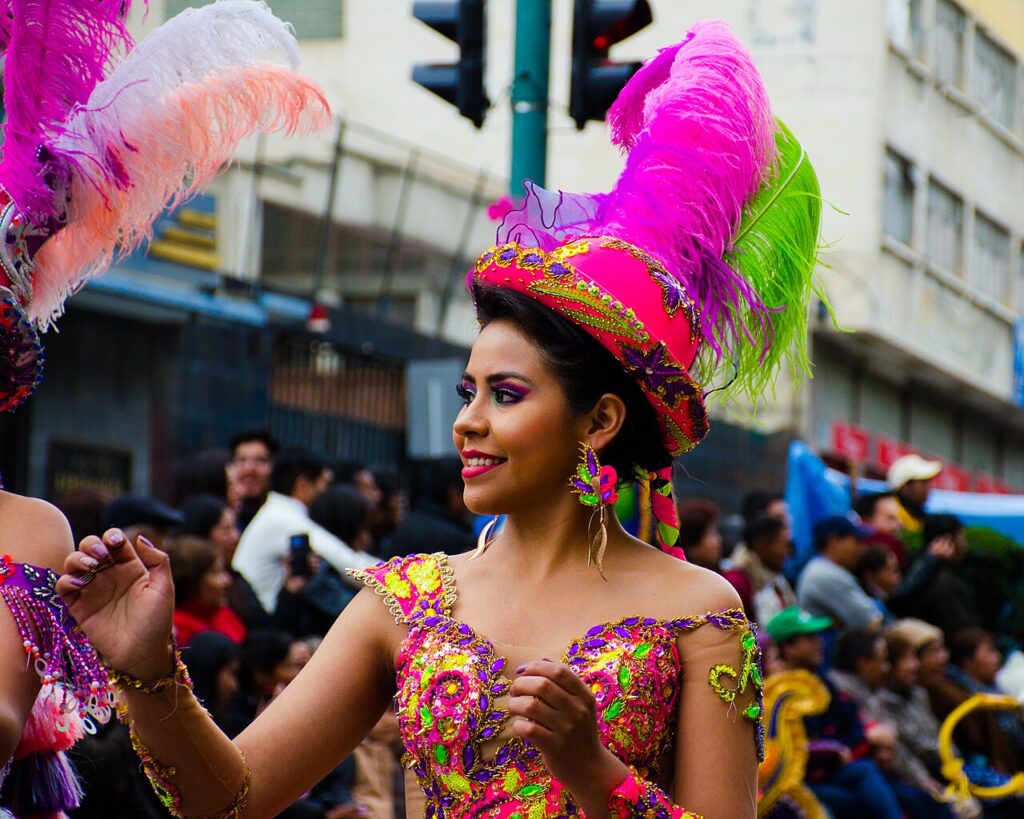
La China Morena, a flamboyant figure associated with the Morenada tradition, became an important vehicle for gender expression during the 1960s and 1970s. Women such as Ofelia and Barbarella transformed what had traditionally been a costumed festival role into something much more openly gender-defying. Then came one of the great pieces of Bolivian queer folklore.
During the dictatorship of Hugo Banzer, Barbarella famously kissed the dictator at a La Paz festival. The act became an extraordinary piece of political theater: a trans woman publicly confronting authoritarian power through performance and spectacle. The government subsequently restricted the participation of trans women and other gender-diverse people in popular festivities.
Today, researchers and activists regard these women as important figures in Bolivia’s LGBTQ+ history. Their story is a reminder that queer visibility in Bolivia wasn’t imported from North America or Europe—it has its own distinctly Bolivian roots.
The Pride Movement
Modern LGBTQ+ activism began taking more visible form in the 1990s.
ADESPROC Libertad, one of Bolivia’s longstanding LGBTQ+ organizations, traces its origins in La Paz to 1996. It organized national coordination among LGBTQ+ groups and began advocating publicly for legal and social rights.
Bolivia’s first Pride march took place in Santa Cruz in 2000, with Pride subsequently developing in La Paz and other cities. Early marches were not always easy affairs. Fear of discrimination meant that some participants in La Paz wore masks to conceal their identities, while violent incidents have occurred at Pride events over the years.
Where Should Queer Travelers Go?
La Paz: High-Altitude Queer Culture
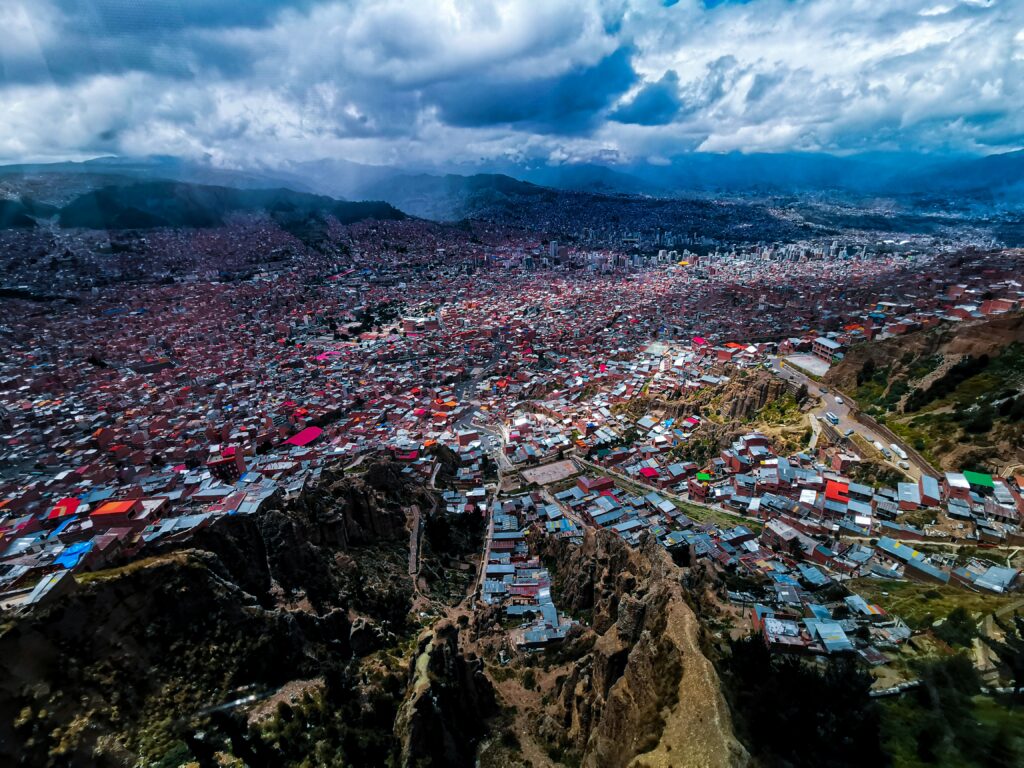
At nearly 12,000 feet above sea level, La Paz is already one of the world’s most dramatic cities. For LGBTQ+ travelers, it is also one of Bolivia’s principal centers of queer community and activism.
The city has LGBTQ+ venues, cultural activity, and organizations, including ADESPROC Libertad, which remains an important national LGBTQ+ rights organization.
La Paz’s municipal government also operates a Unidad de Diversidades Sexuales, a dedicated service for LGBTQ+ residents that offers social and psychological support and information on rights.
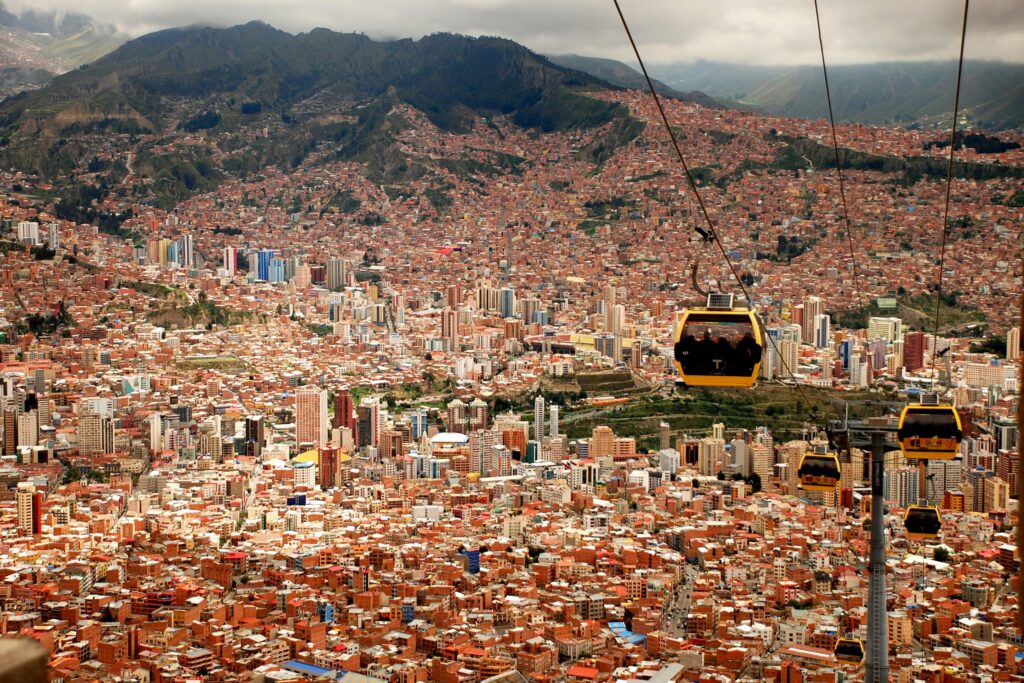
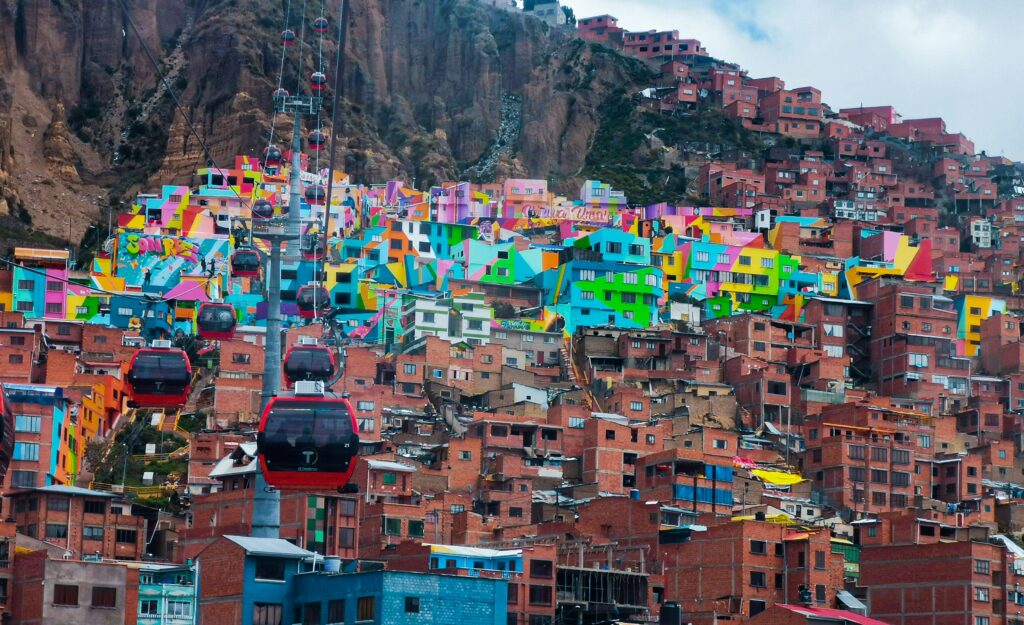
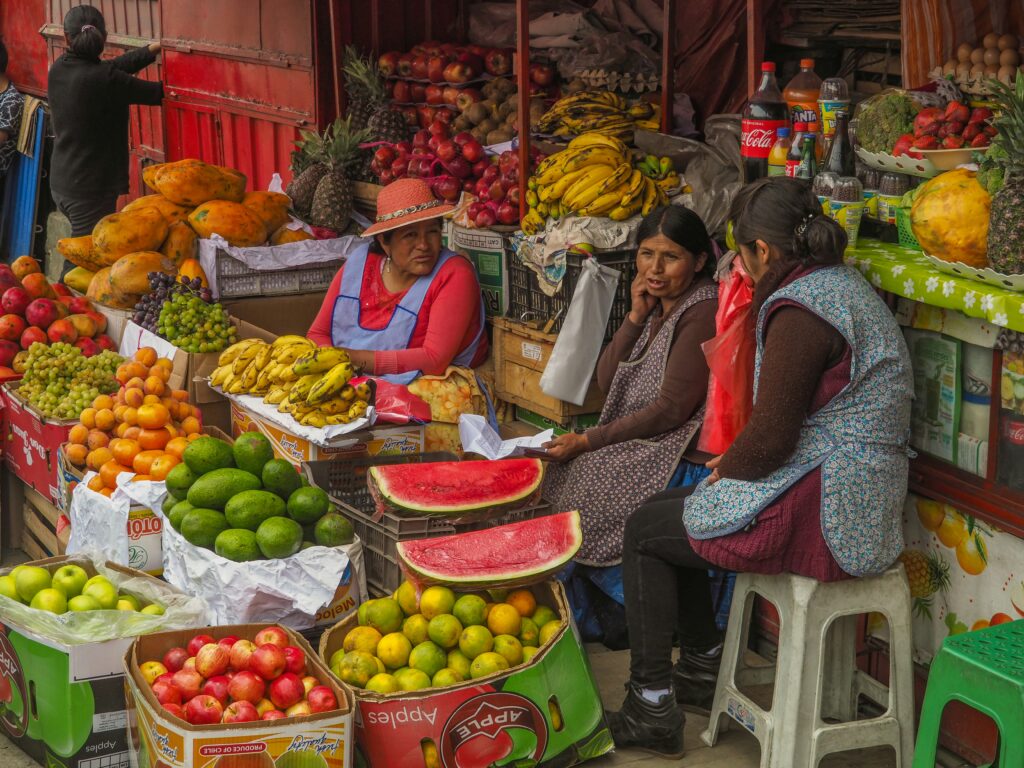
And beyond the nightlife, La Paz is a superb destination for queer travelers who like their vacations with a serious dose of culture: explore the Witches’ Market, ride the famous Mi Teleférico cable cars above the city and make time for museums, markets and the extraordinary surrounding Andean landscape.
Just remember that La Paz is also the country’s political center, and demonstrations and road blockades can disrupt travel. The current U.S. advisory recommends increased caution because of crime and unrest and specifically advises travelers to reconsider travel to La Paz because of unrest.
Santa Cruz: Bolivia’s Queerer, More Relaxed Side
If La Paz is Bolivia’s dramatic Andean capital, Santa Cruz de la Sierra is its tropical, cosmopolitan counterpoint—and it is particularly important to the country’s LGBTQ+ story.
It was here that Bolivia’s first Pride march took place in 2000. And it was here, in August 2026, that Justiniano and Rocha made history as the country’s first legally married same-sex couple.
Santa Cruz is generally regarded as more socially liberal than many parts of the Altiplano. LGBTQ+ nightlife is relatively modest by Latin American mega-city standards, but there is an identifiable queer scene, with venues and LGBTQ+-friendly businesses concentrated around the city’s commercial and central areas.
For travelers, Santa Cruz also makes an interesting base for exploring eastern Bolivia, with a warmer climate, lush landscapes and a very different cultural atmosphere from the high Andes.
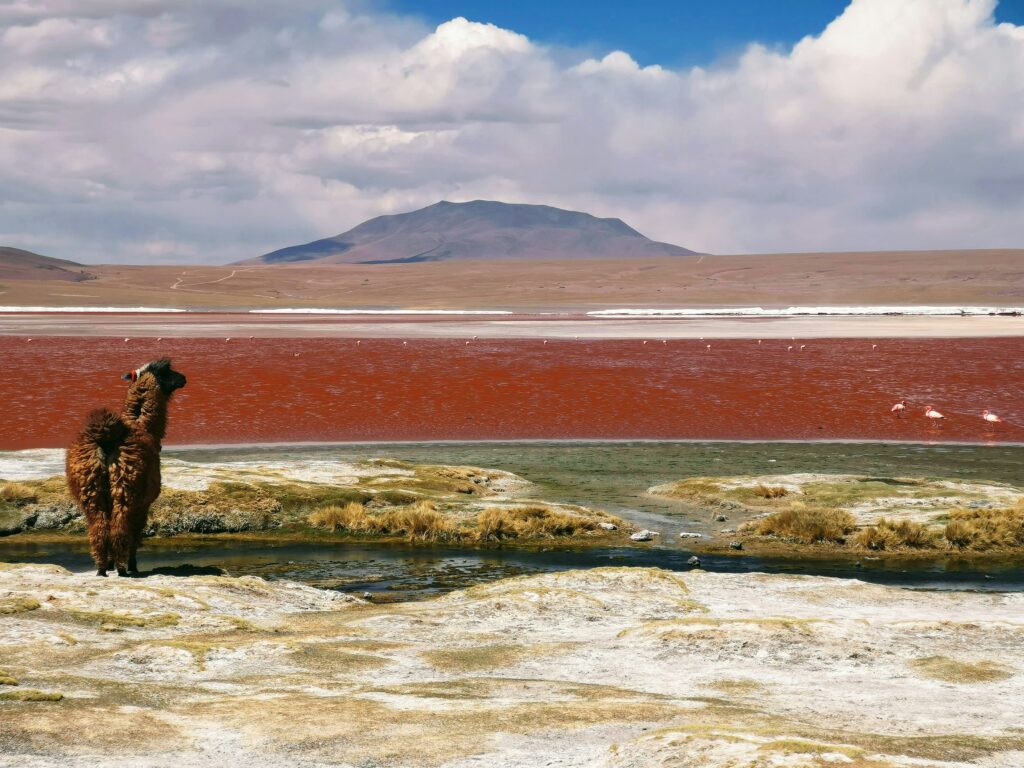
And Then There’s the Bolivia You’ve Seen on Instagram
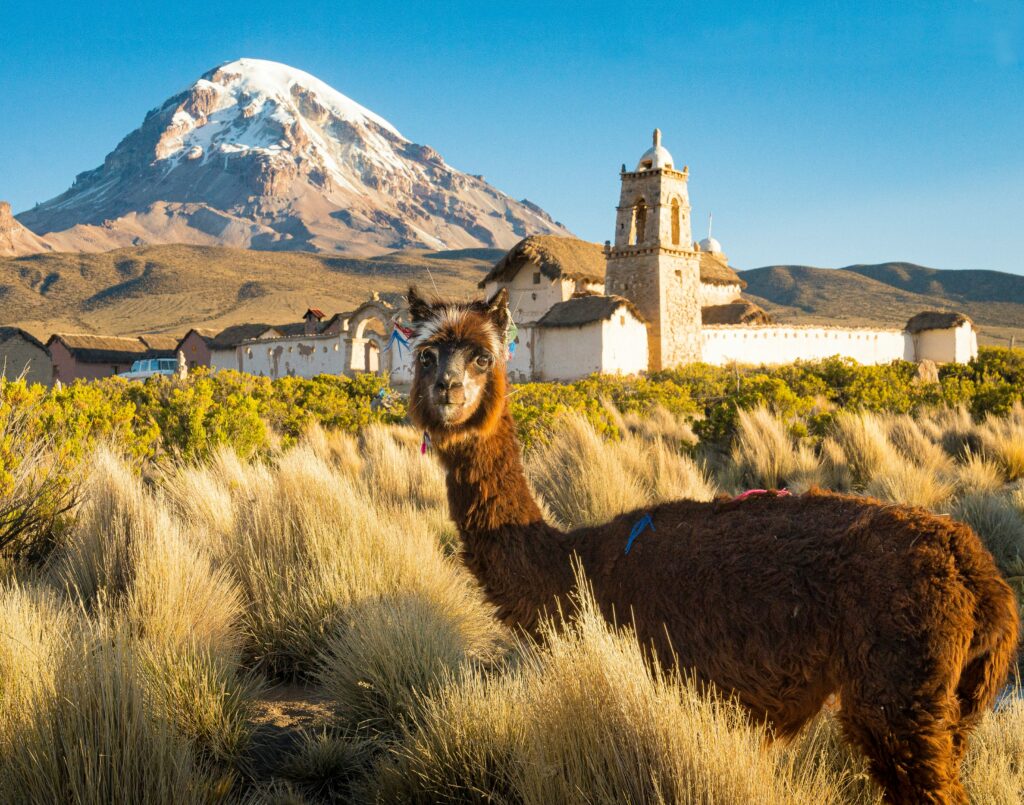
Of course, you cannot come to Bolivia without seeing the landscapes. The Salar de Uyuni is the obvious showstopper: the world’s largest salt flat, producing that extraordinary mirror effect after rain that makes visitors look as if they are walking across the sky.
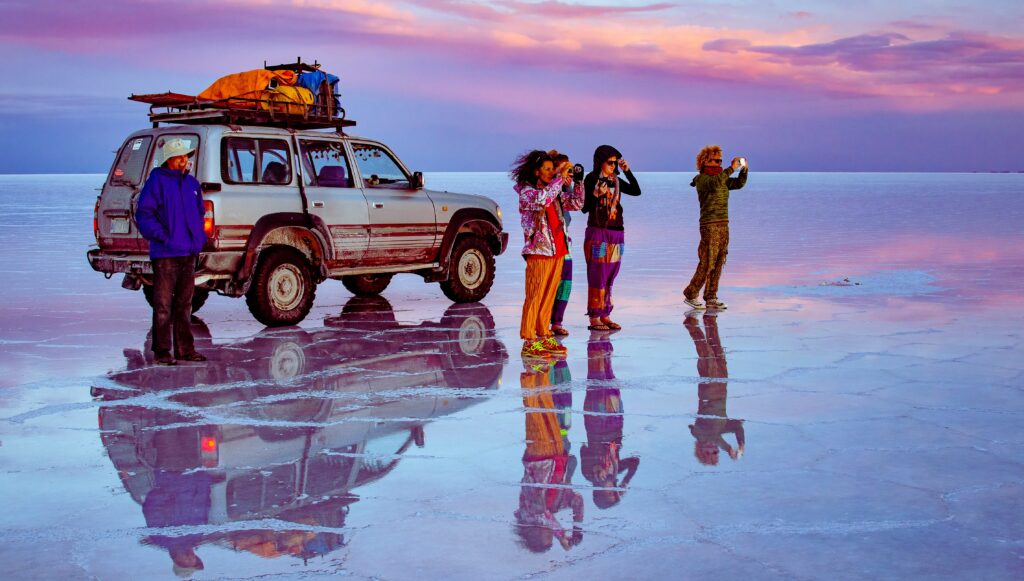
Then there is Lake Titicaca, the world’s highest navigable lake, along with colonial Sucre, the silver-mining history of Potosí, the dramatic landscapes around La Paz and the astonishing biodiversity of Bolivia’s Amazonian regions.
For LGBTQ+ travelers, the attraction is partly that Bolivia still feels less packaged than some of South America’s established queer destinations.
This isn’t Buenos Aires, Rio or São Paulo. You won’t find a huge gay district or endless LGBTQ+ nightlife. Instead, queer travel here is more about culture, landscape, history and connecting with the country’s evolving LGBTQ+ community.

But Is Bolivia Safe for LGBTQ+ Travelers?
This is where the rainbow-colored glasses should come off.
Bolivia can be an excellent destination for LGBTQ+ travelers, but social acceptance varies considerably by location and circumstance. Canada’s travel guidance says homosexuality is increasingly accepted but warns that much of Bolivian society remains conservative and that LGBTQ+ people can face discrimination based on sexual orientation, gender identity, and gender expression.
British travel advice similarly notes that same-sex sexual activity is legal but says same-sex relationships are viewed less favorably in parts of the country, particularly the Altiplano, than in Santa Cruz.
In La Paz and Santa Cruz, LGBTQ+ travelers are generally likely to encounter a more cosmopolitan atmosphere. In smaller towns and rural areas, discretion around public displays of affection may be sensible.
For same-sex couples, holding hands in a tourist district is one thing; an overtly sexual display in a conservative rural setting is another.
Safety Tips for Queer Travelers
Think about ordinary crime as much as LGBTQ+ discrimination. Petty theft is common in tourist areas, and travelers should be particularly careful with phones, wallets, and bags. The U.S. currently rates Bolivia at Level 2, “Exercise Increased Caution,” due to crime, unrest, and health concerns.
Check travel advisories: Bolivia has some recent travel warnings, from narcotrafficking to yellow fever. Check the State Department’s website for the latest updates.
Be cautious with nightlife. There have been reports of sexual assaults in clubs and hostels. Don’t accept drinks from strangers, keep an eye on your drink and make sure you know how you are getting back to your accommodation.
Use reputable transportation. Avoid getting into unofficial taxis, particularly late at night. This is sensible advice for everyone, but solo LGBTQ+ travelers should be particularly cautious when leaving nightlife venues.
Don’t assume dating-app strangers are safe. Meet in public places first, tell someone where you are going and avoid revealing your hotel room number or accommodation details.
Don’t confuse legal equality with social equality. Bolivia’s Constitution provides strong anti-discrimination protections, but enforcement can be inconsistent and prejudice remains.
Trans travelers should carry documentation. Bolivia recognizes legal gender changes, but bureaucratic implementation can still be complicated. Carry copies of important documents and allow extra time if your passport and other identification use different gender markers or names.
Watch political developments. Demonstrations, strikes and road blockades can disrupt transportation, sometimes with little warning. This is particularly relevant if you’re moving between cities by road.
And one particularly practical warning: don’t bring coca leaves or coca products home. Coca is legal and culturally important in Bolivia, but it can cause serious problems at international borders because coca leaves are prohibited in many other countries.
The Queer Verdict
A country whose Constitution still contains traditional language about marriage has just witnessed its first legally recognized same-sex marriage. A country where early Pride marchers sometimes hid their faces now has municipal LGBTQ+ services. A country whose trans history was once pushed to the margins is increasingly recovering the stories of figures such as Ofelia and Barbarella.
For queer travelers, Bolivia is a country in motion. Come for the salt flats and the Andes. Stay for the food, music, Indigenous cultures, and astonishing landscapes. But also look a little closer at the people and stories behind the rainbow.
Explore some great Bolivia vacation packages here with Expedia. Some incredible flight deals are here. And affordable luxury is here.