
Budapest: An LGBTQ Traveller’s Guide to Hungary’s Beautiful Capital
Budapest is one of those cities that can make you fall in love with it almost accidentally, and for many good reasons.
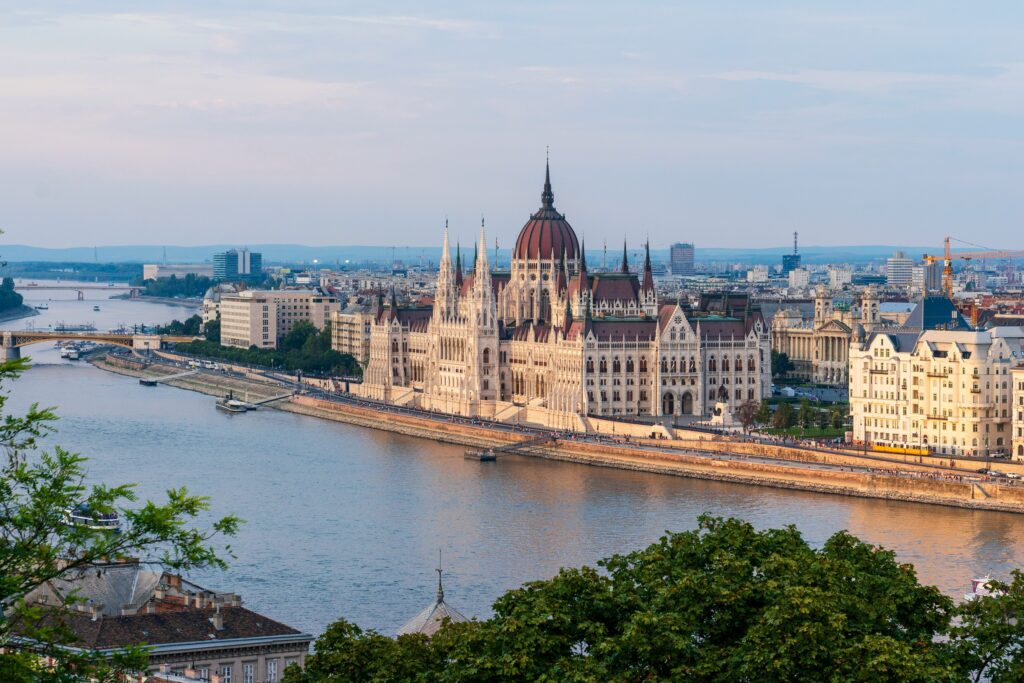
There is the Danube, slicing the city in two; the grand neo-Gothic Parliament; Buda Castle rising above the river; architecture ranging from medieval to Art Nouveau; cozy coffee houses and cobblestone streets; the unmissable Great Market Hall; and extraordinary thermal baths.
Put some Franz Liszt on your playlist and spend a morning wandering the Castle District on the Buda side. Cross the Chain Bridge. Walk along the Danube. Visit the Parliament from the outside and explore the city’s extraordinary coffee-house culture.
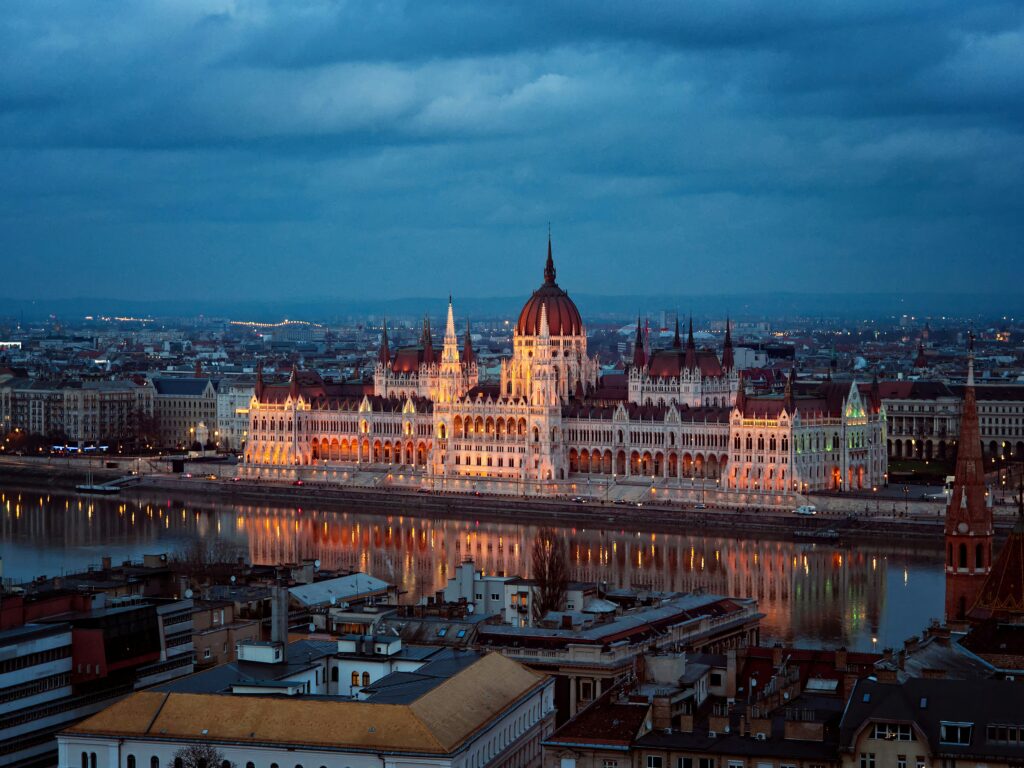
Then there is the Budapest of ruin bars, drag shows, underground parties, and queer nightlife that continues until dawn—if you know where to find it. For LGBTQ travelers, however, the city’s atmosphere and Hungary’s national political environment have not always moved in the same direction. That tension is part of this unique city’s story and history.
Budapest’s LGBTQ scene: compact but lively
Budapest has no single equivalent of London’s Soho, Paris’s Marais, or even New York’s Greenwich Village. Instead, LGBTQ life is scattered through central Budapest, particularly Districts VI and VII and the surrounding downtown area. The Jewish Quarter, Erzsébetváros, is particularly useful territory for queer visitors because it combines nightlife, restaurants, ruin bars, and accommodation.
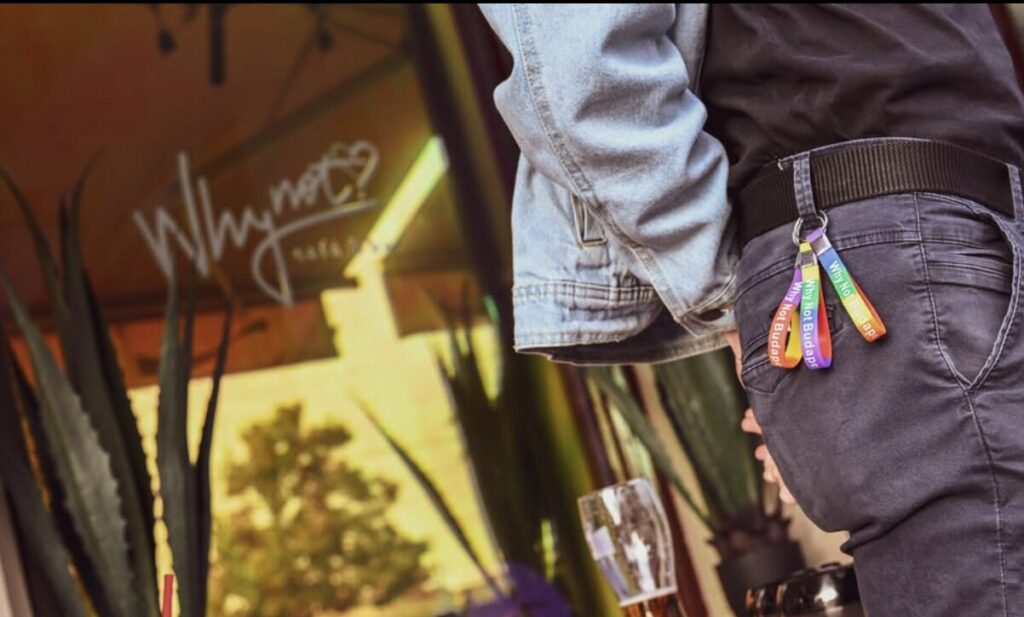
For a first evening, head towards Why Not Cafe and Bar on Belgrád rakpart. It is one of Budapest’s established LGBTQ venues and has the considerable advantage of a Danube-side location. It operates as more than a late-night drinking spot, with drag bingo, queer karaoke, and viewing parties—you have to love a spot that had a King of Drag watch party and a Bonnie Tyler tribute night! It’s friendly, mixed, and you can get food there, too.
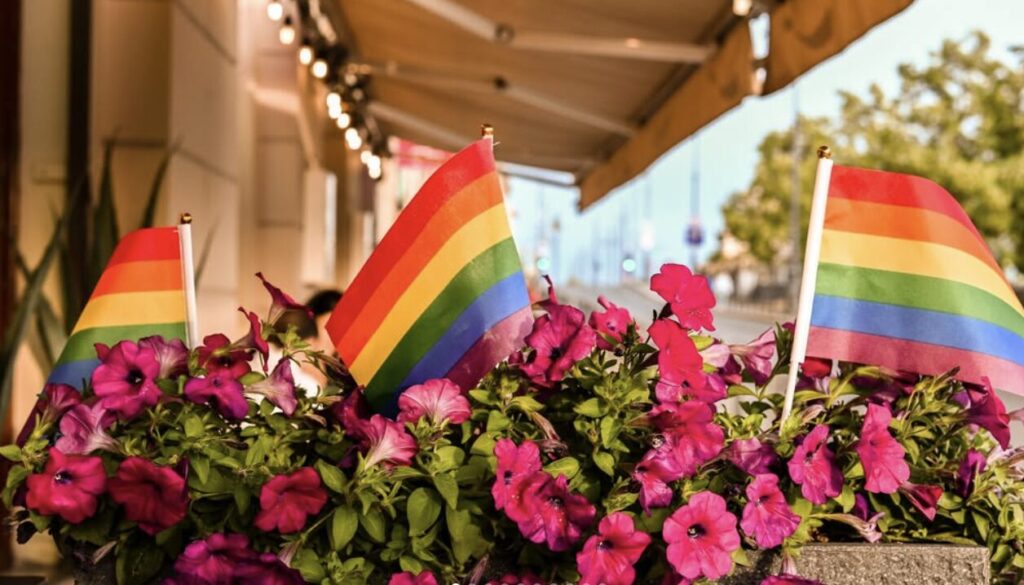
Habroló Café & Bar is a cozy LGBTQ bar in the Jewish Quarter. It is much more intimate than Budapest’s large nightclubs and has a reputation for being relaxed and friendly, making it an easy place for solo travelers to strike up conversations.
If you want the full Saturday-night experience, ALTEREGO is one of the city’s established gay clubs. It operates primarily on Friday and Saturday nights, with dancing, drag performances, and a late closing time. Budapest nightlife is famously nocturnal, so don’t be surprised if arriving at 10 pm feels rather early. Bring your energy with you!
An important LGBTQ tip: not every queer night in Budapest happens in a gay venue. Mainstream and alternative bars, clubs, and pop-up parties are an important part of the city’s queer social landscape.
From ruin-bars to thermal baths
Even if you aren’t particularly interested in gay nightlife, you should experience Budapest’s ruin-bar culture. These bars emerged from abandoned or semi-abandoned buildings, particularly in the old Jewish Quarter, and became one of the city’s defining nightlife phenomena. Time Out has a fairly up-to-date guide to the best ruin bars/pubs here.
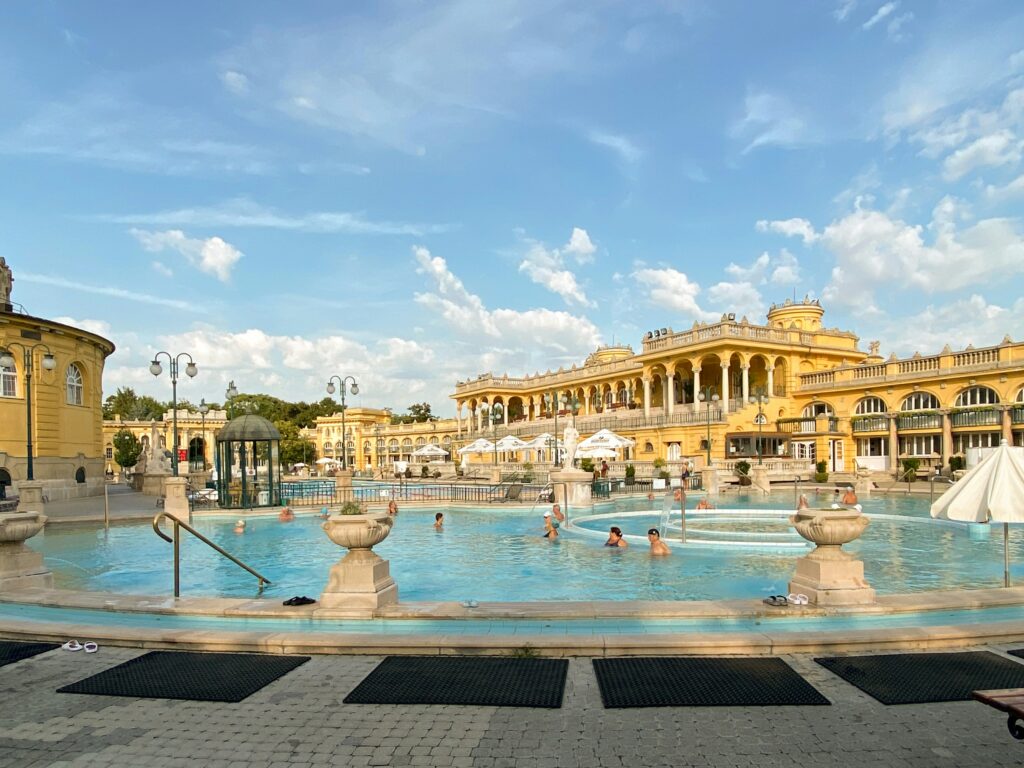
And then there are the thermal baths. You cannot properly visit Budapest without going to a thermal bath. The city’s bathing culture is centuries old, and the spectacular historic bathhouses are as much part of Budapest’s identity as the Parliament or the Danube.
The famous Széchenyi and Gellért baths are public rather than LGBTQ venues, but they are part of the broader Budapest experience for queer visitors.
If you’re looking specifically for gay men’s nightlife, dedicated venues like Magnum Sauna and Sauna 69 also offer options.
Budapest for lesbians and queer women
Budapest’s permanent LGBTQ nightlife infrastructure is considerably more oriented towards gay men than lesbian and queer women. There isn’t currently a large permanent lesbian-bar culture comparable with what you might find in some Western European capitals. Instead, queer women tend to participate in broader LGBTQ nightlife, such as Why Not, cultural events and temporary parties. Current Budapest nightlife guides specifically note the absence of permanent lesbian bars and the importance of occasional women-focused parties.
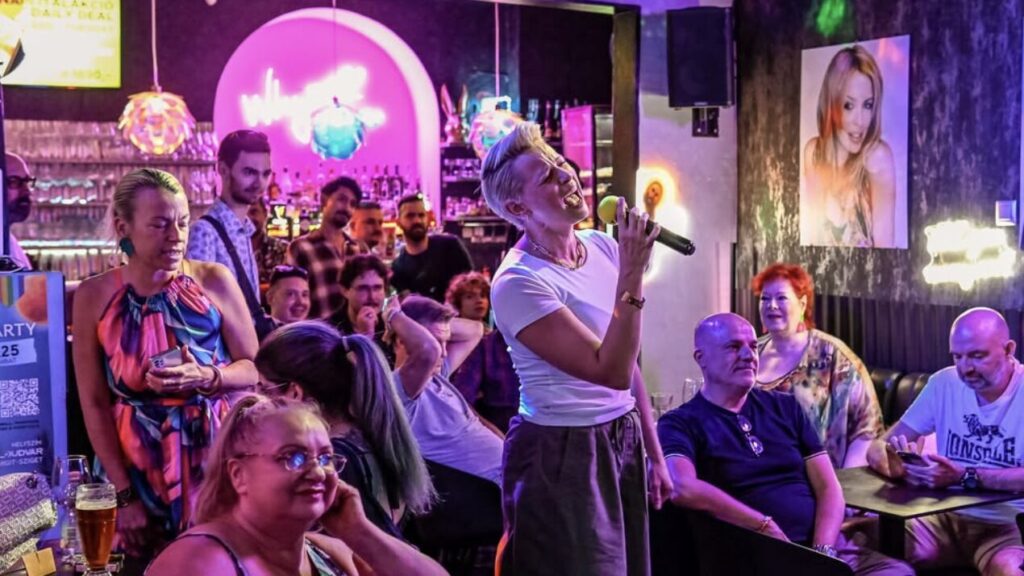
Labrisz Lesbian Association, founded in 1999, is Hungary’s primary organization for lesbian, bisexual, and transgender women. They host regular discussion groups (Labrisz Evenings), informal monthly meetups (Labrisz Relax), and cultural projects like the Lesbian Identities Festival (LIFT).
A city with a complicated LGBTQ political backdrop
Hungary, under Viktor Orbán’s government, enacted legislation restricting LGBTQ representation and education, including the controversial 2021 law concerning the depiction or promotion of homosexuality to minors. Same-sex marriage remains unavailable, although registered partnerships exist.
But 2026 has brought a significant political change. Peter Magyar defeated Orbán in April 2026, and his government has now proposed reversing several of the previous government’s LGBTQ-related restrictions. In September 2026, the government submitted legislation to repeal the 2021 restrictions, and Magyar also announced plans to reverse the effective ban on same-sex adoption.
The legal and political situation is currently in transition, not something that can be accurately described by Hungary’s situation from several years ago. But Hungary has had a remarkably turbulent political scene throughout its history, from the early migration of the Magyars (fierce horse archers!) to the modern era. It’s been a cultural island in Central Europe, making it a frequent battleground for domestic power struggles and foreign empires. But without that identity, you wouldn’t have the multiple layers and intrigue that make Budapest such a compelling destination.
Budapest Pride and LGBTQ safety
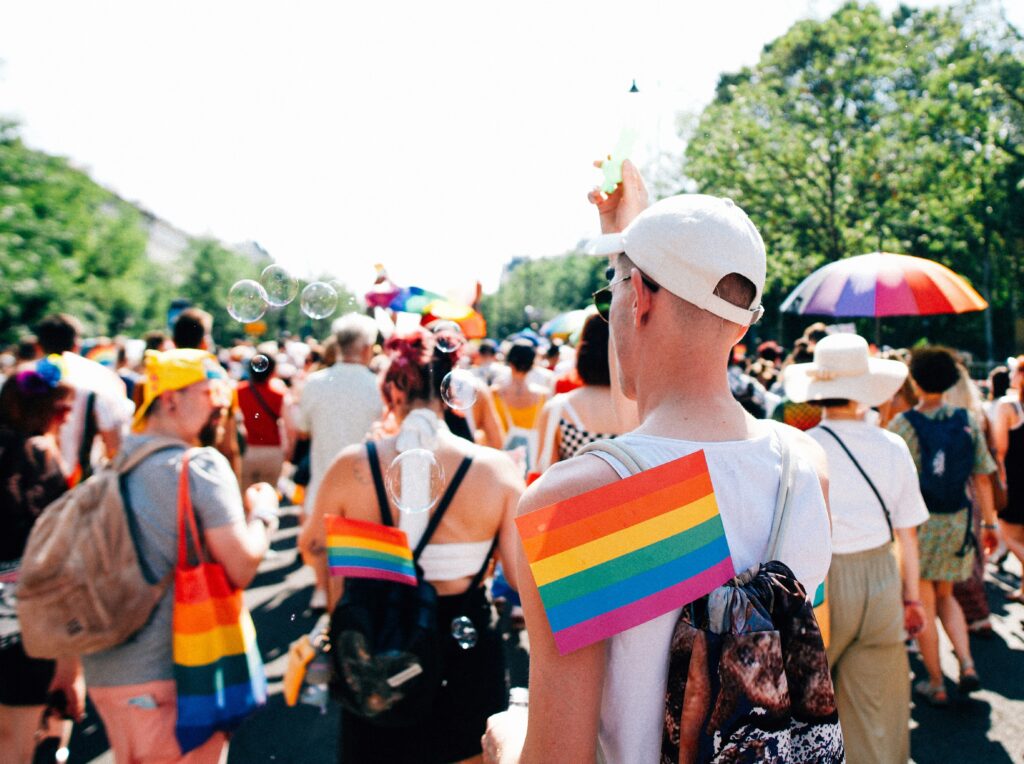
Budapest Pride in June has become one of Hungary’s most visible expressions of LGBTQ life. The event is more than a party: it has become an important public demonstration for LGBTQ rights and political freedom. Budapest held its 31st annual Pride march on Saturday, June 27, 2026, and tens of thousands of people attended. If you’re traveling specifically for Pride, check the official event information as your trip approaches, because regulations and political circumstances can change quickly.
For most visitors, Budapest is a major European tourist city where ordinary precautions apply, but LGBTQ travelers should be mindful of the difference between Budapest’s relatively lively queer scene and Hungary’s broader political environment. The LGBTQ nightlife is visible and established, particularly in central Budapest. At the same time, it is sensible to exercise normal discretion around public displays of affection, particularly outside the central tourist and nightlife areas. If attending demonstrations or Pride-related political events, pay attention to current local guidance.
Where to stay: Editor’s pick
Kimpton BEM Budapest, part of IHG Hotels & Resorts’ luxury and lifestyle portfolio, is the city’s newest boutique landmark, designed by internationally acclaimed Dutch designer Marcel Wanders. Renowned for his unconventional, imaginative approach, Wanders created a hotel that honors Hungary’s rich folklore and celebrates the vitality of its capital through Maximalism and bold Expression.
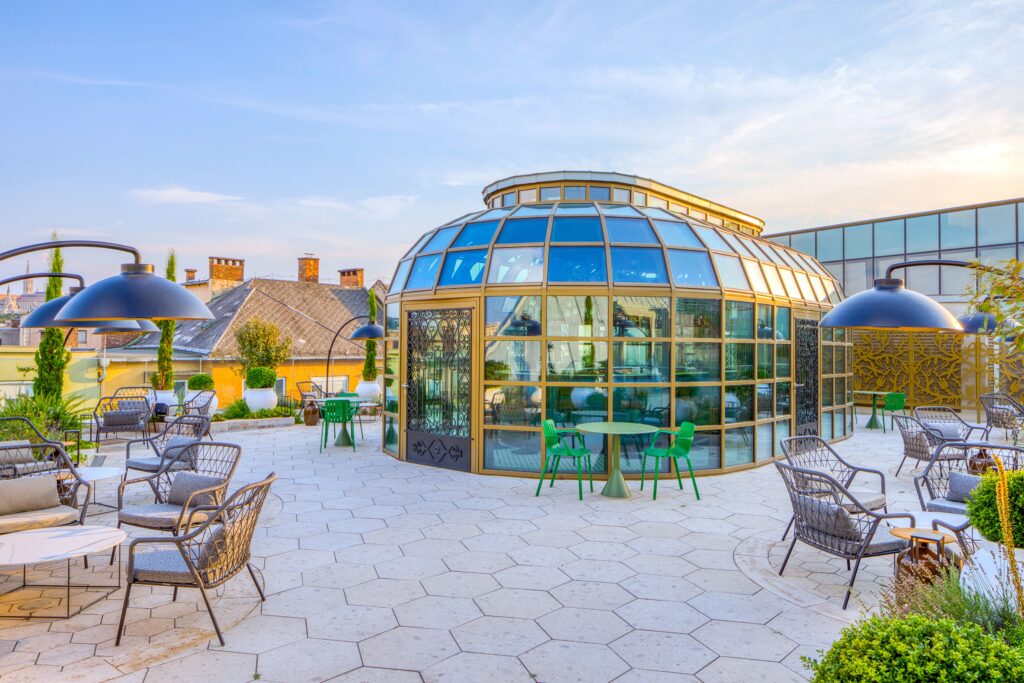
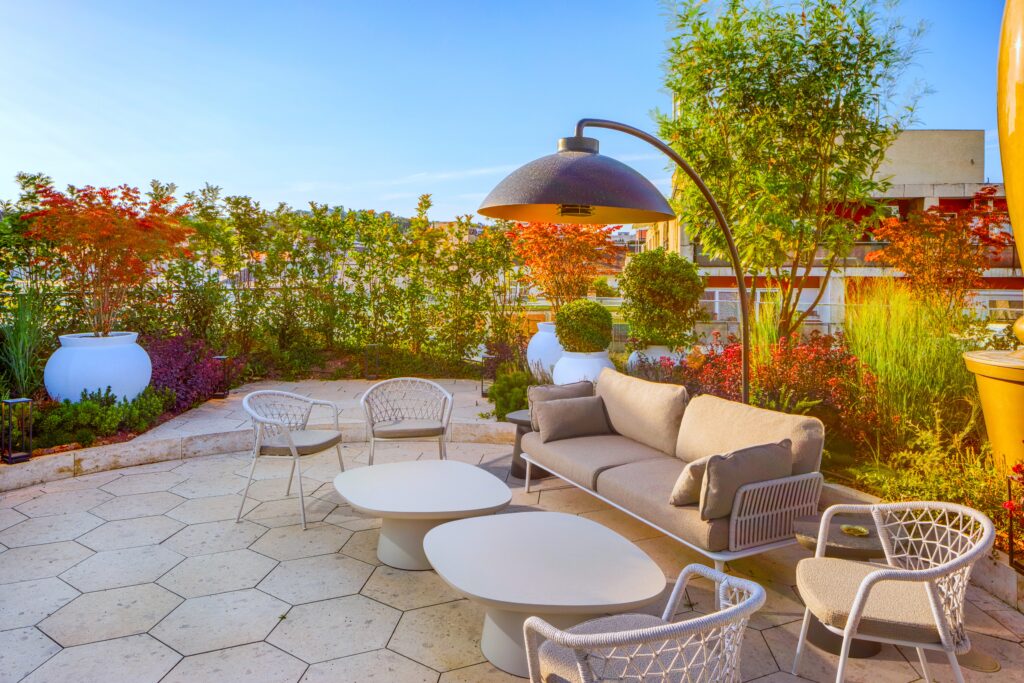
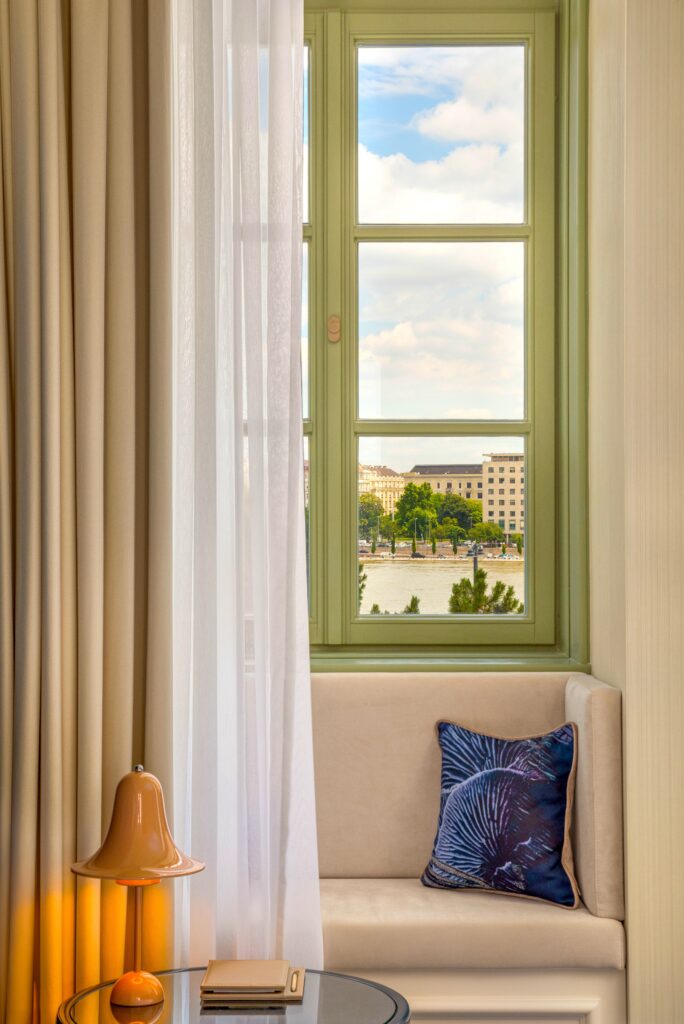
The hotel is named after the Polish General Bem, who helped Hungarians during the Independence War of 1848 and it’s set within a restored 19th-century mansion on the Buda side of the Danube. Kimpton BEM Budapest features 127 guest rooms, including eight suites, plus three innovative restaurants. Positioned moments from the UNESCO World Heritage-listed Castle District, the property offers guests front-row access to Fisherman’s Bastion, Matthias Church, the Chain Bridge, and the city’s famed thermal baths.
Wanders and team immersed themselves in local libraries and historical archives and met with Hungarian artists. The result is a hotel infused with myth, magic, and timeless storytelling. From the Golden Stag, a guardian figure in Hungarian legend, to motifs of native flora such as poppies and tulips, folkloric symbols run throughout the interiors. In the Turul Room, a private dining and meeting space, the mythic bird of Magyar tradition spreads its wings across the walls, grounding the modern design in centuries-old lore.

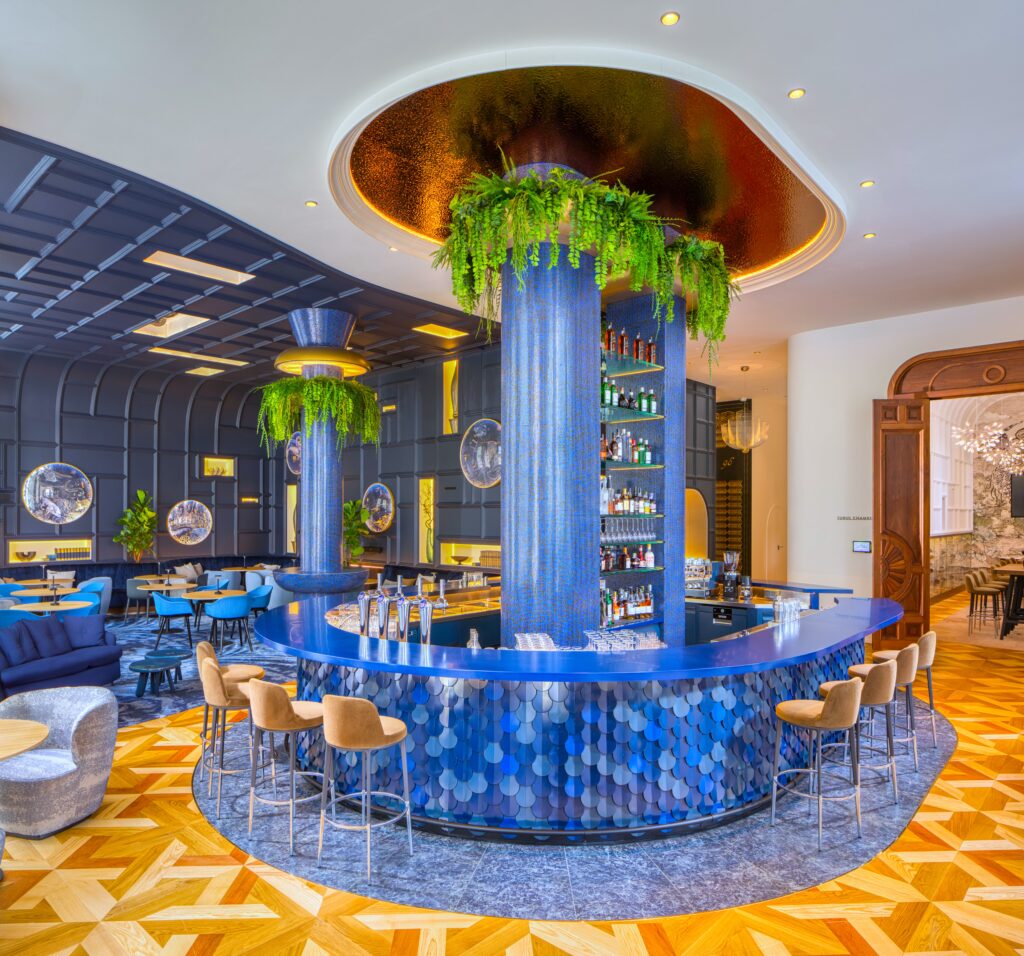
“We wanted (guests) to truly wake up in Hungary and Budapest, not somewhere else,” says Wanders. “Every element was created to touch the fiber of (this) nation and culture.” Marcel invited local Hungarian craftsman to bring his wooden door and detailed floor designs to life. “It’s important to create something that belongs somewhere,” he says. “If you make a chair it can land anywhere, but interiors don’t have feet – if you make a hotel, you know exactly where it lands.”
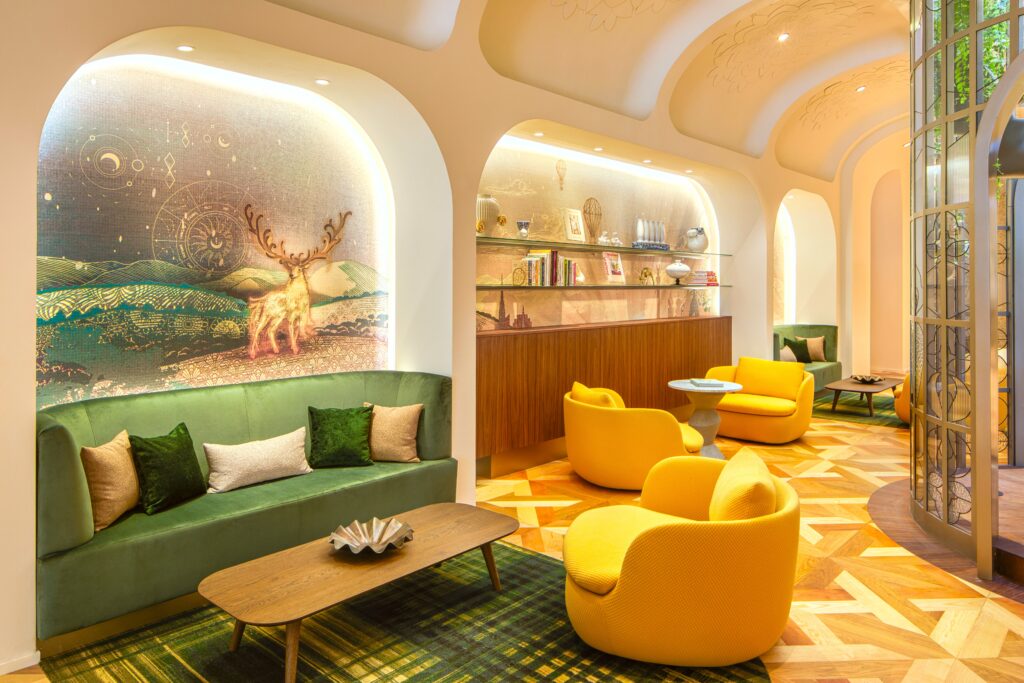
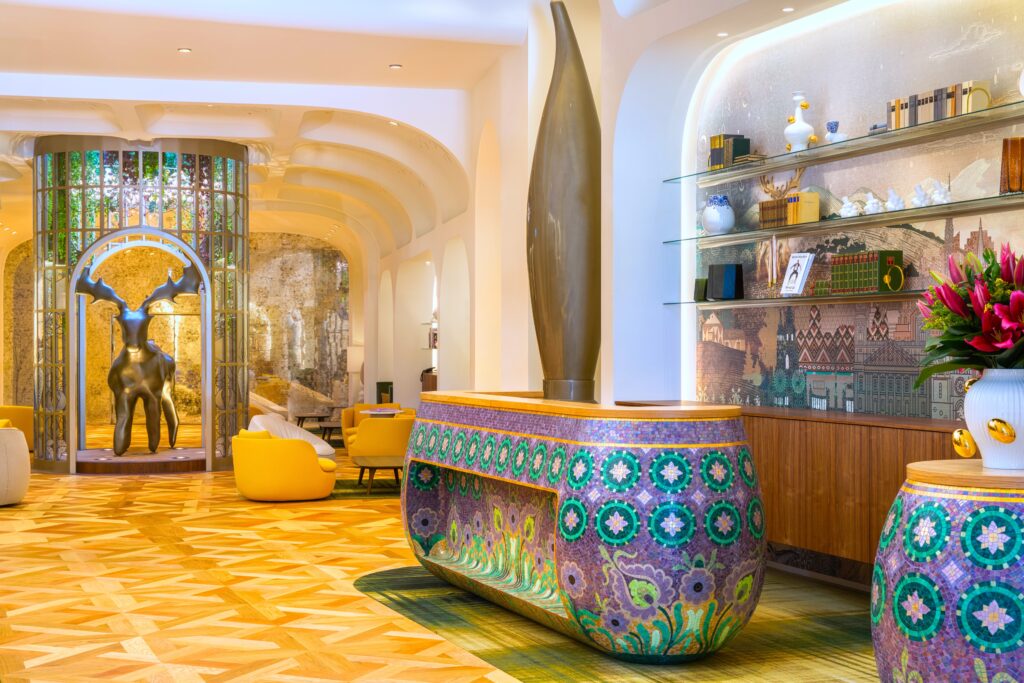
Design highlights include the ornate lobby desk with its folkloric motifs, the Argos restaurant chandelier, and Art Deco detailing. Each guest room has its own identity, with varied palettes of rich, mature tones that go beyond simple, contemporary hues.
“There’s a clear sense of individuality in every space—you’ll remember exactly which room you stayed in,” Wanders notes. For the penthouse suite, he went even further, creating a celestial interior that “aims for the stars” with an otherworldly, cosmic feel.
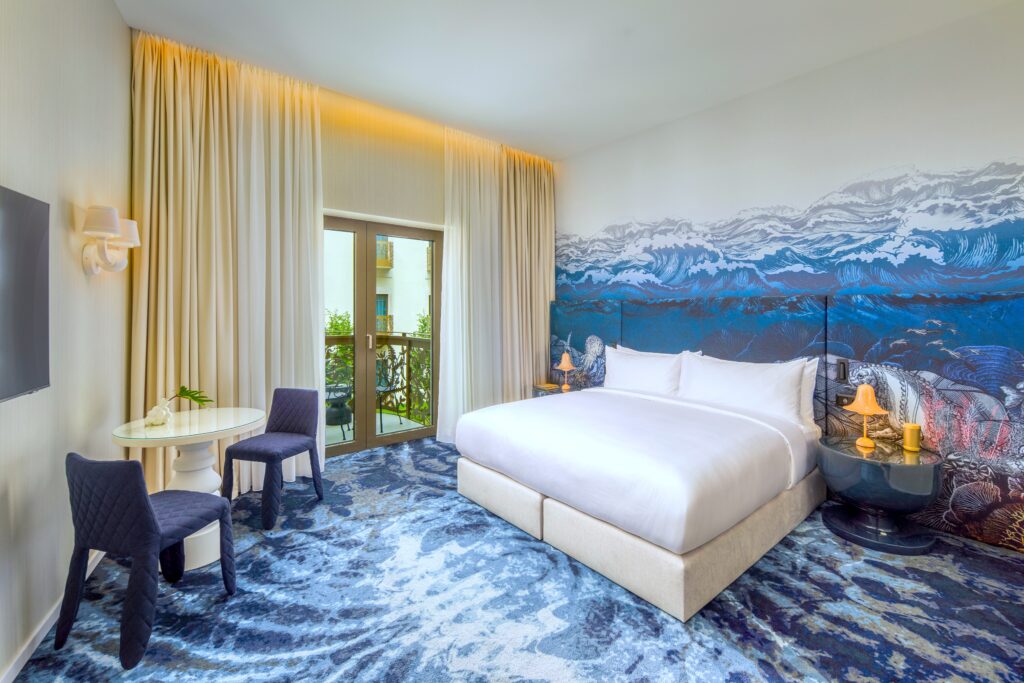
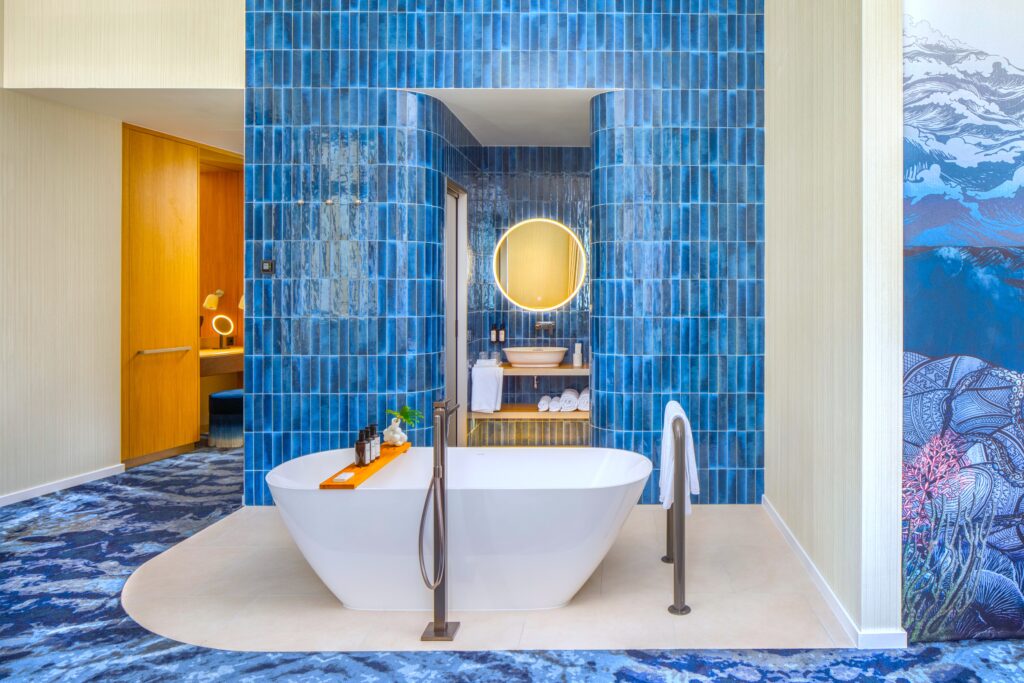
Kimpton BEM Budapest is intentionally bold. Wanders insists that design should spark individuality: “The whole point of the interior is that not everyone should like it… we want open-minded people.”
With its imaginative interiors and cultural depth, Kimpton BEM Budapest stands as a landmark of Budapest’s evolving design landscape—a place where Hungarian folklore meets maximalism under the visionary hand of Marcel Wanders.
See what people are saying about the Kimpton BEM Budapest here where you can read the reviews, see more photos and check availability.