Get Lit in Alaska: A Guide to Fairbanks and the Northern Lights
In a recent visitor profile study, the Alaska Travel Industry Association found that one in three tourists said their “reason for visiting” the state was to scratch one off their bucket list.
That’s not too surprising. The Last Frontier State is a wildly remote geographic natural wonder filled with glaciers, grizzlies, salmon, and parks like Denali. It’s also home to 180,000 Indigenous people who make up the 229 Federally Recognized Tribes there. Its history is rich and draws many, including those who love Gold Rush energy and its Russian roots (still evident today).
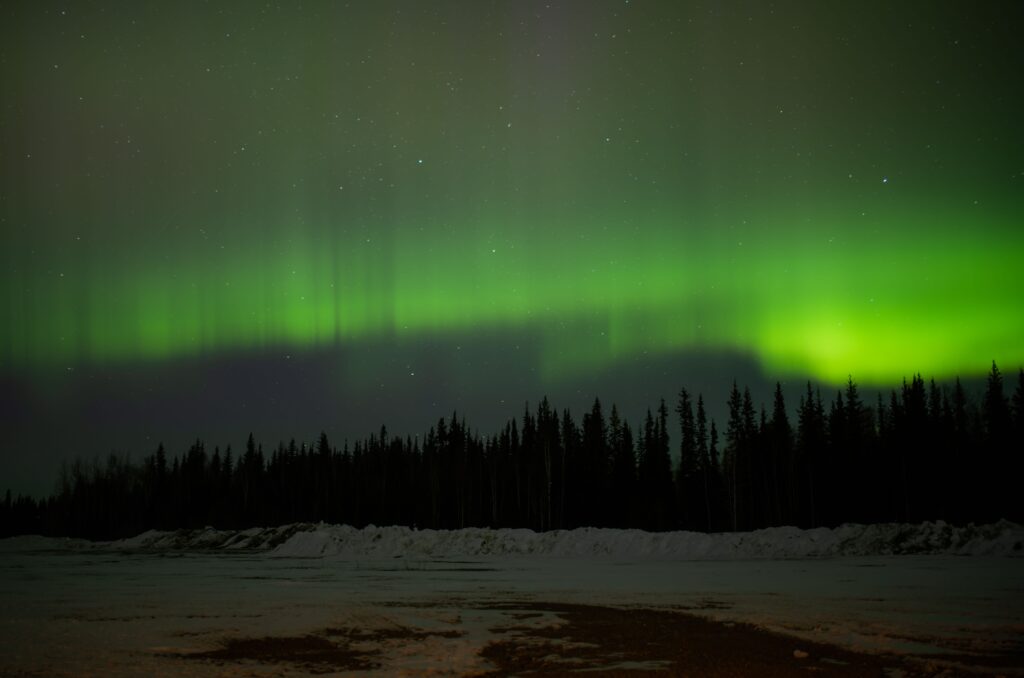
But maybe more than any bucket-list draw are those Northern Lights. And until you’ve experienced them, it’s just hard to put across. One minute the night sky is dark and full of stars, and then, out of seemingly nowhere, comes an explosion of dancing, moving lights, arching above your head, taking your breath away. It was Lady Aurora that mostly drew me, and she was not disappointing in any way.
I always had a desire to see the Lights, but I’m not a cold-weather gal, and all the photos I’d ever seen had been taken in ultra-frigid locations. Then there was also the expense. The best consistent viewing seemed to be mostly in the Nordic countries (Norway, Finland, Sweden, and Greenland) or in remote parts of Canada, all adding many thousands of dollars to the trip. But then I found Alaska! Not cheap, mind you, but certainly much more reasonable than these other spots.

From a scientific view, the 49th state is an optimal place to see the Lights. Due to its high latitude, Alaska sits in what is known as the “auroral oval,” the imaginary ring-shaped area around the North Pole where Auroras are most frequent and intense. It’s also one of the least populated states, so city light pollution is dramatically reduced, and its long dark winter also limits interfering sunlight. All lead to way better chances of seeing the Aurora, from late September to early April.
And that’s just it. The Aurora Borealis occurs almost every day of the year (more intense when there are coronal mass ejections, which are eruptions of plasma from the Sun, also called geomagnetic storms), but many conditions need to be met to see the magic. A high latitude, darkness, and very clear skies are pretty much mandatory. Alaska offers all. But keep in mind: when you see all those great photos of bears grabbing salmon at Katmai Park, those folks didn’t get to see the Lights. Bears are out in the very late Spring to the very early Fall, months when the lights are not visible due to Alaska’s Midnight Sun, meaning virtually endless days and little darkness.
Cruising to Alaska is another wonderful experience, but it’s also very expensive, and generally most ships end their excursions there in the autumn due to rough seas.
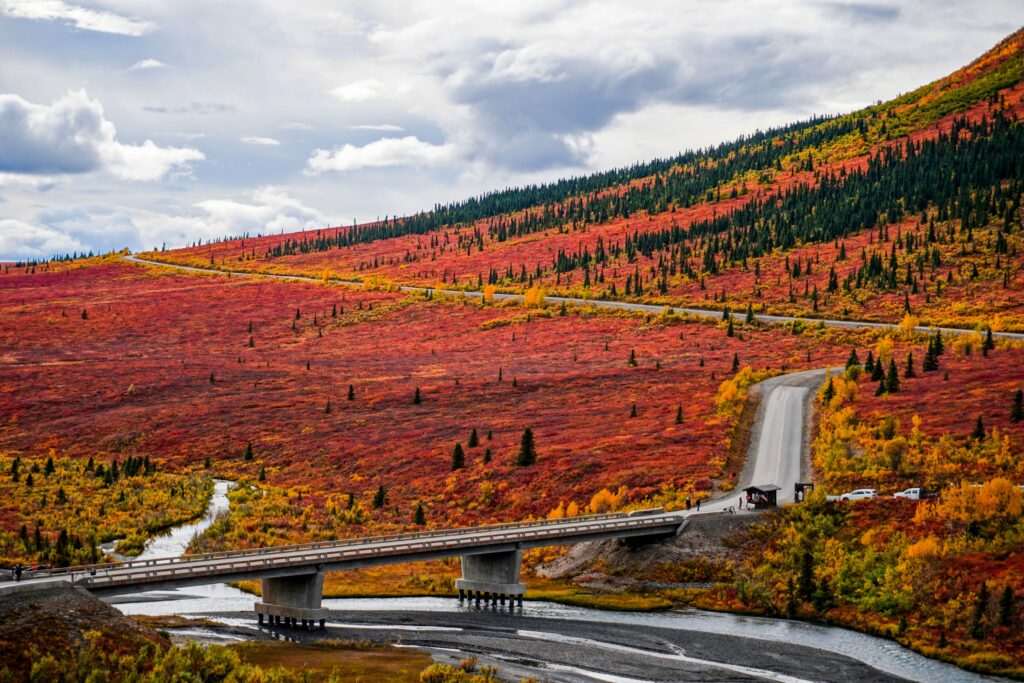
So I made a choice, forgoing Alaska’s summer loveliness for the chance to see those Lights. Anchorage, the largest city with about 250,000 inhabitants, is where most head. I picked Fairbanks, the second-biggest city, but with only 33,000 folks and much farther north to increase my chances of seeing the lights. Mid to late September was optimum for me… foliage in full vibrancy, better pricing as fewer tourists go then, little chance of snow, and the beginning of Aurora season.
In Fairbanks, there are basically three options for seeing the Lights—you can hire a “chaser,” stay at a lodge nearby that specializes in accommodating Aurora viewers, or just chance a spectacular show any night you happen to luck out in downtown. Hiring a chaser may give you your best consistent shot at seeing the lights, as even when there is deep cloud cover in Fairbanks proper, these guides are called chasers because that is exactly what they do. Most will pick you up wherever you are staying in Fairbanks, usually around 10 pm in mid to late Fall, and then, using numerous weather apps, they hunt for the Lights based on cloud coverage and other solar blast information. So even if the lights aren’t visible downtown, these folks will drive several hours to make sure you get to see a fabulous display, then bring you back to your hotel.
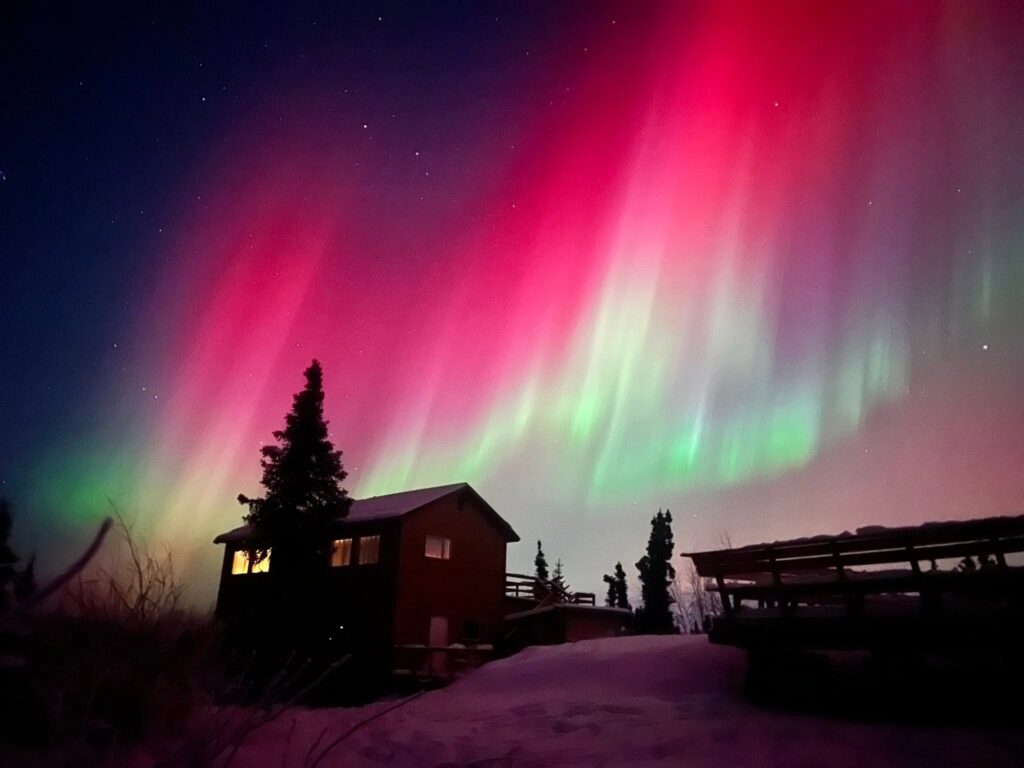
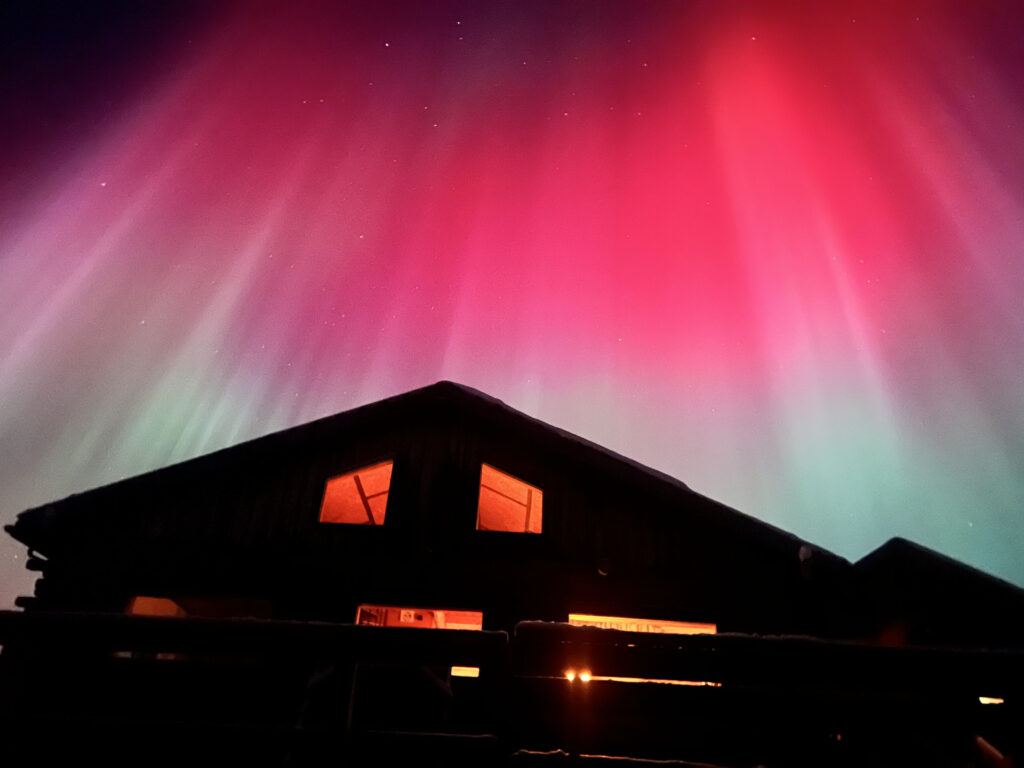
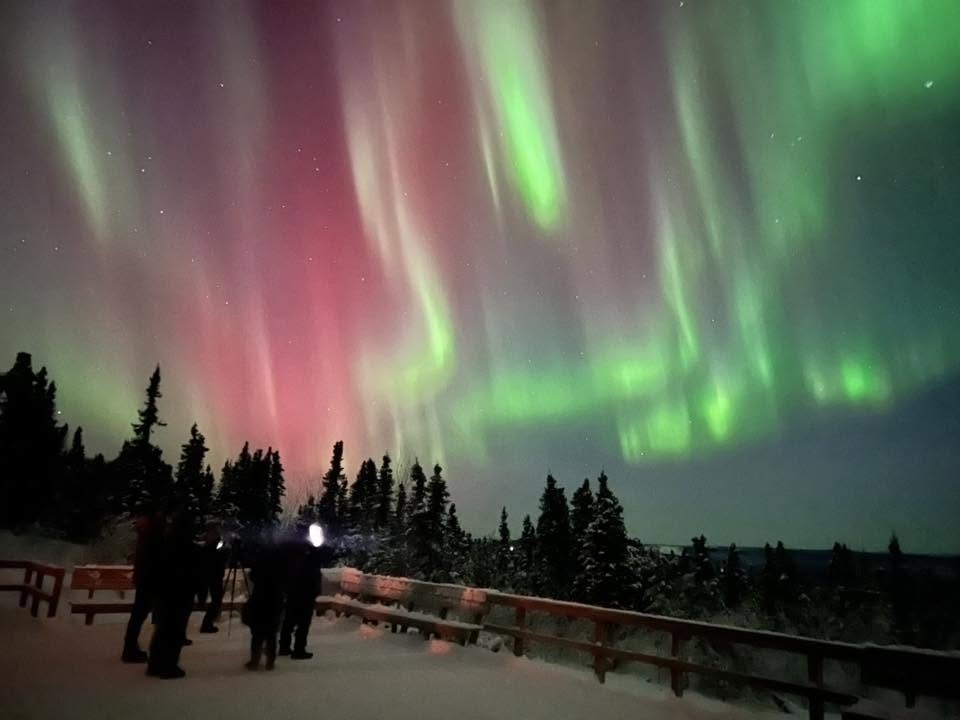
Numerous small lodges are also within a 30-minute drive of downtown and cater to viewers. I stayed at one for a few nights called the Aurora Borealis Lodge, owned by Mok Kumagai. About 25 minutes outside Fairbanks on Cleary Summit, the place is stellar, with super comfortable rooms that include full kitchens and one wall of windows, all set up for optimum viewing. If the Lights are out, you can literally lie in bed and watch the show. There are also outdoor decks for those who want to use tripods for photography, and a large lounge where you can enjoy full viewing with others, which Kumagai brings up by van for four-hour, single-night visits from downtown. Hot chocolate, marshmallows, and cookies included!
Keep in mind, though, even at the lodge, there are no guarantees. Most will tell you that if you stay in the Fairbanks area for seven to ten days during the Aurora season, you will almost definitely get at least one great night of viewing in the general area without having to drive several hours.
“I tell everyone, sometimes you get to see a base hit, sometimes a grand slam,” says Kumagai. “We just never know.”
In all transparency, while I was at the Lodge, I only got to see base hits. And that was totally OK. I got to see something, hiked all around Cleary Summit (there’s bear spray in all the rooms!), and deeply enjoyed the solitude.
My great Aurora fortune happened smack dab in the middle of Fairbanks, about three blocks off the main road, Airport Way, right in front of the Airbnb I stayed in (And I do recommend looking at those rather than large hotels in Fairbanks. I stayed in both, and the larger chains were pricey and did not offer the same comfort of the Airbnb). See what Vrbo has here.
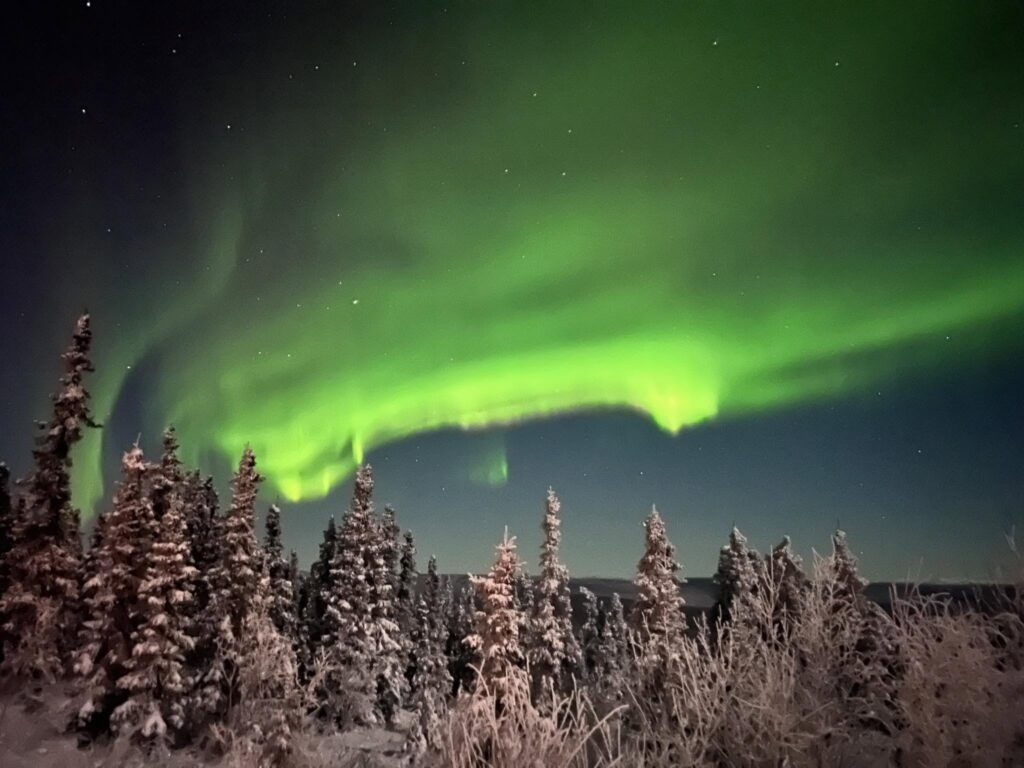
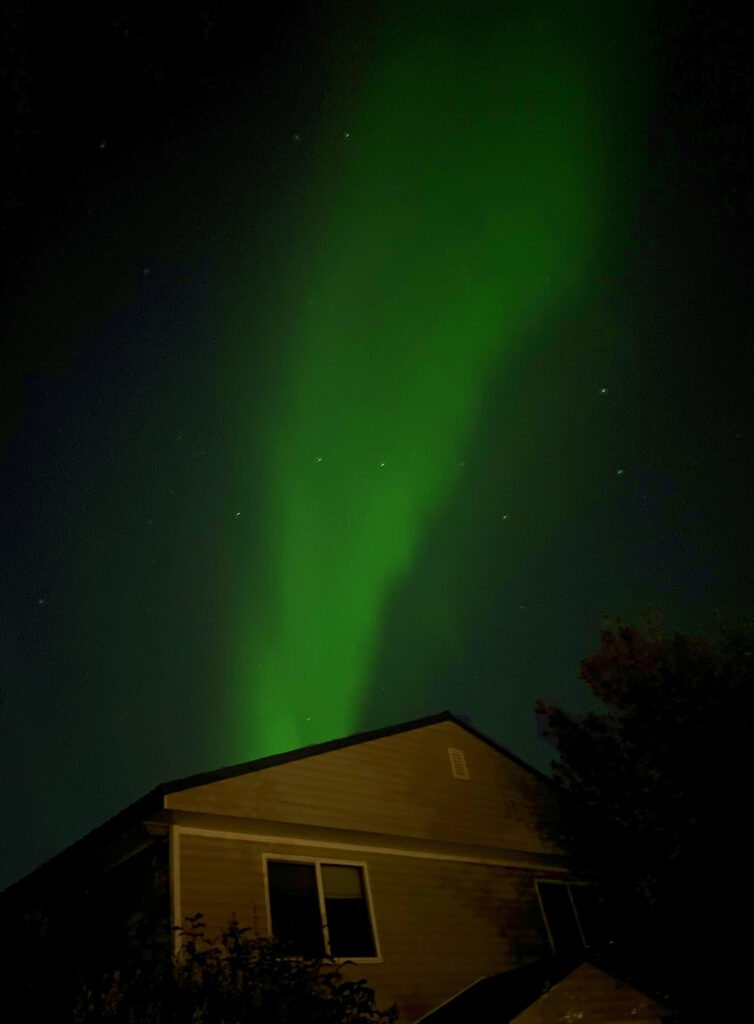
It was one of my first nights in Fairbanks, and I was super tired from traveling there and the time change. I was already in sleepwear when I opened the Aurora App and saw the predictors looked pretty positive for that night. I was surprised, since there had been night after night of clouds, but this particular night looked pretty clear. So, in my semi-PJs, at 10:30 PM, I threw on my parka and walked outside. The sky was indeed clear. A zillion beautiful stars, but no Aurora. And yet, there was this really odd-looking “cloud” arc off in the distance. It was almost perfectly convex. Having learned that the iPhone often sees the lights when we can’t, I held up my phone, and that weird “cloud” kind of had a green tint. Little did I know that in the next five minutes it would get darker and darker until it was quite clear this was the Aurora!
But it was still only a small patch of green light. I was so excited I had no trouble standing out in the middle of the road, freezing, and just patiently waiting. Within a few more minutes, the “cloud” opened into a long line of Aurora magic, then exploded across the sky. I was like a ten-year-old, jumping up and down, and trying to get photos and videos. I was fortunate to see both green and red Lights, and several iterations of shapes, including the dancing columns, for almost 45 minutes. For me, it was a grand slam and something I will never forget.
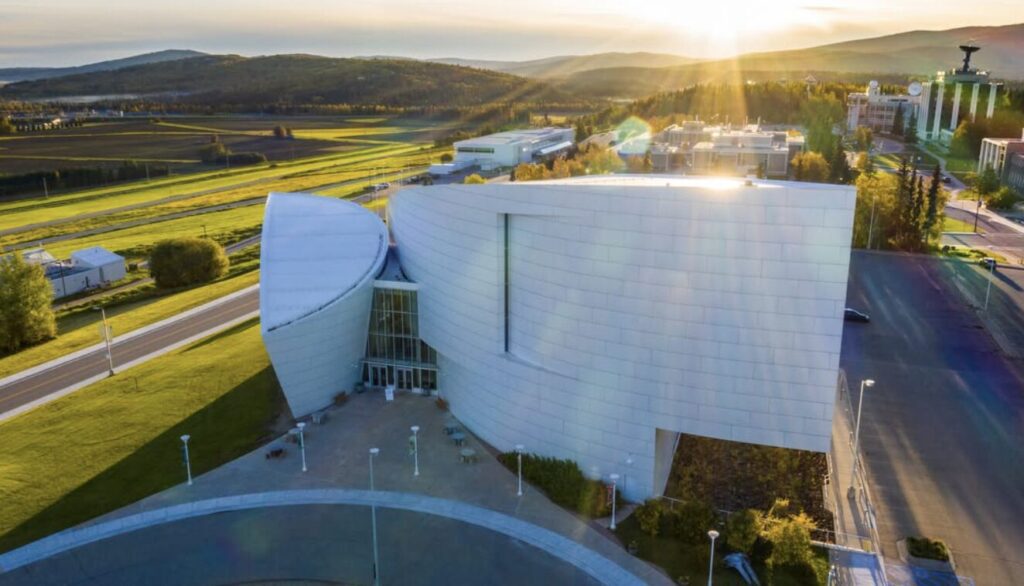
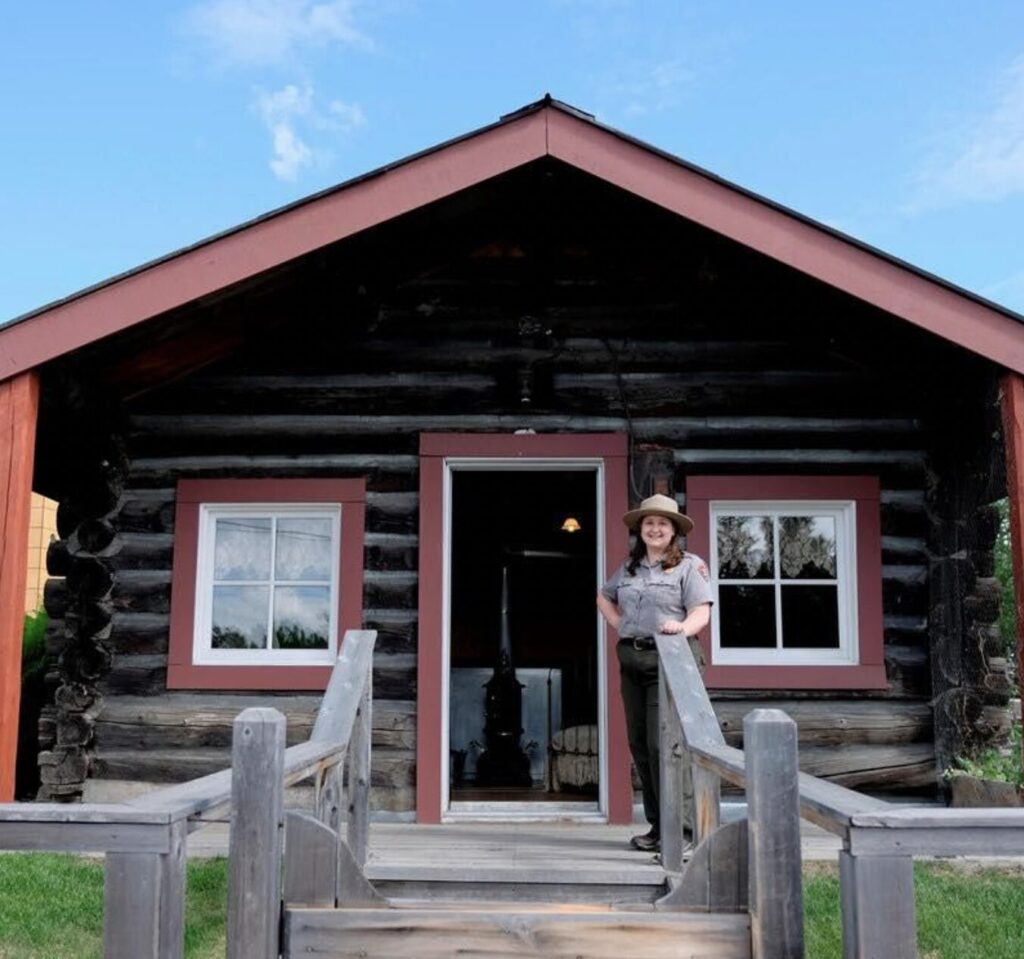
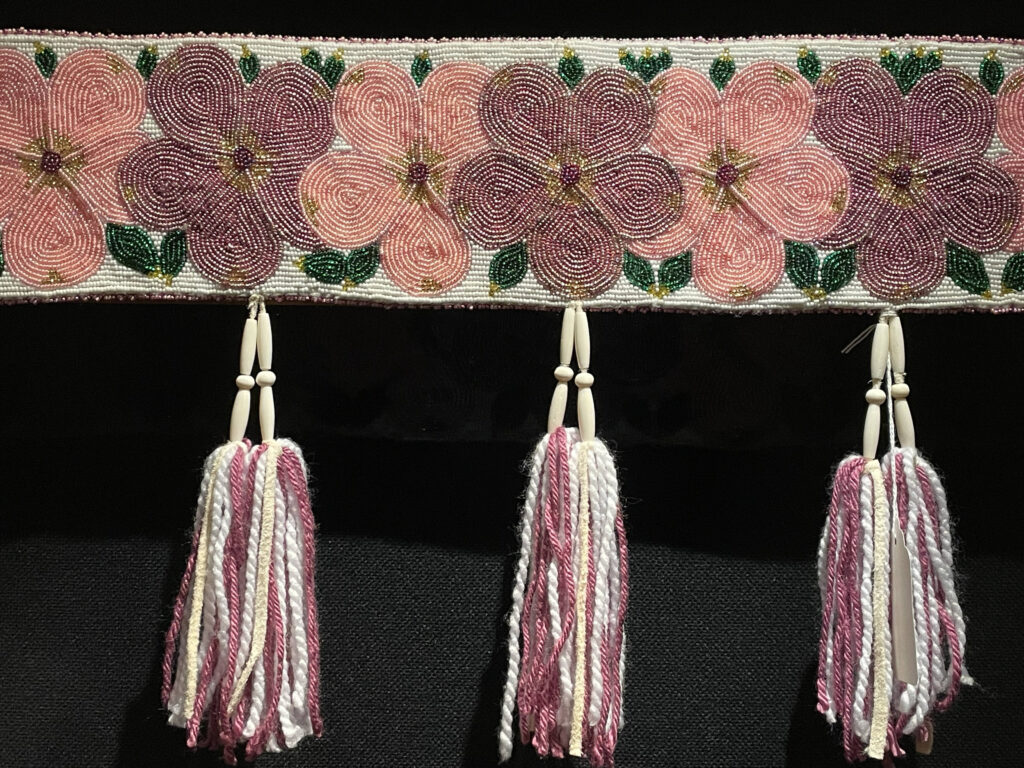
Keep in mind, there is also quite a bit to do during the days in Fairbanks, so you’ll be juggling late nights with daytime excursions. The good thing is that Fairbanks is very small and very easy to get around. Several good museums are in town, none more than 15 minutes from the others. A good starting point might be Museum of the North, located on the University of Alaska. Up on a ridge, it offers great outdoor views and a fantastic collection of Indigenous art, cultural and traditional items, and local wildlife exhibits. The Morris Thompson Cultural & Visitors Center also offers outstanding presentations of Native Alaskan history and life, and it offers free admission year-round.
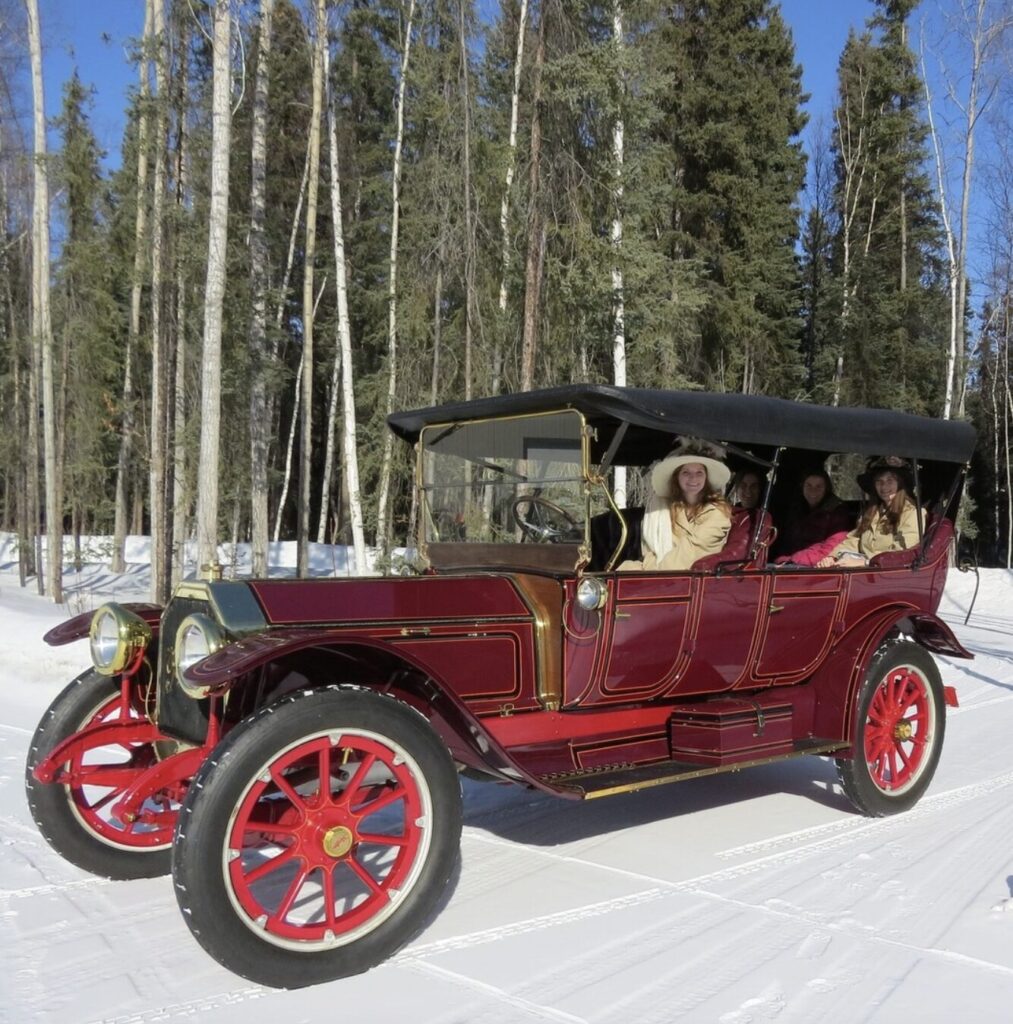
One of my favorite visits was the Fountainhead Antique Auto Museum. Just outstanding, and easily up there with any big city museum I’ve ever visited. There are more than 100 pre-WWII vehicles, most in pristine condition, and all are flanked by side exhibits of historical nostalgia of that time (including gorgeous fashion treasures, from purses, to gowns, to top hats).
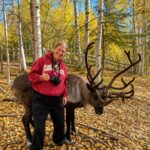
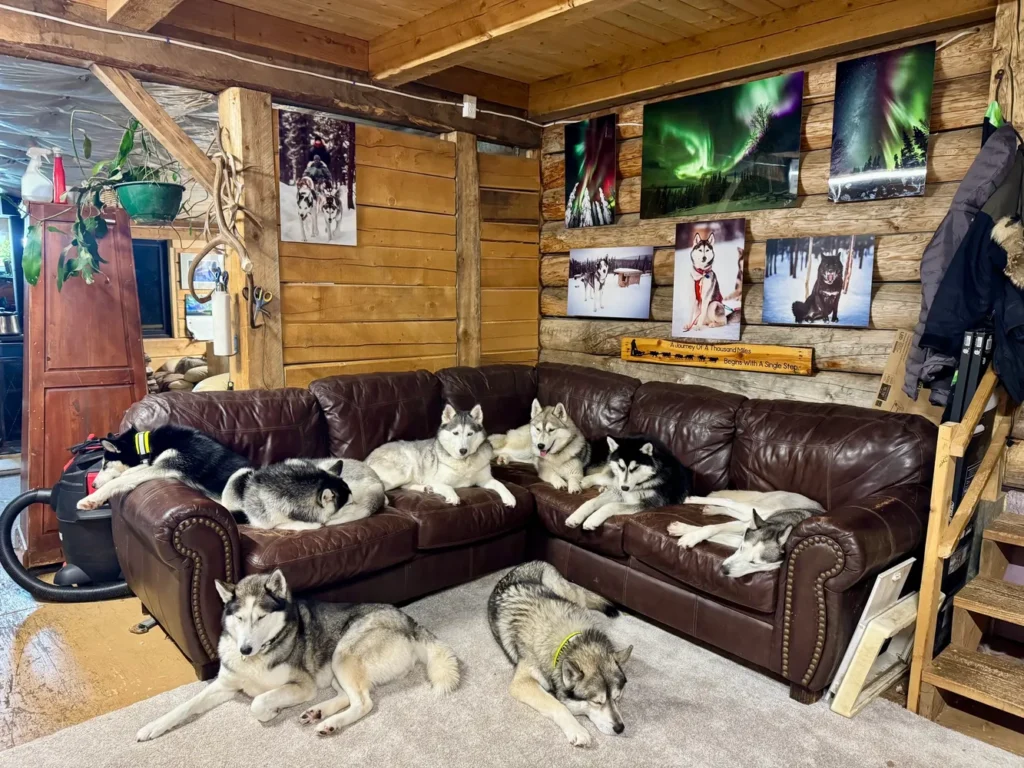
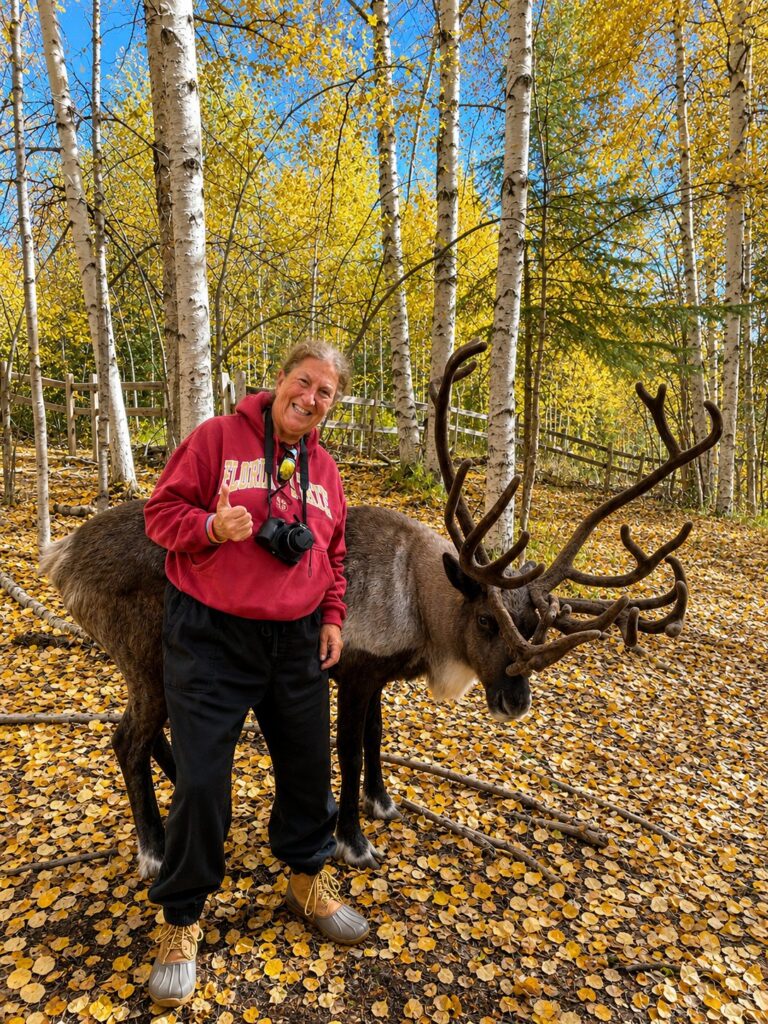
If nature is your thing, check out the Running Reindeer Ranch, where you’ll get to literally walk with these big-antlered domesticated caribou. You can also visit sled dog kennels even if there is no snow. I spent time with owner Nita Fowler at Sirius Sled Dog Rescue, a nonprofit group that uses funds from sledding tours and Aurora viewing to finance efforts to rescue Huskies and participate in the Heritage Breed Preservation Program.
Housed in the old Art Deco Lacey Street Theater building, the Fairbanks Ice Museum is a bit kitschy and super cold, but it’s fairly small and still a fun, quick stop to see the ice sculptures. Kids will love the ice slide (and yes, adults can go down it too).
You can also head out of Fairbanks and get to a few pretty neat places without going too far. North Pole is a real place about a 25-minute drive away, and full of Christmas cheer. If you’re up for a longer drive, the magnificent Denali National Park is about two hours away. It generally closes its entrance to cars in mid-September, but you can hike in or consider Fat Truck Tours based in Healy at the park’s entrance. Owned by Joel Miner, the company runs different tours year-round, and Miner is a wealth of knowledge.
The food in Fairbanks, like most things, is more pricey than in most small 33,000-inhabitant cities in the lower 48, but there are some really good spots to eat. I very much enjoyed the Cookie Jar, Hungry Robot, Fenders, Chowder House, Lulu’s Bagels, Thai Noodle House, Salty’s, Pike’s Landing, and a few others.
Nightlife might be a bit limited for some, but The Basement is a fantastic venue hosting all kinds of alternative art programs, including several burlesque shows every year.


Fairbanks likely wasn’t on your bucket list, but if seeing the Northern Lights is, honestly, there’s no reason to wait. It’s far less expensive than every other destination with consistently incredible displays, and there’s plenty to do (even when it’s -30 in winter). Turn your goals into reality. Get lit. No buckets needed.
Tips for travel to Fairbanks
1. There are many main highways in Alaska that are really just gravel roads, and rental car companies have very strict rules about which vehicles can traverse which roads. Know the limitations of the car you are renting, since they are all fitted with trackers, and you will be fined heavily if you take it on the wrong roads. Don’t play hero. If there is snow on the ground and the temps are below zero, be sure you know how to navigate in that weather, and be prepared for anything.
2. While there are plenty of banks in Fairbanks, the only national one we saw was Wells Fargo. There is no JPMorgan Chase, no Bank of America, no Citibank. Their local banks work like the big guys, but if you need something specific from one of your banks, take care of it before you go.
3. Moose are not your friends. Not the females or the males. They make for great photos, but stay very far away. Same for grizzlies, but you probably already know that.
4. Cell phone reception can be spotty, even just a few miles out of town. Download Google Maps before you go, and you can access it even when you’re not connected to the Internet.
5. While many bring all kinds of professional camera equipment to shoot the Aurora, newer iPhones take excellent photos with easy adjustments to two or three settings. Check out online tutorials before you go.
6. Add an Aurora app to your phone before you go (this way you can practice and see what may be coming in the next week or two). I used My Aurora Forecast & Alerts and was extremely happy with its ease of use, and predictive info.
7. Be prepared to layer especially in the Fall!! One day it can be 50 degrees during the day, and the next day it can be 25.
8. There is a reason the locals joke that the mosquito is Alaska’s national bird. Although they are generally gone by September first if you go earlier, bring a ton of bug spray and get ready for the biggest blood suckers you’re ever seen.
9. Although very unpretentious and a bit rural, Fairbanks is still on the expensive side. Be equipped.
10. Leave your other assumptions at home. While Fairbanks is home to many conservative people, as is much of Alaska, it is also a bastion of independent thinkers and many liberals. Look for opportunities to learn about the Indigenous peoples as well (and “Eskimo” is considered an outdated, offensive colonial label).