
TSA Update: What Every Traveler Needs to Know Before Packing Checked Bags
With Holiday travel upon us, it’s time you checked the latest updates on what you can check in your luggage.
Picture this: You’ve zipped your suitcase shut, breezed through the baggage drop, and settled into your gate seat with a pre-flight coffee. Then, over the airport intercom, you hear your name. A Transportation Security Administration (TSA) officer needs to inspect your checked bag—and a common item you tossed in at the last minute is about to be confiscated, potentially delaying your luggage or even your flight.
Over the past year, the TSA and the Federal Aviation Administration (FAA) have tightened regulations around what can safely travel in the cargo hold. Driven largely by the rising popularity of cordless, battery-powered, and gas-fueled gadgets, these updated rules target hidden fire hazards that flight crews cannot reach mid-air.
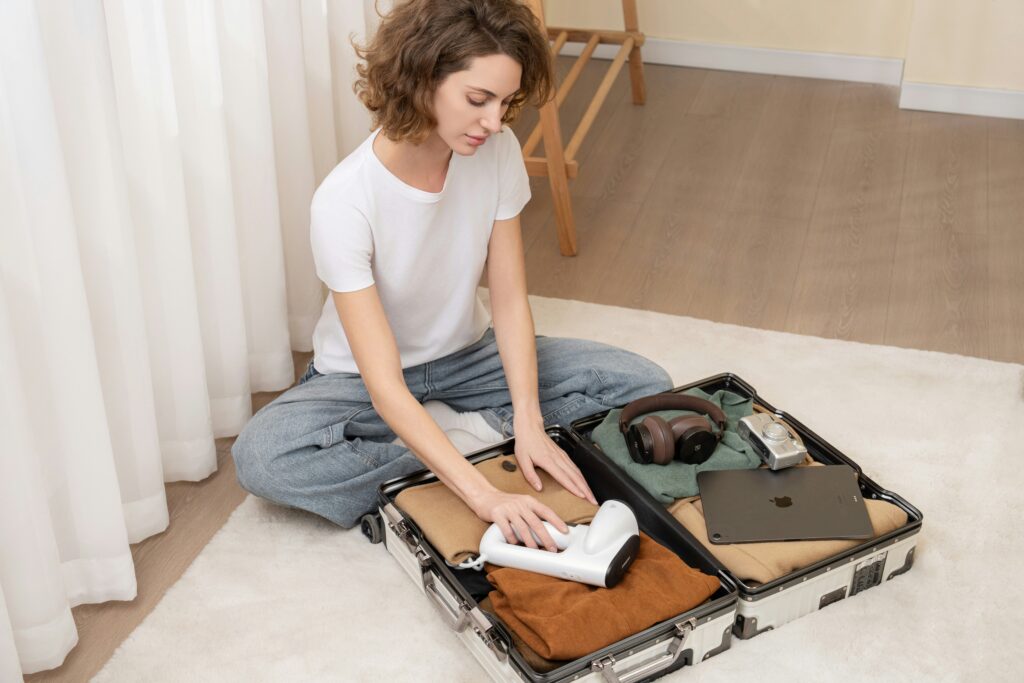
Before you pack for your next trip, here is the definitive breakdown of the everyday items the TSA has banned from checked luggage—and how to bring them along without a hitch.

1. Cordless Hair Styling Tools
If you rely on a cordless curling iron, flatiron, or straightening brush for touch-ups on the go, pay close attention. Following updated FAA hazardous materials guidance, the TSA strictly prohibits cordless hair tools containing gas cartridges, butane fuel, or non-removable lithium batteries from checked bags.
- The Risk: Pressurized gas and high-heat elements can accidentally activate inside a shifting suitcase, sparking a cargo fire.
- How to Pack It: You can still bring one gas- or butane-powered styling tool per person in your carry-on bag, provided a safety cover is securely fitted over the heating element to prevent accidental activation. (Note: Spare gas refill cartridges are completely banned from both carry-on and checked luggage.) Traditional plug-in hair tools with cords remain completely fine in either bag.
2. Portable Chargers, Power Banks, and Spare Lithium Batteries
While lithium-ion batteries have been scrutinized for years, enforcement around power banks and spare batteries has reached an all-time high. Portable chargers, cell phone battery cases, and any uninstalled lithium-ion or lithium-metal batteries are strictly forbidden in checked luggage—including bags that are gate-checked at the boarding door.
- The Risk: Damaged or short-circuited lithium batteries can experience “thermal runaway,” igniting intense fires that automated cargo suppression systems struggle to extinguish.
- How to Pack It: Keep all power banks and spare batteries in your carry-on or personal item. Most airlines cap power banks at 100 watt-hours (Wh), and battery terminals should be protected in a case or taped over to prevent short-circuiting.
3. “Smart” Luggage with Non-Removable Batteries
High-tech suitcases equipped with built-in USB charging ports, GPS trackers, or motorized wheels revolutionized airport travel—until they became a major aviation hazard. Smart bags with non-removable lithium batteries are completely banned from checked luggage.
- The Risk: Just like power banks, a built-in battery trapped in the cargo hold poses an inaccessible fire hazard.
- How to Pack It: If you travel with smart luggage, the battery must be easily ejectable. Before handing your bag over at the ticket counter or gate, remove the battery and carry it with you into the cabin.
4. Vapes, E-Cigarettes, and Electronic Smoking Devices
Whether it is a sleek disposable vape pen or a customizable mod, electronic nicotine delivery systems are barred from the cargo hold.
- The Risk: Heating coils paired with lithium-ion batteries and e-liquids have been linked to numerous baggage fires.
- How to Pack It: Pack all vapes and e-cigarettes in your carry-on luggage. Make sure the device is completely powered off and protected against accidental button presses. Any extra vape juice must follow the standard TSA 3-1-1 liquids rule (containers of 3.4 ounces or less inside a single quart-sized clear bag).
5. Plasma Arc and Torch Lighters
Standard disposable lighters have specific restrictions, but high-powered ignition devices face much harsher rules. Plasma arc lighters (which use high-voltage electricity to create a flame-free arc) and torch lighters are strictly prohibited in checked bags.
- The Risk: Extreme heat and sensitive activation buttons make them a severe ignition threat in pressurized cargo holds.
- How to Pack It: Torch lighters are banned from planes altogether. While standard soft-flame lighters are generally limited to one per person in your carry-on, check specific airline policies before packing any electronic arc lighter in cabin baggage.
6. Household and Industrial Aerosols
It is easy to confuse a can of hairspray with a can of spray-on waterproofing for your hiking boots, but TSA X-ray scanners know the difference. While personal toiletry aerosols (like deodorant or dry shampoo) are permitted in checked luggage within size limits, household and industrial aerosols—including cooking spray, spray paint, compressed air dusters, and lubricants like WD-40—are banned.
- The Risk: Many non-toiletry aerosols rely on highly flammable hydrocarbon propellants that can rupture or ignite under changing cargo pressures.
- How to Pack It: Leave these items at home and purchase them at your destination.
7. High-Proof Alcohol (Over 140 Proof)
Bringing back a bottle of local wine or craft whiskey in your checked suitcase is a classic travel perk, provided you check the alcohol by volume (ABV) first. Any alcoholic beverage exceeding 70% ABV (140 proof)—such as grain alcohol or certain overproof rums—is banned from both checked and carry-on bags.
- The Risk: High-proof spirits are classified as flammable hazardous materials.
- How to Pack It: Stick to wine, beer, and spirits under 140 proof. Bottles between 24% and 70% ABV are limited to five liters per passenger in checked luggage and must remain in their original, unopened retail packaging.
Before heading to the airport, do a quick sweep of your checked suitcase—and double-check the official TSA What Can I Bring? Tool to ensure your trip starts smoothly at baggage claim rather than at the security desk.