

What Gay Men Over 40 Are Really Looking for When They Travel Alone
Many gay men, especially in their 40s and beyond, are looking for time to move, rest, explore, and make genuine connections with other people.
There’s a particular freedom in arriving somewhere alone. I’ve felt it myself. No one is waiting for you to decide what the day should be, or measuring whether you’re having enough fun. You can wake early or sleep late, or take the long way somewhere just because the light looks good.
But traveling alone doesn’t always mean wanting to be alone. That’s gotten clearer to me as I’ve gotten older. For a lot of gay men in their forties, fifties, and beyond, solo travel isn’t really about escape. It’s about finding better conditions for connection, not bigger conditions, just better ones. A place where you can meet people without stepping straight back into the old performance, without feeling like you have to be the most interesting, the most social, the most together person in the room.
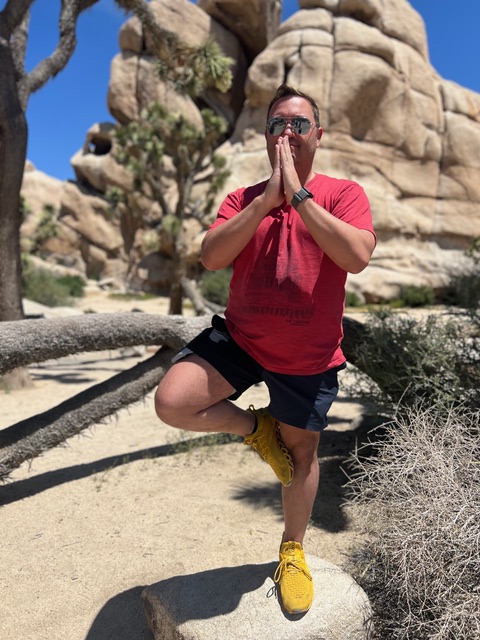
I know that feeling because I’ve lived through enough versions of it. Growing up in a small town like Preston, Missouri, you learn early how to perform. Everyone knows everyone, so you learn to be who the town expects you to be. Years later, working as a youth professional and a teacher, I learned a different kind of performing: staying composed, staying upbeat, always modeling the right thing for the kids in front of you,
never letting them see you tired or unsure. Running for Congress added another layer of it, the version of performing where you’re always on, always representing something bigger than yourself. What all of that taught me is that performing isn’t really about lying. It’s about never getting to switch off.

In my memoir, Write Your Evolving Story, I wrote about change as something gradual and relational, not instant or clean. I think that’s part of what a lot of us are looking for when we travel now, too. Not reinvention on command, just enough room to hear ourselves again, and maybe be met honestly by other people.
Some travelers will always love a busy dance floor or a late dinner that turns into a later night, or the ease of traveling with a partner or a group of old friends. Nothing wrong with any of that. But there’s also room for another kind of trip, one shaped by conversation, movement, local discovery, rest, and the relief of not having to be “on” the whole time.
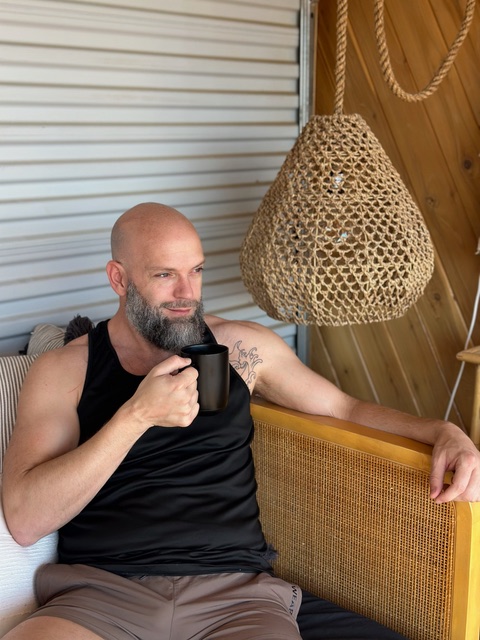
Alone is not the same as lonely
Solitude feels spacious when it’s chosen. Loneliness is sharper than that, and quieter. It’s having no one to text about the first coffee of the morning, or the strange thing you saw on a side street, or a meal that was good enough to deserve a witness.
I’ve had trips where I wanted exactly that solitude. I’ve also had moments, if I’m honest, where I was lonely in a way I didn’t want to admit. Not dramatic loneliness, just that flat feeling of moving through a beautiful place with no one to turn toward. I think a lot of men know that feeling well and get very good at outrunning it.
That difference, between being alone and feeling alone, is part of why small-group travel appeals to gay men in midlife. It gives you independence without asking you to be fully self-contained. You can arrive on your own and still have someone to meet at dinner. You can spend an afternoon by yourself and still know a conversation might be waiting later. That matters more than people admit.
Midlife can make friendship harder to find
By the time a lot of gay men reach their forties, their social lives have changed in ways they didn’t plan for. Partners and careers take time. Some are caring for parents or kids. Others have moved cities, left a familiar neighborhood, or watched old friendships thin out into occasional texts and a dinner that never quite gets scheduled.
The ordinary structures that used to make friendship easy are just gone. No weekly class, no shared apartment, no campus, no job where the same people keep showing up. Nightlife might still be part of someone’s life, but it’s not always the place he wants to build community anymore. Dating apps and social media create contact without necessarily creating closeness, and for others, the local gay scene can feel younger, more hurried, or more focused on a kind of visibility that no longer feels central to what they want.
Name your roadblocks and don’t obsess over them, because at some point you have to tell yourself the truth about what’s actually in the way. Fear could be one. Shame could be another. So could timing, and so could the environment you’ve been stuck in for years. Sometimes the problem isn’t that you’re bad at friendship or bad at belonging. It’s that the old containers no longer fit your life, and you haven’t found new ones yet. Gay men over 40 aren’t a uniform group, but I think a lot of us share one quiet desire: to be in social spaces where we don’t have to compete for attention or prove we belong there.
A different way to enter the room
There’s a real appeal in traveling somewhere you don’t have to be the youngest, fittest, wealthiest, funniest, or most outgoing person in the room. That’s not a rejection of energy or beauty or ambition. It can be clarity, a wish to let those things become optional for a few days. To be welcomed whether you’re talkative at breakfast or still waking up. To move your body without it becoming a public referendum. Shared activity helps because it gives people somewhere honest to begin: a walk through a new neighborhood, a morning mobility session, a market visit, a table set for dinner. Conversation comes more naturally then. Nobody has to open with a polished life story or force intimacy. It’s more courageous to be vulnerable than to be strong, and I firmly believe that, especially for men, and especially for gay men who spent years learning how to read a room before they ever relaxed inside one.
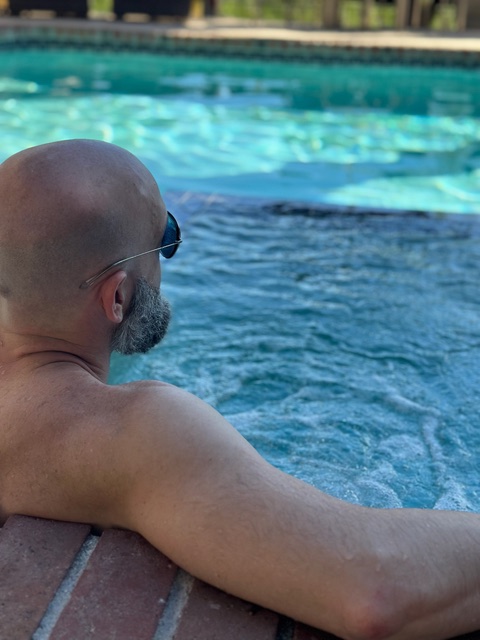
That’s part of the appeal of small-group retreats like Owa He, which bring gay men traveling solo together through movement, local discovery, shared meals, and protected downtime. What works isn’t forced bonding; it’s the structure and the care, the fact that nobody has to invent a reason to be together. The point isn’t constant togetherness. It’s the chance to be known without being crowded.
Wellness without self-correction
The word “wellness” can get weird fast. It starts to sound like we’re all unfinished assignments: fix your body, fix your stress, fix your habits, come home improved. I don’t think that’s what most people are actually hungry for. What I hear, and what I’ve wanted myself, is usually simpler. Sleep more deeply. Move in a way that feels good. Eat food made with care. Spend a few days somewhere beautiful without carrying every decision on your back. Remember that your body isn’t only something to manage or present; it’s also how you walk, swim, stretch, taste, laugh, and rest.
Movement helps, but only when it’s adaptable rather than performative. One man might want a strong morning session, another something slower, and both should belong in the same space without either becoming the standard for the other. Rest matters just as much. A full itinerary isn’t necessarily a meaningful one. Sometimes the real shift happens by the pool, during a nap, or in the space created by doing a little less. The pause isn’t what happens after the experience, it’s part of it.
Transformation can be quiet
Travel gets sold as a chance to become someone new. I understand the appeal, but I trust a slower story more. The changes that last are usually less dramatic than we expect. You come home a little clearer about what’s been missing, a little more willing to accept an invitation, a little less defended. You remember that curiosity is still available to you, that connection doesn’t have to come through intensity, that your life probably doesn’t need a full overhaul, maybe just a few honest adjustments. There’s nothing wrong with you that a destination needs to fix.
Sometimes the change is just renewed aliveness, being awake to your surroundings, interested in the people beside you, less hemmed in by habits that have quietly narrowed your days. Sometimes it’s even smaller than that: you linger over breakfast, take the longer way back, let yourself be seen in a way that would’ve felt harder a month ago.
More room for the person you already are
Maybe this is what a lot of gay men over 40 are really looking for when they travel alone. A setting where independence and belonging can exist at the same time, with enough structure to feel held and enough freedom to make it your own. A place where you can talk or listen. Join the walk, or take the afternoon slowly. Meet new people without explaining everything. Be part of the group without being available
every minute. Solo is how you arrive. Connected is how you leave.
And maybe the point of traveling alone isn’t to come back as a different person. Maybe it’s to come back with a little more room for the person you already are.
To learn more about Owa He and upcoming small-group retreats for gay men, visit owahe.com, follow @joinowahe on Instagram, or apply to join a future retreat.